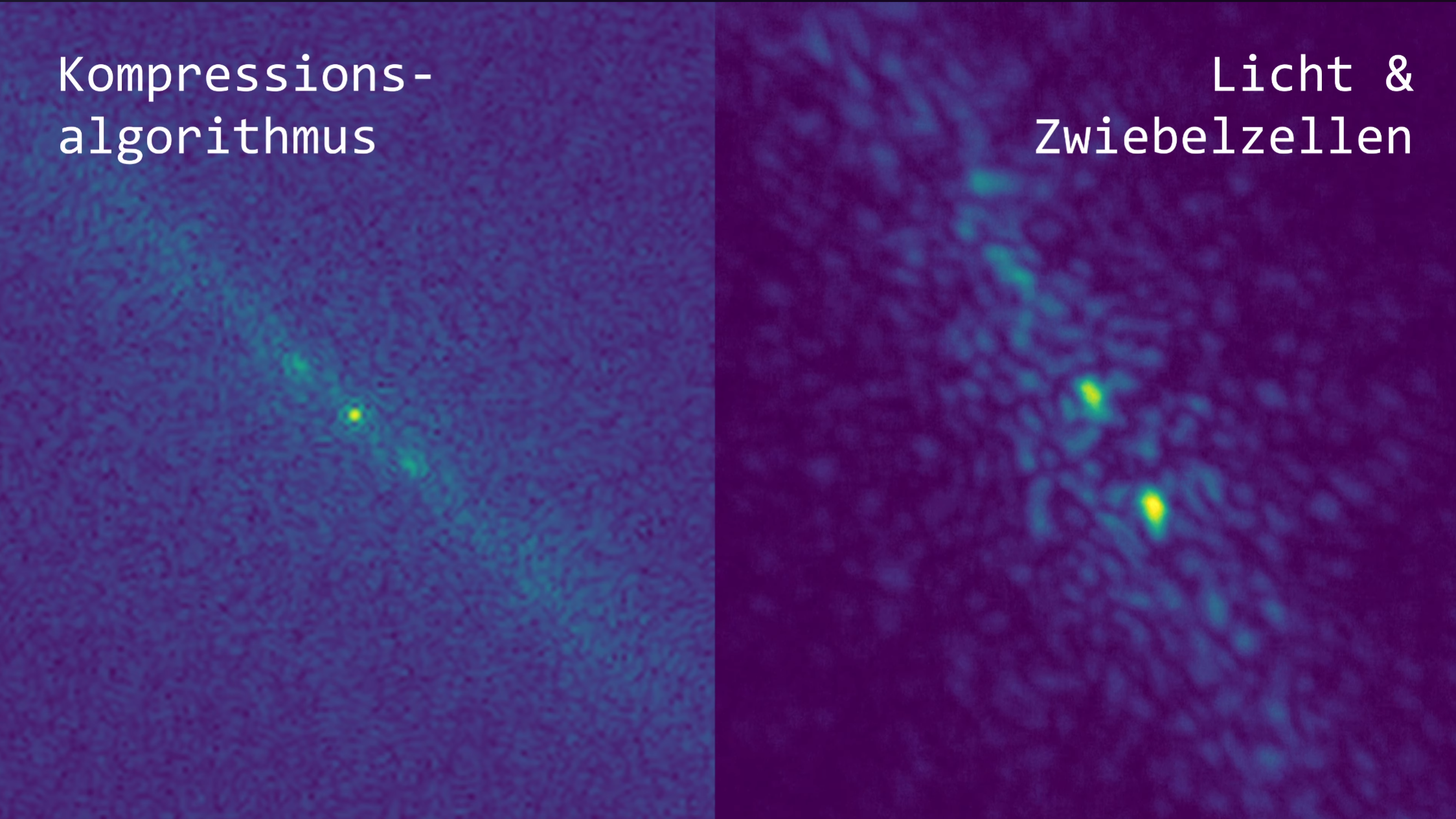
A recent study by Xoreaxeax has revealed the fundamental relationship between diffraction gratings and Fourier transforms, enhancing our understanding of optical microscopy. Building on his previous work with a lens-less optical microscope, Xoreaxeax explains how diffraction patterns can be interpreted as frequency decompositions of a specimen’s features, essentially serving as a Fourier transform.
In earlier experiments, Xoreaxeax demonstrated that by shining a laser beam through a sample, he could deduce its structure from the resulting diffraction patterns. This latest research delves deeper, deriving equations for the Fourier transform from the basic principles of diffraction. The study includes a detailed examination of light as a wave represented by a sinusoidal function, simplifying the complex mathematical formulations involved.
The foundational concept of the Huygens principle plays a crucial role in this analysis. According to this principle, light emanating from a point in a sample spreads out in spherical waves. The wave at any specific location can be computed as a function of distance, which facilitates understanding how light interacts with the sample. Additionally, the principle of superposition states that when multiple waves converge at a point, the resultant amplitude is the sum of their individual contributions.
Extending this summation to all light sources emerging from the sample leads to an infinite integral, which ultimately simplifies into a specific form of the Fourier transform. This mathematical relationship unlocks new perspectives on how optical data can be represented and processed.
An intriguing implication of this research is its connection to image compression techniques. For instance, JPEG compression employs the Fourier transform to convert images into a series of sine wave patterns. By organizing these patterns according to their frequency and orientation, researchers can create a speckle pattern resembling the diffraction pattern observed when a laser is shone through onion cells. This connection illustrates the practical applications of theoretical principles in both scientific research and digital technology.
For those interested in the original experiment that generated these insights, Xoreaxeax has documented his work with the ptychographical microscope, which further illustrates the connection between physical structures and Fourier transforms. As research in this area continues, it opens doors for innovative methodologies in imaging and analysis across various scientific fields.
This exploration not only reinforces the relevance of established optical principles but also paves the way for future advancements in microscopy and image processing technologies. Understanding the interplay between diffraction and Fourier transforms could lead to significant breakthroughs in how we visualize and interpret complex data.