The latest dietary guidelines released by the Trump administration call for Americans to prioritize whole foods and protein while reducing their intake of highly processed foods and added sugars. On March 15, 2024, Health Secretary Robert F. Kennedy Jr. and Agriculture Secretary Brooke Rollins unveiled the 2025-2030 U.S. Dietary Guidelines for Americans, which will serve as the foundation for federal nutrition programs.
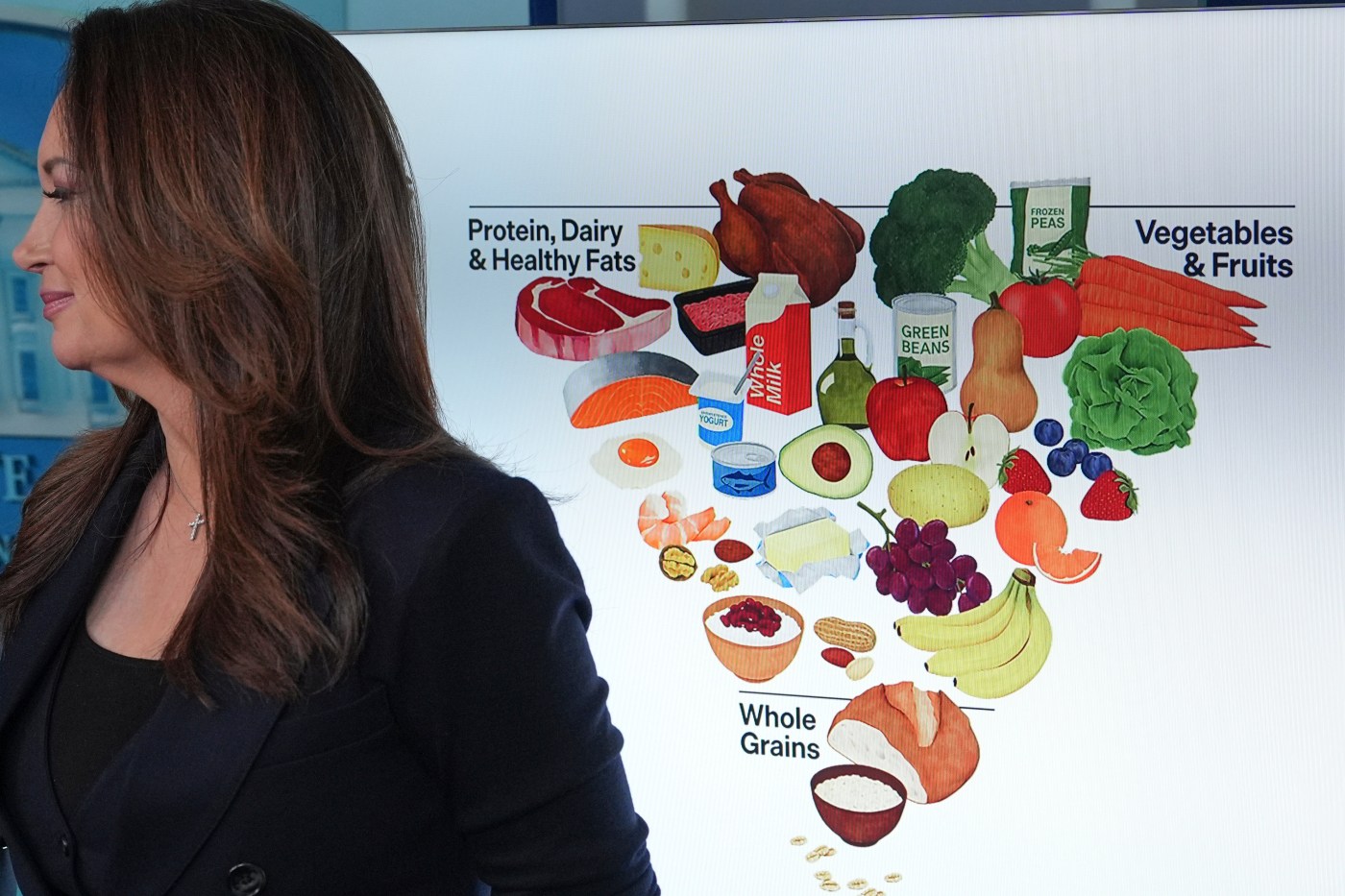
During a White House briefing, Kennedy emphasized the importance of consuming “real food.” The new guidelines promote fresh vegetables, whole grains, and dairy products, maintaining longstanding advice for a balanced diet. The administration introduced a new graphic featuring an inverted food pyramid, placing protein, dairy, healthy fats, and fruits and vegetables at the top, with whole grains at the bottom.
A significant shift in the guidelines is the recommendation to avoid “highly processed” foods, which are often high in sugar and salt. This term encompasses many ultraprocessed products that contribute over half of the calories in the average American diet and are linked to chronic diseases like diabetes and obesity. Officials are now advising consumers to steer clear of packaged and ready-to-eat foods, including chips, cookies, and candy.
While the guidelines uphold previous recommendations to limit saturated fats to no more than 10% of daily caloric intake, they suggest opting for whole-food sources of these fats, such as meat, whole-fat dairy, or avocados. This nuanced approach contrasts with earlier signals from Kennedy and Food and Drug Commissioner Marty Makary, who indicated a possible push to increase animal fat consumption.
As the guidelines undergo their five-year update, they remain crucial for addressing the dietary habits of a nation where more than half of adults suffer from diet-related chronic diseases. Despite the recommendations, research reveals that few Americans adhere to them.
Notable figures in nutrition have praised the new guidelines. Dr. David Kessler, former FDA commissioner, advocates for an increased focus on whole foods and reduced consumption of highly processed carbohydrates. Similarly, Dr. Bobby Mukkamala, president of the American Medical Association, commended the guidelines for promoting food as a means to improve health.
While these adjustments have received positive feedback, some experts express concern about the emphasis on meat and dairy as primary protein sources. Dr. Marion Nestle, a prominent nutritionist, cautioned that following these guidelines could lead to higher caloric intake rather than the intended reduction.
The new document is notably concise at just 10 pages, aligning with Kennedy’s aim to simplify dietary advice. Previous editions have expanded significantly, increasing from a 19-page pamphlet in 1980 to a 164-page report in 2020. The impact of these guidelines will be especially pronounced in the federally funded National School Lunch Program, which must adhere to the new recommendations when providing meals to nearly 30 million children each school day.
There is some uncertainty regarding the recommendations on ultraprocessed foods, as the guidelines do not reflect the findings of a 20-member panel of nutrition experts who reviewed scientific evidence over two years. This panel did not provide recommendations on ultraprocessed foods due to concerns about the quality of the research linking them to adverse health outcomes.
Despite this, the FDA and the Agriculture Department are working to define ultraprocessed foods, although this process may take time. Not all processed foods are considered unhealthy; Dr. David Ludwig, an endocrinologist at Boston Children’s Hospital, noted that the focus should be on highly processed carbohydrates, as processing methods for proteins and fats can vary widely.
Another significant change in the guidelines is the recommendation to potentially double protein consumption. The new allowance suggests 1.2 to 1.6 grams of protein per kilogram of body weight, compared to the previous recommendation of 0.8 grams. This increase could influence dietary habits, as many American men currently consume an average of 100 grams of protein daily.
While the American Heart Association advocates for further research on optimal protein sources, they encourage consumers to prioritize plant-based proteins, seafood, and lean meats while limiting high-fat animal products linked to cardiovascular risks.
The guidelines also address added sugars, recommending that individuals either avoid or sharply limit their intake. The new advice states that no single meal should contain more than 10 grams of added sugars, approximately two teaspoons. This marks a shift from previous guidelines, which allowed added sugars to constitute less than 10% of daily caloric intake for individuals over the age of two.
The new dietary guidance does not include a limit on alcohol consumption, recommending instead that Americans consume less alcohol overall. Specific groups, such as pregnant women and those recovering from alcohol use disorder, are advised to avoid alcohol entirely.
As the U.S. embarks on this updated dietary journey, the emphasis on whole foods and a balanced intake of nutrients could potentially reshape the nutritional landscape for millions of Americans, informing both individual choices and broader public health initiatives.