








































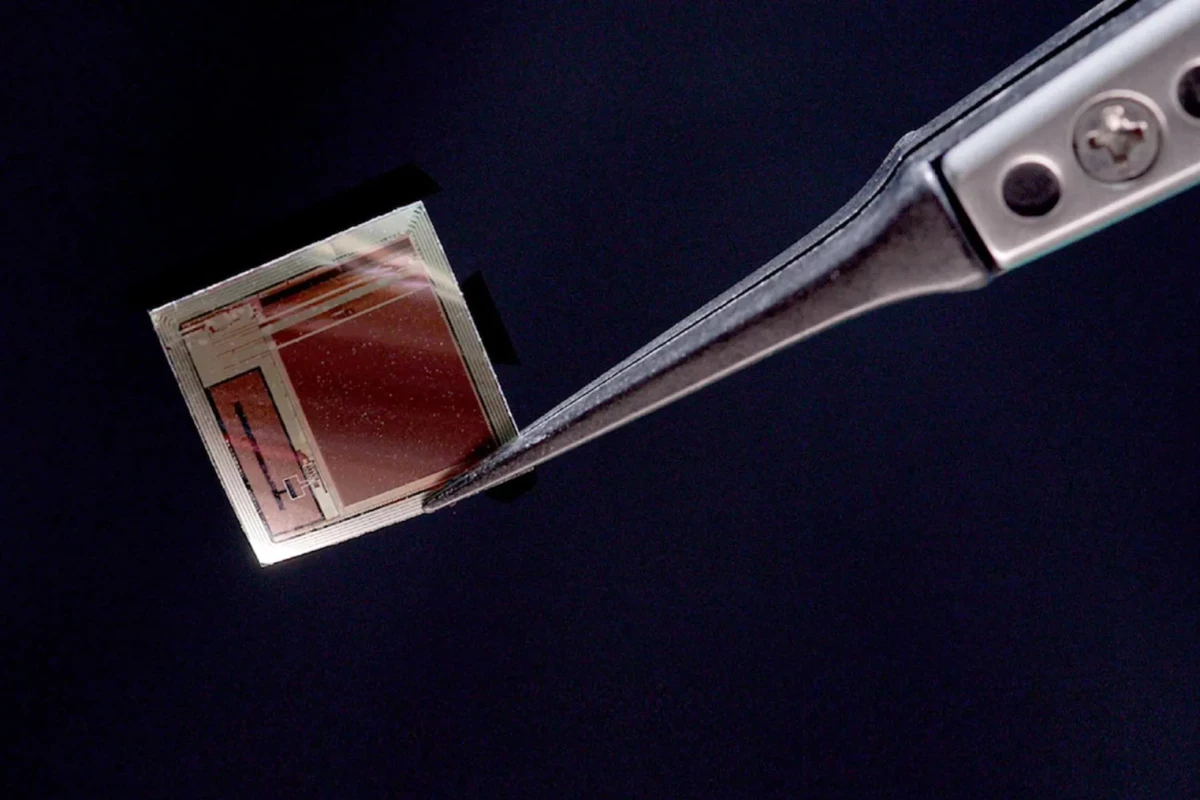
Researchers have unveiled an innovative brain-computer interface (BCI) that promises to revolutionize the treatment of neurological conditions. The new device, known as the Biological Interface System to Cortex (BISC), is designed to provide significant improvements in communication between the brain and external devices. This advancement, detailed in a recent publication in Nature Electronics, could lead to enhanced quality of life for individuals suffering from conditions such as seizures, strokes, and amyotrophic lateral sclerosis.
Ken Shepard, a leading engineer on the project and a professor at Columbia University, explained that current BCIs often consist of bulky electronic canisters that take up considerable space within the body. “Most implantable systems are built around a canister of electronics that occupies enormous volumes of space inside the body,” he stated. Despite this limitation, Shepard and his team have developed a more efficient design that could transform the landscape of neural technology.
Revolutionary Design Enhances Functionality
The BISC features a paper-thin design that allows for minimal invasiveness during surgical implantation. As Brett Youngerman, an assistant professor of neurological surgery at Columbia and a main clinical collaborator on the BISC project, noted, “The key to effective brain-computer interface devices is to maximize the information flow to and from the brain.” The BISC achieves this goal by being inserted through a small incision in the skull and positioned directly on the brain’s surface in the subdural space.
Unlike traditional BCIs, the BISC does not rely on cumbersome wires or electrodes that penetrate the brain, thereby reducing the risks of tissue damage and signal degradation. This advancement is made possible by leveraging superconductors and semiconductor technologies, allowing significant miniaturization of the device’s components. Shepard emphasized the impact of these technologies, stating, “We are now doing the same for medical implantables, allowing complex electronics to exist in the body while taking up almost no space.”
Advanced Functionality and Future Implications
With a thickness of just 50 micrometers, the BISC houses 65,536 electrodes and 1,024 recording channels, making it less than a thousandth the volume of typical brain implants. This design enables the BISC to conform to the brain’s surface, much like a postage stamp. Its external relay station allows for high-speed connections to computers, boasting a throughput of 100 megabits per second, which is significantly faster than competing devices.
The BISC’s ability to decode high-bandwidth recordings enables it to interpret body motion, sensory information, and even user intent. This capability positions it as a potential game-changer in how we interface with computers and cybernetic devices. “By integrating everything on one piece of silicon, we’ve shown how brain interfaces can become smaller, safer, and dramatically more powerful,” Shepard explained.
The emergence of Kampto Neurotech, founded by Nanyu Zeng—who is also a lead engineer on the BISC project—marks a significant step towards commercializing this technology. The company is currently focused on manufacturing BISCs for research purposes, aiming to facilitate advancements in the field of BCIs.
The implications of this technology extend beyond mere physical relief. As Shepard stated, “This could change how we treat brain disorders, how we interface with machines, and ultimately how humans engage with AI.” As research in BCIs continues to expand, the BISC represents a promising pathway to improved treatment options for millions of individuals facing severe neurological challenges.
























