








































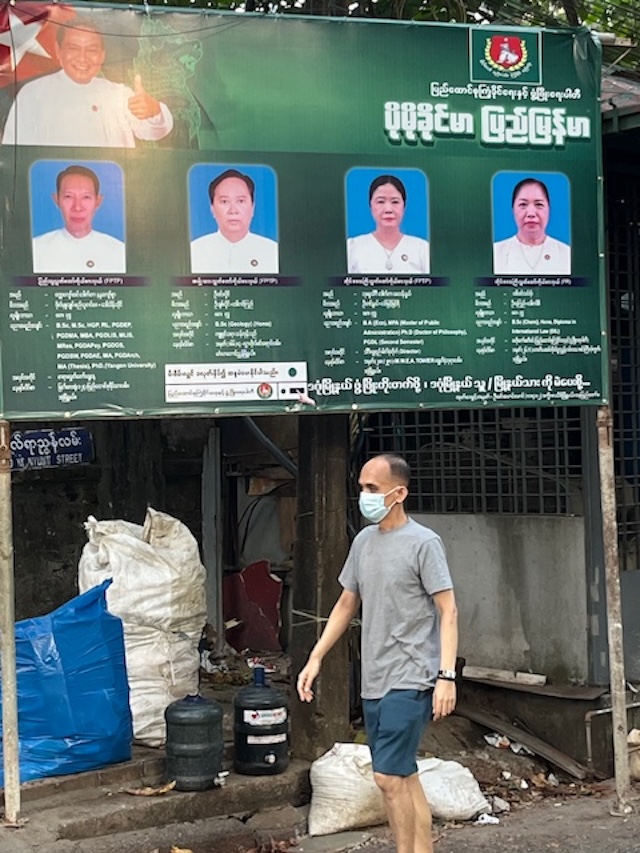
URGENT UPDATE: In the wake of escalating violence and repression, Myanmar’s military-backed party, the Union Solidarity and Development Party (USDP), has swiftly claimed victory in the ongoing, highly contested elections. The January 2, 2024 preliminary results show the USDP winning 38 of 40 seats in the lower house, amid widespread condemnation of the electoral process as a “sham.”
Amid a backdrop of civil war that has left thousands of civilians dead and over 22,000 political prisoners incarcerated, civil rights activists are questioning the legitimacy of these elections. “How can you hold elections and bomb civilians at the same time?” asked Khin Ohmar, a prominent activist monitoring the situation from abroad.
The military junta has systematically dismantled opposition, dissolving 40 political parties that refused to register for these elections, including the National League for Democracy (NLD) led by Aung San Suu Kyi. Her party had previously won a landslide victory in 2020 before the military annulled the results following their coup in early 2021.
The elections, taking place in three phases, began on December 28, 2023, with further voting scheduled for January 11 and January 25. However, the junta has excluded 65 townships from voting due to safety concerns, raising further alarms about the fairness of the process.
Reports indicate that as the elections approached, military airstrikes intensified, targeting civilian areas. On December 5, airstrikes in Tabayin township killed 18 people, and another strike on a hospital in Mrauk-U resulted in 33 fatalities. These attacks have fueled a growing outcry against the junta’s brutality.
United Nations Secretary-General Antonio Guterres, during a visit to the region, expressed skepticism about the elections’ integrity, labeling the junta’s actions as “deplorable” and urging a return to civilian rule. Contrastingly, the Trump administration recently described the junta’s election plans as “free and fair,” a stance that has drawn heavy criticism.
“Voting seems pointless,” said Min, a Yangon taxi driver, reflecting the sentiment of many who feel trapped under the military’s control. “We are ruled by China, not Min Aung Hlaing,” he added, highlighting the perceived foreign influence in Myanmar’s internal affairs.
Despite the oppressive atmosphere, some citizens, aligned with the military’s interests, did vote, eager for stability. The USDP’s campaign called for a family turnout to restore progress in Myanmar, a message reminiscent of earlier elections when the party was last in power.
As the military government solidifies its power through these elections, analysts warn that the facade of legitimacy could lead to increased repression. The military’s control extends over major cities and strategic locations while over half of the country remains under the influence of ethnic armed groups and resistance forces.
The shadow National Unity Government continues to rally support for a democratic and federal Myanmar free from military dominance. As the elections unfold, the international community watches closely for any shifts in power dynamics.
With millions displaced and many living under junta control, the potential for change hinges on the military’s next moves. Observers speculate whether a USDP government could lead to gestures of goodwill, such as easing forced conscription or releasing political prisoners.
Khin Ohmar aptly described the situation: “Political prisoners are used as bait. The world would at least have to applaud.” As the situation in Myanmar evolves, the urgency for a credible path to democracy grows ever more pressing.
























