








































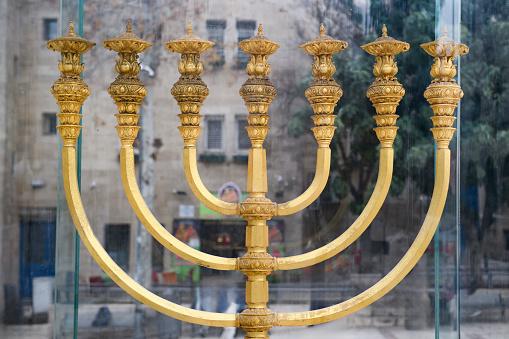
The menorah, an enduring symbol of Judaism, encapsulates the depth and continuity of Jewish identity through its rich historical and spiritual significance. Unlike the more commonly recognized Star of David, the menorah represents a comprehensive visual theology of light, wisdom, and resilience. Its roots trace back to the Torah, specifically the book of Exodus, where it is commanded that Moses create a menorah of pure gold (Exodus 25:31).
The menorah’s unique design—crafted from a single piece of gold—symbolizes spiritual integrity and unity. As a central object in both the Tabernacle and the Jerusalem Temple, it served as a representation of God’s enduring presence among the people of Israel. The daily lighting of the menorah by priests signified ongoing devotion and the covenantal relationship between God and the Jewish people.
Historical Significance and Modern Adaptations
The importance of the menorah is further illustrated in the prophetic vision of Zechariah, who describes a golden menorah as a symbol of divine support during the rebuilding of the Temple after the Babylonian exile. In this vision, a message is conveyed: “Not by might, nor by power, but by My spirit, says the Lord of hosts” (Zechariah 4:6). This emphasizes the menorah as a beacon of spiritual resilience rather than military strength.
The fate of the menorah took a dramatic turn following the Roman destruction of the Second Temple in 70 CE. This historical event is famously depicted on the Arch of Titus in Rome, where Roman soldiers are shown carrying the Temple menorah in triumph. This imagery underscores the menorah’s role as a symbol of Jewish sovereignty, even in times of defeat and exile.
In contemporary times, the menorah has been adopted as a national symbol of Israel. The emblem of the State of Israel, established in 1948, features a stylized seven-branched menorah flanked by olive branches. This design draws inspiration from the Arch of Titus relief, reclaiming a symbol of exile and turning it into one of renewed sovereignty.
The seven branches of the menorah hold significant meaning within Jewish tradition. The number seven reflects completeness and sanctity, representing the seven days of creation and the holiness of the Sabbath. Philosophers, such as Philo of Alexandria, associated the branches with the seven classical planets, suggesting a harmony of the cosmos under divine governance.
Personal Reflections on the Menorah’s Impact
The menorah also resonates on a personal level for many Jewish families. Simon Eder, co-founder of a Jewish community in the UAE, recalls lighting a nine-branched menorah in the desert each Chanukah, celebrating the establishment of their community. These gatherings were marked by the singing of “nes gadol haya po,” or “a great miracle happened here,” reflecting the significance of their pioneering efforts in an Arab land.
Last year, Eder returned to the UAE to celebrate his son Jonah’s bar mitzvah at the Abrahamic Family House’s Moses Ben Maimon Synagogue. He was struck by the prominent depiction of the menorah on the building’s exterior, symbolizing the journey of openly practicing Judaism in a region where it was once a dream. The sight of the menorah against the Abu Dhabi skyline was a powerful reminder of the community’s growth and acceptance.
Beyond its historical and national dimensions, the menorah serves as a source of spiritual reflection. It embodies the prophetic call of Isaiah to be a “light unto the nations,” promoting ethical monotheism and justice. In a world often marked by darkness and conflict, the menorah continues to inspire hope, standing as a beacon of divine presence, unity, and resilience.
























