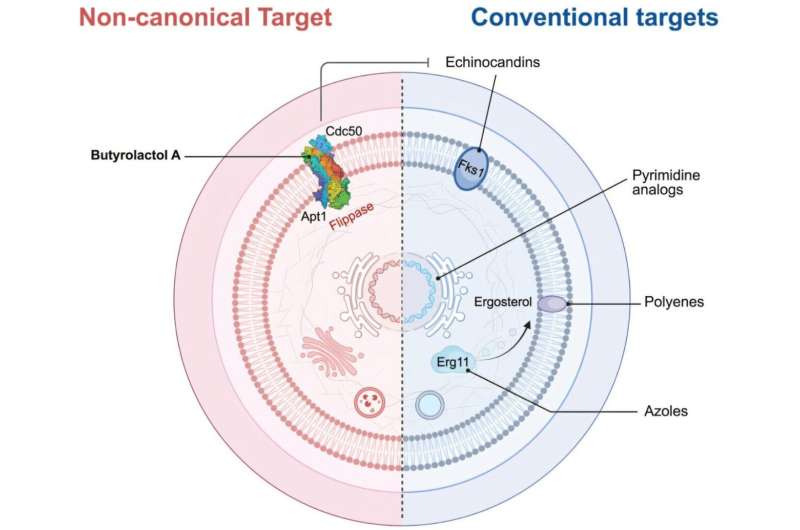
Fungal infections pose a significant global health threat, claiming millions of lives each year. Researchers at McMaster University have identified a molecule, butyrolactol A, which shows promise in enhancing the efficacy of existing antifungal treatments against drug-resistant pathogens, particularly Cryptococcus neoformans. This pathogen is known for its resistance to current medications and poses a severe risk to individuals with weakened immune systems, such as those undergoing cancer treatment or living with HIV.
The World Health Organization has classified Cryptococcus along with other fungi like Candida auris and Aspergillus fumigatus as priority pathogens due to their increasing resistance to treatments. Currently, medical professionals have limited options, primarily relying on a drug class known as amphotericin, which is often criticized for its severe side effects. According to Gerry Wright, a professor in McMaster’s Department of Biochemistry and Biomedical Sciences, “Fungal cells are a lot like human cells, so the drugs that hurt them tend to hurt us too.”
While amphotericin is considered the gold standard, both azoles and echinocandins—two other antifungal classes—fail to provide effective treatment against Cryptococcus. Azoles only inhibit fungal growth, whereas echinocandins have become ineffective due to widespread resistance.
Exploring New Solutions with Adjuvants
With the antifungal drug pipeline stagnating and resistance rates rising, researchers are now focusing on “adjuvants,” which are molecules that enhance the effects of existing medicines without directly killing pathogens. Wright explains that these compounds make fungi more vulnerable to treatment. His team at McMaster screened a vast chemical collection and identified butyrolactol A, a molecule previously overlooked, produced by certain Streptomyces bacteria.
Initially, the research team was skeptical about butyrolactol A’s potential since it had not been studied in depth since its discovery in the early 1990s. Wright admitted, “When it showed up in our screens, my first instinct was to walk away from it.” However, the insight of postdoctoral fellow Xuefei Chen led to a renewed investigation. Chen believed that if butyrolactol A could indeed revive a class of antifungal medicines, it was worth exploring further.
After extensive research, the team discovered that butyrolactol A disrupts a critical protein complex in Cryptococcus. Chen noted, “When it’s jammed, all hell breaks loose,” indicating that the molecule renders the fungus susceptible to drugs that were previously ineffective.
The research team also demonstrated that butyrolactol A has similar effects on Candida auris, broadening its clinical potential. Their findings, published in the journal Cell, represent over a decade of research and collaboration. Wright stated, “That first screen that put butyrolactol A on our radar took place in 2014. More than eleven years later, thanks almost entirely to Chen, we have identified a legitimate drug candidate and an entirely new target to attack with other new drugs.”
The discovery of butyrolactol A marks a significant advancement in the search for effective treatments against drug-resistant fungal infections. As research continues, it holds the potential to transform the landscape of antifungal therapy, providing hope for millions who are at risk.