








































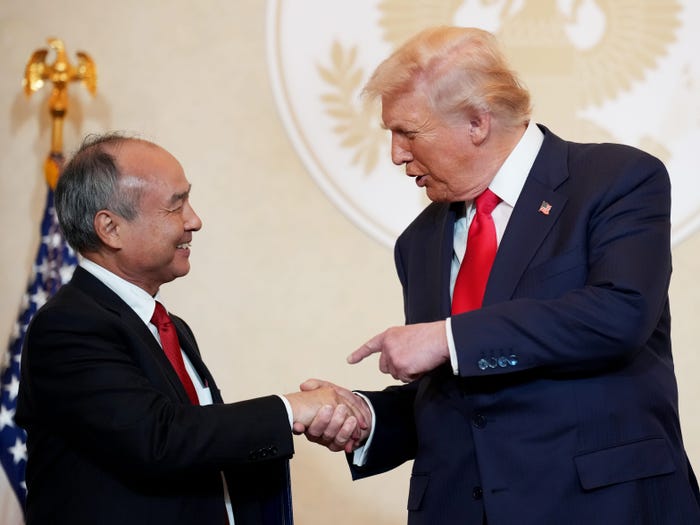
UPDATE: Two major tech deals have just been confirmed, reshaping the landscape of artificial intelligence as we kick off 2025. SoftBank is set to acquire DigitalBridge for approximately $4 billion, while Nvidia announced a surprising licensing agreement with Groq on Christmas Eve, signaling a new trend in tech acquisitions.
The urgency of these developments cannot be overstated. While many in the tech world were winding down for the holidays, both SoftBank and Nvidia’s deal teams were hard at work, unveiling transactions that could redefine their competitive strategies in the AI sector.
SoftBank’s acquisition of DigitalBridge, expected to close in the second half of 2026, marks a significant investment in the infrastructure that supports AI technologies, including data centers and fiber networks. This deal comes on the heels of SoftBank’s recent sale of nearly $6 billion in Nvidia stock, freeing up cash for this strategic move.
Meanwhile, Nvidia’s deal with Groq is a game changer. The company has entered a “non-exclusive licensing agreement,” bringing Groq’s founder and key engineering talent on board while allowing the startup to operate independently. This agreement highlights a new model of tech deal-making, where talent acquisition outstrips traditional buyouts, a trend that could become the norm in 2025 and beyond.
Disney is also making headlines with a groundbreaking partnership with OpenAI. The entertainment giant has secured a three-year licensing agreement and is investing $1 billion in OpenAI. This deal not only gives Disney access to cutting-edge AI tools like Sora, OpenAI’s video generator, but also positions Disney to engage audiences more effectively on platforms like Disney+.
In a cautionary tale, Windsurf, a promising startup, saw its acquisition deal with OpenAI collapse, leading Google to step in. Instead of a full acquisition, Google chose to pay $2.4 billion to hire top talent from Windsurf, leaving the remaining employees to navigate their uncertain future at a different startup.
The U.S. government also made a significant move by acquiring a 9.9% stake in Intel for $8.9 billion, aimed at boosting domestic chip production amid rising competition from foreign manufacturers. This investment illustrates the administration’s commitment to enhancing national security through technology.
In another notable transaction, Meta has agreed to invest $14.3 billion for a 49% stake in Scale AI, bringing its co-founder Alexandr Wang on board as chief AI officer. This strategic hire underscores Meta’s aggressive push into the AI space, aiming to attract top talent and enhance its technological capabilities.
Finally, the Stargate Project, spearheaded by former President Trump, aims to invest $500 billion in a network of data centers across the U.S. This ambitious initiative seeks to bolster the nation’s infrastructure to support the burgeoning AI industry, with construction already underway in Texas, Ohio, and Wisconsin.
As 2025 unfolds, these deals signal a transformative era for artificial intelligence, characterized by unconventional partnerships and strategic talent acquisitions. The implications of these transactions will be closely monitored by industry experts and investors alike.
Stay tuned for more updates as these stories develop.
























