








































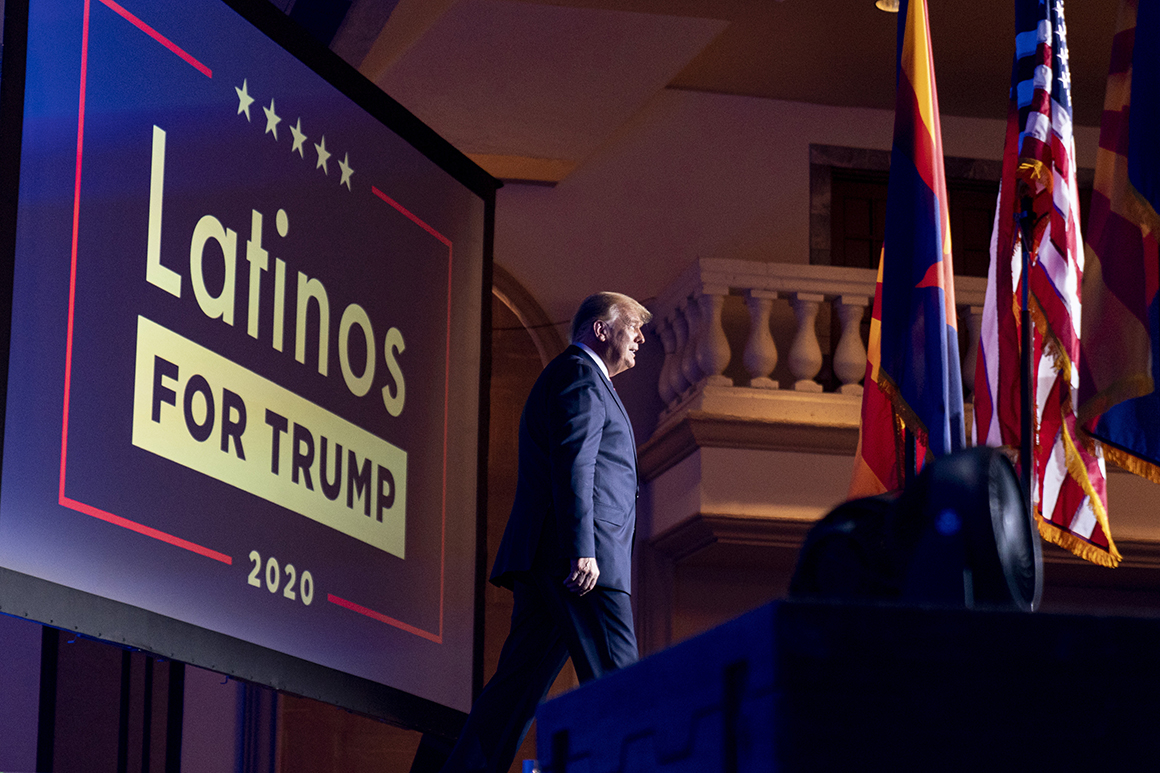
The economic sentiment among Hispanic small business owners is shifting, raising concerns for the Republican Party as the U.S. midterm elections approach. A growing number of Latino voters, who previously supported Donald Trump, are expressing dissatisfaction with the current economic climate, which they attribute to the administration’s policies.
Recent data highlights that the optimism originally felt by many Hispanic entrepreneurs has diminished significantly. According to the National Federation of Independent Business (NFIB), confidence among small business owners in the Hispanic community has dropped from over 60% in early 2020 to just 38% as of August 2022. This decline reflects a broader concern about inflation and rising operational costs that are impacting their businesses.
Hispanic voters played a crucial role in Trump’s 2016 election victory, with many believing that his policies would lead to economic growth and job creation. However, with the current inflation rate hovering around 8.5%, many are reevaluating their support. Reports indicate that the soaring prices of essential goods and services have particularly affected this demographic, leading to a sense of betrayal among those who once viewed Trump as a champion of small business interests.
A recent survey conducted by the U.S. Chamber of Commerce revealed that only 26% of Hispanic business owners now believe that the current administration is effectively managing the economy. This figure represents a stark contrast to the sentiments expressed during Trump’s first term, where many felt optimistic about economic policies aimed at reducing regulations and taxes.
The Republican Party is taking note of these shifts. As midterm elections draw near, party leaders are aware that losing the support of Latino voters could have significant ramifications. Historically, this demographic has shown increasing political engagement, and their discontent could lead to a critical voting bloc siding with Democratic candidates.
Interestingly, many Latino voters cite the need for greater support from the government, particularly in areas such as healthcare and immigration reform. While these issues were not as pronounced during Trump’s earlier campaigns, they have gained traction in recent months. This evolution in priorities indicates a potential pivot in how Hispanic voters assess political candidates.
Local business owners in regions with high Hispanic populations are voicing their frustration. In Los Angeles, for instance, a group of small business owners recently gathered to discuss the challenges they face. They emphasized that while they once supported Trump’s business-friendly approach, the current economic environment has made it increasingly difficult to sustain their operations. One business owner noted, “We want to support policies that work, but right now, we are struggling to keep our doors open.”
As the midterms approach, it remains to be seen how these sentiments will translate into votes. The Republican Party’s ability to address the concerns of Hispanic voters may determine their success in key battleground states. With inflation impacting various sectors, party leaders are urged to adapt their messaging to resonate with this crucial demographic.
The shifting attitudes among Latino voters underscore the complexity of the current political landscape. As economic pressures mount, the Republican Party may need to reassess its strategies to maintain support among Hispanic constituents. The outcome of the midterm elections could hinge on whether these voters feel acknowledged and supported in their economic struggles.
























