








































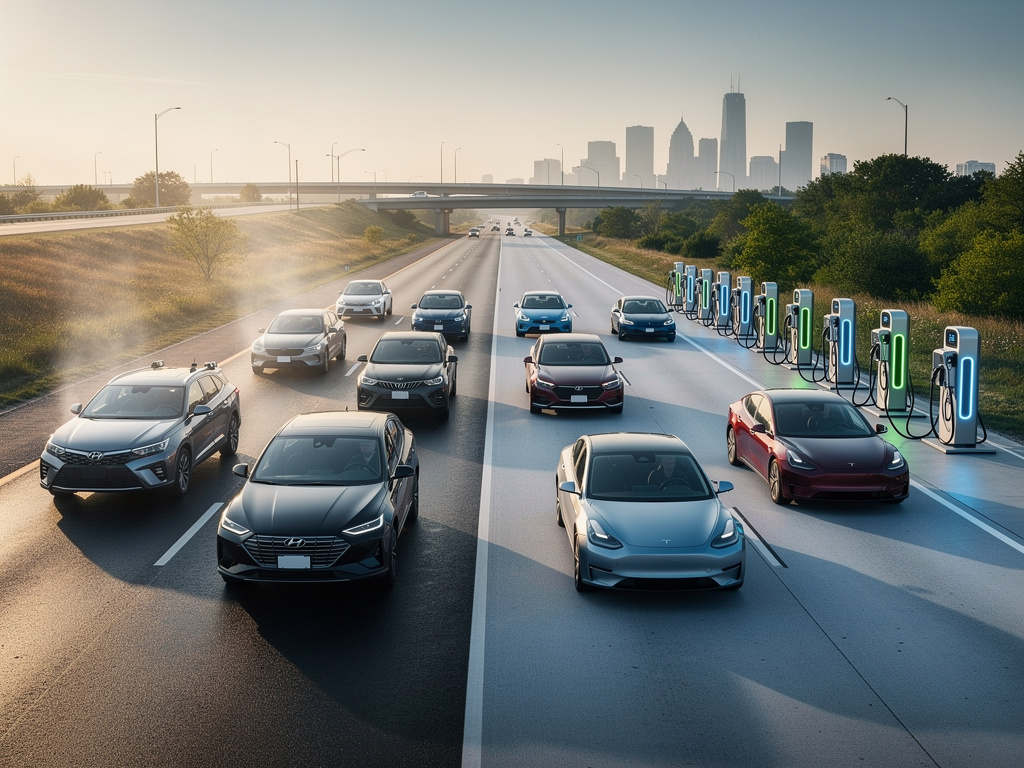
URGENT UPDATE: Hybrid vehicle sales are surging in the United States as consumers increasingly turn to these models as a practical solution for greener driving. Just recently reported data shows that hybrids accounted for an impressive 10.8% of U.S. vehicle sales in Q3 2024, marking a record high as electric vehicle (EV) adoption faces significant challenges.
As the deadline for federal EV subsidies approaches, set to expire at the end of September 2025, automakers are pivoting toward hybrids to meet both consumer demand and stringent fuel economy standards. This shift is reshaping the automotive landscape, with companies like Ford and Honda ramping up their hybrid offerings for 2026, emphasizing efficiency and affordability amidst slowing EV sales momentum.
Hybrid vehicles combine internal combustion engines with electric motors, providing a familiar driving experience without the extensive charging infrastructure required for pure EVs. This dual capability addresses critical barriers, such as charging availability and higher upfront costs associated with full electrification. Analysts suggest that hybrids serve as a gradual introduction for consumers to electric driving, making them increasingly appealing during this transitional period.
Recent posts on social media platforms like X, formerly known as Twitter, reflect a growing consumer sentiment that hybrids are bridging the gap to full electric vehicles. Many users highlight hybrids’ advantages in fuel economy and lower emissions, making them an attractive option for those wary of the limitations of EVs.
The current policy landscape is also driving this transition. With federal EV incentives diminishing, buyers are gravitating toward hybrids as a more accessible entry point into greener mobility. According to BloombergNEF’s latest Electric Vehicle Outlook, the automotive industry is adapting to these shifts, with hybrids filling the void left by expiring subsidies.
Across the Atlantic, European markets are experiencing similar trends. The European Commission has relaxed timelines for phasing out internal combustion engines, creating a parallel to the U.S. situation where EV adoption has plateaued. Ford’s recent announcement of significant adjustments to its EV strategy demonstrates the financial pressures compelling automakers to embrace hybrid technology.
Consumer behavior is a crucial factor in this evolving landscape. Surveys indicate that many Americans see hybrids as a practical compromise, especially in regions where charging stations are scarce. A recent report from the Los Angeles Times predicts that hybrid sales will dominate dealership business, reflecting a major shift in consumer preferences.
However, critics argue that hybrids could perpetuate reliance on fossil fuels. Conversations on X highlight concerns over hybrid vehicles, suggesting that their reliance on both gas and electricity could hinder the push for full EV adoption. Yet, with advancements in hybrid technology—such as improved battery efficiency and regenerative braking—these vehicles are becoming more sophisticated and environmentally friendly.
Looking toward the future, projections indicate that hybrids could account for nearly 17% of U.S. sales by 2026, as innovations continue to enhance their appeal. Enhanced plug-in hybrids promise to deliver EV-like experiences without sacrificing convenience, positioning hybrids as essential players in the broader transition to sustainable transportation.
In the face of rising consumer interest, automakers like General Motors and Hyundai are closely monitoring market dynamics, recognizing the necessity of hybrids in maintaining profitability and market share. The ongoing evolution in the automotive sector underscores the critical role hybrids play in facilitating the shift toward a more sustainable future.
As the infrastructure for EVs continues to develop, hybrids are providing a vital bridge, allowing consumers to transition without the anxiety of range limitations. With significant sales growth and evolving technologies, hybrids are not just a temporary fix; they represent a strategic evolution in America’s journey toward electrification.
























