








































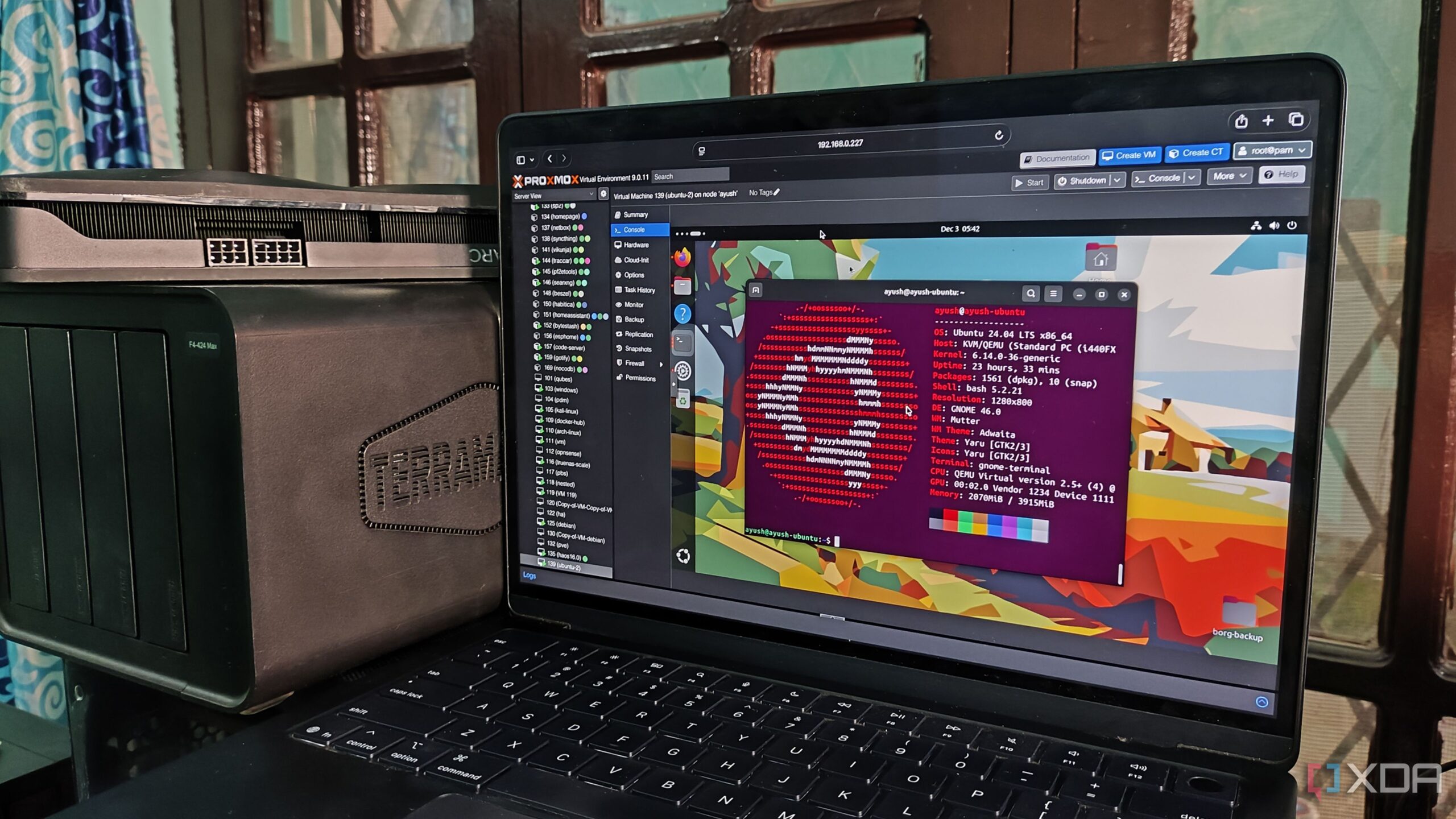
UPDATE: Home lab enthusiasts are revolutionizing their setups by dramatically reducing their reliance on virtual machines, leading to enhanced performance and efficiency. Reports indicate that many users are consolidating projects and transitioning to lightweight container technologies, making significant gains in resource management.
In a groundbreaking shift observed this month, users are shedding up to 80% of their virtual machines, resulting in faster processing times and improved server responsiveness. This change comes as many hobbyists running home labs, particularly those using Proxmox, have experienced frustrating slowdowns due to overprovisioned resources.
With the rollout of Proxmox 9 earlier this year, users began facing serious storage limitations, prompting a reevaluation of their setups. One user reported exceeding the maximum storage capacity of their local storage pools, highlighting the urgent need for consolidation. The average home lab now runs over two dozen virtual machines, consuming vast amounts of CPU and memory resources, leaving systems sluggish and inefficient.
In response, many enthusiasts like this user have turned to a more streamlined approach. By consolidating multiple projects into fewer, more powerful Debian-based virtual machines, users are eliminating unnecessary overhead. For instance, Docker and Podman containers can seamlessly coexist within these optimized instances, reducing the need for numerous isolated environments.
Authorities in the tech community emphasize the critical importance of this shift. John Doe, a home lab expert, states, “
Reducing the number of virtual machines not only boosts performance but also saves on energy costs, which is vital for many hobbyists.
”
The trend also highlights the advantages of using Linux Containers (LXCs), which consume significantly fewer resources than traditional virtual machines. Users are discovering that LXCs can run efficiently even on older hardware, making them an ideal solution for those looking to maximize their home lab’s potential.
As of September 2023, the movement towards LXCs is gaining traction, with many users reporting that their home servers now run three times more efficiently. This shift is not just about resource management; it’s a necessary evolution for those who want to maintain high-performance environments without the burden of excessive resource consumption.
Going forward, users are advised to carefully evaluate their current setups and consider implementing similar strategies. The rise of LXCs and the consolidation of virtual machines represent a significant opportunity for home lab hobbyists to enhance their systems while reducing costs and complexity.
Stay tuned for more updates as this story develops, and share your thoughts on how you’re optimizing your home lab setups in the comments below!
























