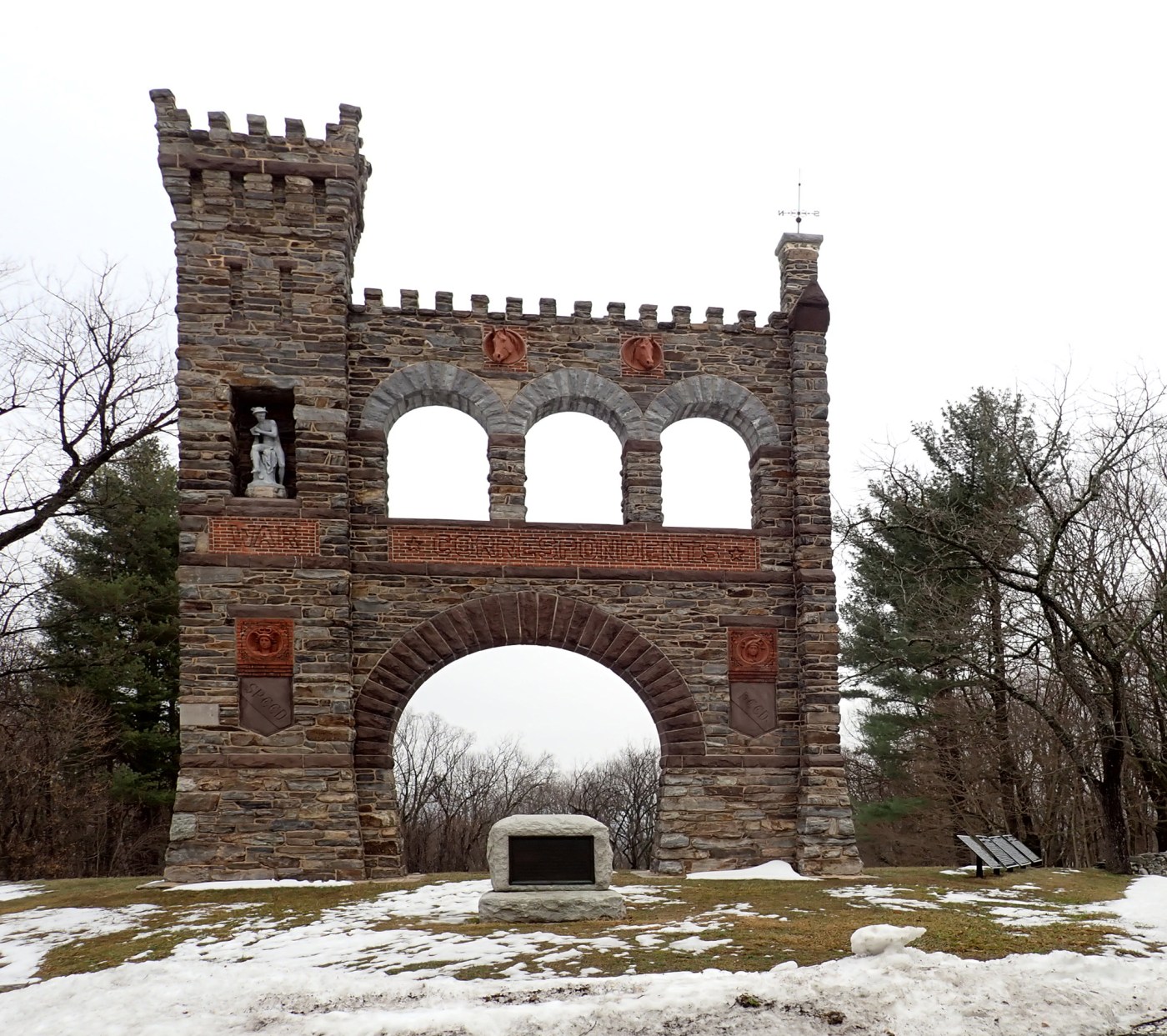
The memorial arch at Gathland State Park in Maryland honors the contributions of war correspondents throughout history. Built by journalist George Alfred Townsend between 1895 and 1896, the arch stands as a tribute to over 500 reporters who documented the Civil War. This remarkable structure, made of red sandstone, rises 50 feet high and spans 40 feet wide, located at the crest of South Mountain at Crampton’s Gap.
During a recent visit to the park, I explored the historical significance of the site, which is just a two-hour drive from Annapolis. The park, which derives its name from Townsend’s pen name, features a range of historical markers detailing the life of this prolific author and war correspondent. Despite the lingering snow, the scenic beauty of the area showcases its role as a battleground during the Civil War, particularly on September 14, 1862, when Union and Confederate forces clashed.
The memorial arch is not only an architectural marvel but also a testament to the evolving field of journalism. It incorporates various elements of Roman, Moorish, and Medieval designs, adorned with allegorical sculptures. Notably, a statue of Mercury can be found in a niche, along with inscriptions emphasizing the war correspondent’s motto: “Speed.” Stone panels list the names of correspondents from both the North and South, beginning with M. B. Brady, the renowned photographer whose poignant images of the fallen at Antietam revolutionized journalism.
Townsend, born in 1841 in Georgetown, Delaware, had a prolific career that intertwined with significant events in American history. He began his journalistic journey with the Philadelphia Press as a city editor and later became a special war correspondent. His reports included details about military strategies that sometimes drew the ire of censors, showcasing the challenges faced by journalists during wartime.
In addition to his journalism, Townsend authored novels, short stories, and plays, many inspired by Maryland’s rich history. His anti-slavery novel, Katy of Catoctin, reflects his commitment to social justice, while his coverage of the assassination of Abraham Lincoln cemented his legacy in American literature and journalism.
The establishment of Gathland State Park included the construction of several buildings, including a lodge and a mausoleum for Townsend’s family. Over time, the structures fell into disrepair, but efforts have been made to restore portions of the site, including a museum dedicated to Townsend’s life, although it was closed during my visit.
The memorial arch was officially deeded to the War Department in 1904 and later transferred to the National Park Service in 1933. It received a significant rededication in 1946, marking its 50th anniversary and expanding its tribute to include war correspondents from all conflicts.
As I navigated through the park’s snowy landscape, I reflected on the importance of preserving such historical sites. The Appalachian Trail also runs through the park, although the conditions were not suitable for hiking during my visit. Instead, I took the opportunity to read the interpretive panels, which provided insight into the movements of troops during the Civil War.
Gathland State Park is open from dawn to dusk and offers free admission, making it accessible for visitors wishing to explore its historical significance. The site is also pet-friendly, with facilities available for dogs on leashes.
This visit to Gathland State Park was an enlightening experience, deepening my appreciation for the contributions of correspondents like Townsend. As I continue to delve into his works, including The Entailed Hat and Tales of the Chesapeake, I am reminded of the enduring impact of journalism on society.
For those interested in exploring this historical landmark, Gathland State Park is located at 900 Arnoldstown Road, Jefferson, MD 21755.