








































UPDATE: Food insecurity in New Hampshire has surged to its highest level in a decade, with a staggering 52,600 households — or 9.1 percent of the state’s population — affected from 2022 to 2024. This alarming trend, reported by the U.S. Department of Agriculture (USDA), signals a critical moment for families struggling to access adequate food.
The latest report reveals a sharp increase in food insecurity, primarily attributed to the erosion of pandemic-era supports like the expanded Child Tax Credit. While New Hampshire’s rate remains below the national average, it reflects a disturbing rise of 2.9 percentage points since the 2020-2022 period and 3.7 points since 2019-2021. This data marks the highest food insecurity rate since 2015-2017.
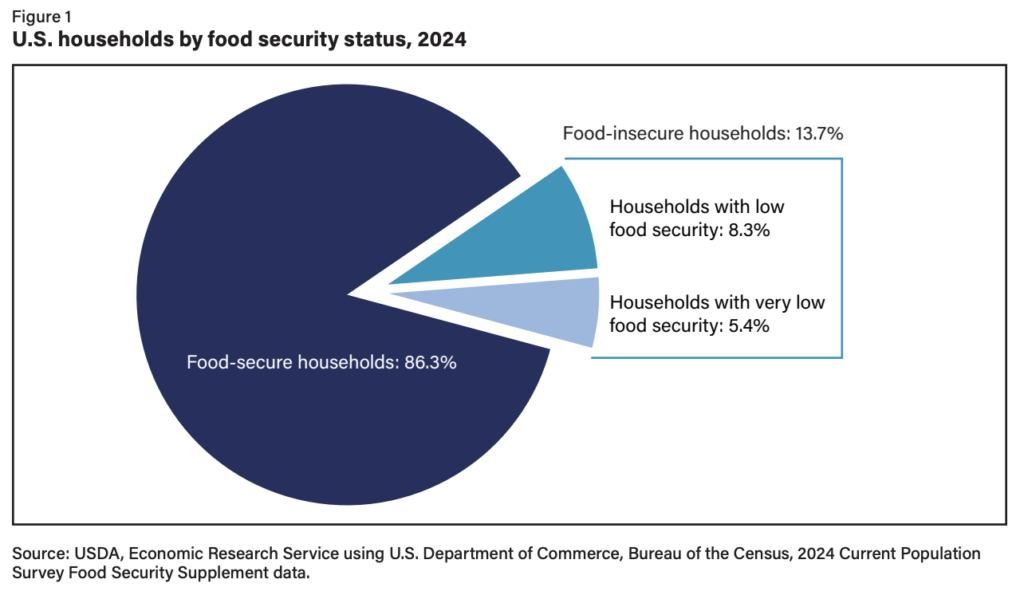
These figures are critical as they highlight the ongoing struggles many Granite State residents face. Increased costs of living, coupled with dwindling federal assistance, have left many households unable to afford basic necessities. In fact, nationwide, approximately 13.7 percent of U.S. households were food insecure in 2024, which represents a significant increase from 10.2 percent in 2021.
The impact is particularly severe among vulnerable populations. Single-parent households, especially those headed by women, are experiencing the highest rates of food insecurity, with over 36.8 percent affected. Additionally, the number of food insecure children has surged, affecting nearly 19.5 percent of children nationwide, a rise of 4.8 million since 2021.
“As federal data sources become more limited, utilizing alternative datasets will be crucial for monitoring trends and ensuring access to food,”
said Jessica Williams, a policy analyst at the New Hampshire Fiscal Policy Institute.
Despite having the second-lowest food insecurity rate in the country, just behind North Dakota, the situation in New Hampshire is dire. Estimates suggest that approximately 149,800 people experienced food insecurity in 2023, translating to around 62,700 households. This alarming figure surpasses the USDA’s estimates for the previous three-year period.
Enrollment in the Supplemental Nutrition Assistance Program (SNAP) also underscores the growing need for food assistance in New Hampshire. In state fiscal year 2025, about 76,000 Granite Staters were enrolled in SNAP, with the highest rates noted in rural areas. However, not all food insecure households meet the criteria for SNAP, leaving many without support.
The increasing levels of food insecurity are not only a statistic; they represent real families facing hunger every day. As the state grapples with these challenges, officials emphasize the importance of utilizing alternative data sources to monitor food access and trends. The need for immediate action is critical to ensure that all Granite State residents have reliable access to food.
As we move forward, attention must be focused on the evolving landscape of food security in New Hampshire. With the USDA phasing out future reports, understanding the ongoing needs of food insecure households will be vital in combating this crisis. Stay tuned for further updates as the situation develops, and consider supporting local initiatives aimed at alleviating food hardship in your community.
























