








































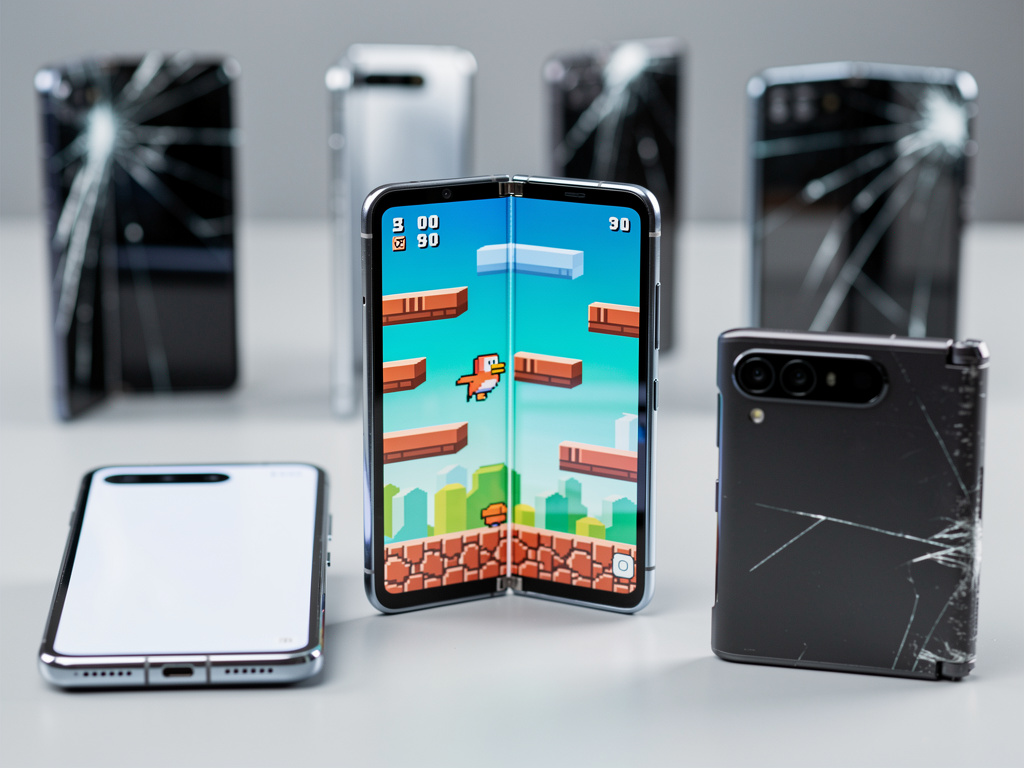
UPDATE: A new viral game, Foldy Bird, is raising urgent concerns over the durability of foldable smartphones. Developed by indie creator Rebane, the game utilizes the unique folding mechanics of devices like the Samsung Galaxy Z series and Google Pixel Fold to turn them into game controllers, prompting players to fold and unfold their phones repeatedly to navigate a pixelated bird through obstacles.
This innovative yet risky gameplay has rapidly gained traction on social media, particularly on X (formerly Twitter), where users are sharing both excitement and warnings about potential damage to their expensive devices. Early reports highlight issues like creaking hinges and unexpected wear, igniting a broader dialogue about whether these high-tech gadgets can withstand such playful abuse.
According to Digital Trends, the game’s mechanics rely on the phone’s built-in sensors to detect folding actions, making the act of gaming physically taxing on the device. Players must continuously open and close their phones to keep the bird airborne, a direct challenge to the engineering that underpins foldable technology.
As the game spreads, concerns mount. Users have reported hearing “crunching” sounds from their devices, signaling possible mechanical fatigue. With foldable phones priced over $1,000, the stakes are high. Experts warn that while manufacturers like Samsung claim their devices can endure 200,000 folds, real-world usage introduces unpredictable stress that could compromise longevity.
This development is not just a playful experiment but a significant moment in mobile gaming and technology. As PhoneArena warns, the constant folding could lead to failures reminiscent of past issues seen with earlier foldable models, such as the initial Galaxy Fold problems in 2019.
Players and critics are flooding social platforms with mixed reactions. One user humorously pointed out that their folding skills might outlast their phone’s warranty. Others echo this sentiment, recognizing the irony that a game designed for fun could lead to real-world consequences for their devices.
In a review from Gamespew, Foldy Bird is called a “brilliant take” on the classic, but caution is advised. Users are encouraged to proceed only if they can accept the risks to their device’s condition. The game serves as a reminder that while innovative, foldables remain vulnerable to wear and tear from unconventional usage.
The rise of Foldy Bird coincides with a broader trend in mobile gaming that integrates hardware features in unique ways. Players are not just interacting with their screens but actively engaging with their devices in a physical sense. As coverage from Dexerto notes, this trend could pave the way for more experiential gaming that pushes the limits of consumer electronics.
Looking ahead, manufacturers are observing this situation closely, although official statements remain scarce. Analysts predict that if Foldy Bird leads to widespread issues, it could result in warranty claims or even class-action lawsuits, prompting companies to refine their durability claims.
As community feedback grows, the game’s popularity highlights a tension between user-driven innovation and the engineered limits of devices. While some users report that their phones have held up well after extensive play, others face peeling screen protectors or minor cracks, raising skepticism about the robustness of foldable technology.
In summary, Foldy Bird is more than just a game; it’s a social experiment that challenges the durability of foldable phones. As excitement builds and users test their devices, the industry must navigate the balance between innovation and caution. For now, gamers are left to ponder whether the thrill of folding for fun is worth the potential cost of repair.
























