








































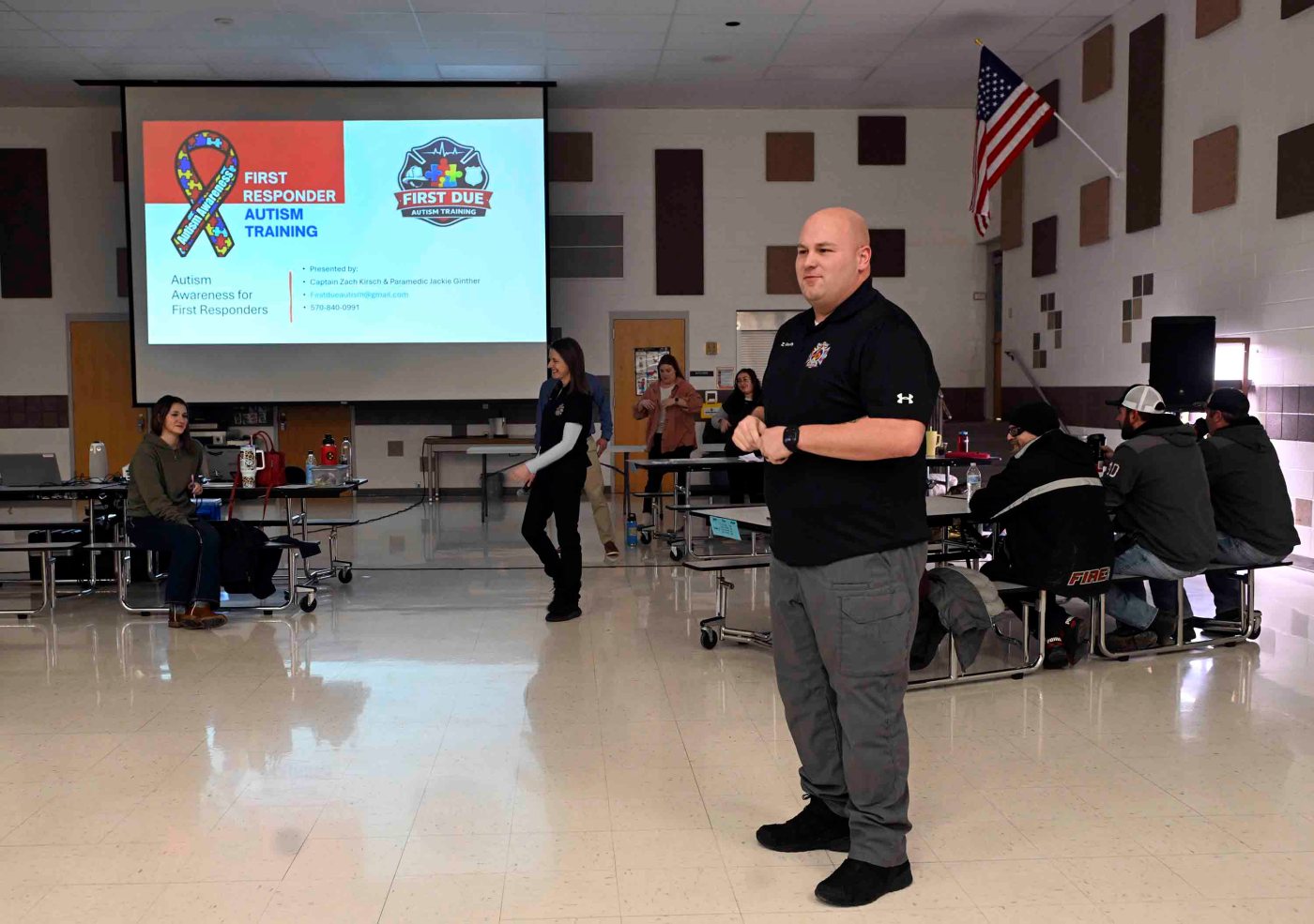
UPDATE: A groundbreaking training session aimed at enhancing first responders’ skills in recognizing and responding to autism-related behaviors took place on January 20, 2026, at Penn-Bernville Elementary School in Berks County. This urgent program, titled “Autism for First Responders,” brought together around 100 firefighters and emergency medical responders from Berks and Schuylkill counties, emphasizing the critical need for tailored approaches in emergency situations involving individuals with autism.
The training, co-hosted by the Bernville Community Fire Company and Tulpehocken School District, focused on life-saving communication techniques that can significantly alter the outcomes of emergency interventions. Paramedic Jackie Ginther, who co-led the session, stressed, “There are ways that, as first responders, we can help mitigate these situations and try to get control before it gets out of hand.”
Participants learned how Autism Spectrum Disorder (ASD) affects communication and behavior, which can often lead to misunderstandings during high-stress incidents. Taylor Charles, assistant to the superintendent for student services, highlighted the importance of effective communication to avoid sensory overload and prevent escalation in emergencies.
Veteran firefighter and father, Zach Kirsch, shared his personal motivation for advocating autism awareness training after his son was diagnosed with Level 2 autism. “I thought, ‘Why am I sitting around when I can advocate for not only him, but others as well, in the event of an emergency?’” Kirsch said, illustrating the profound human impact behind the initiative.
The training provided actionable strategies for first responders. Attendees were advised to use clear, simple communication, limit noise, and employ one-direction-at-a-time instructions, which can help ease the distress of individuals with autism. The presenters emphasized that typical emergency responses, such as sirens and flashing lights, can trigger overwhelming sensory experiences for sensitive individuals.
In real-world applications, Kirsch urged responders to gather crucial information early, such as whether the individual is verbal and what environments make them feel safe. “If responders know a person with autism typically hides under a bed when frightened, they can check there first,” he explained, underscoring the training’s potential to save lives.
Ginther recommended that emergency vehicles be stocked with calming items, such as small toys, to help distract and soothe individuals with autism during crises. The program concluded with responders sharing how they would apply their newfound skills in various scenarios, including missing child cases and medical emergencies involving children with autism.
The implications of this training extend beyond individual incidents; they aim to foster a community where emergency responders are better prepared and more empathetic toward those with autism. As Kirsch aptly noted, “By putting some of the team’s recommendations into practice, some injuries or fatalities might be prevented.”
With the increasing recognition of autism’s complexities, this training marks a vital step towards ensuring that first responders can act effectively and compassionately in emergencies, potentially changing lives for the better. As communities continue to evolve, the call for such initiatives is more urgent than ever, making today’s training a pivotal moment for first responders in Berks County and beyond.
























