








































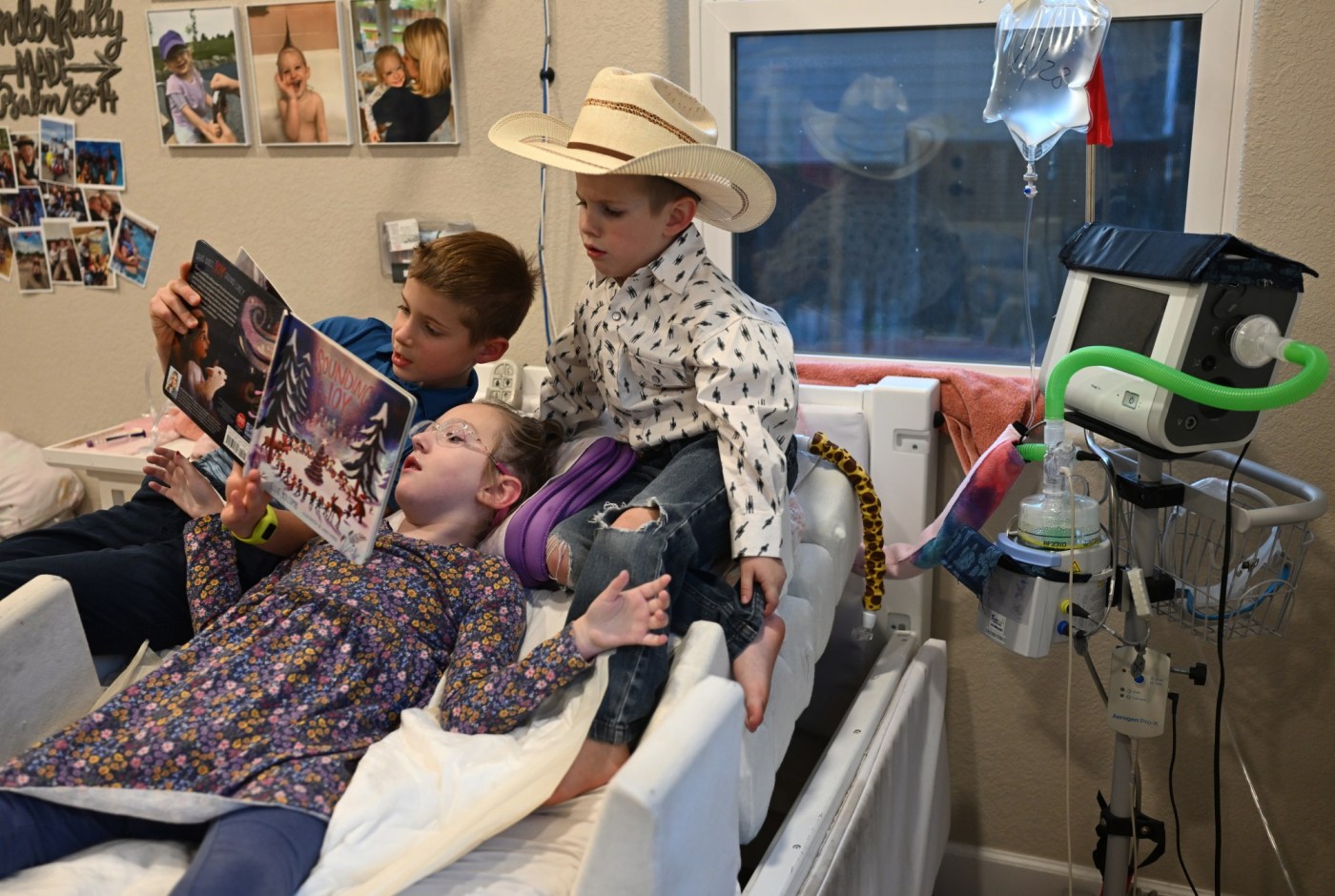
URGENT UPDATE: A family in Fort Collins, Colorado, is racing against time to raise $4 million for a groundbreaking gene therapy that could transform the lives of children unable to move due to a rare genetic disorder. The Green family’s daughter, Everly Green, was diagnosed with a mutation in the FRRS1L gene, which has left her trapped in her body, only able to communicate through eye movement.
The situation escalated when Everly, now 8 years old, began experiencing seizures at age two, leading to a rapid decline in her abilities. After three months, she required a feeding tube. Her mother, Chrissy Green, described the heartbreaking reality: “These kids are in there, they want to play like other kids, they just can’t move.” Everly attends a mainstream school, where she thrives intellectually, but longs for the ability to engage physically with her surroundings.
The Green family, along with other parents of children with the FRRS1L mutation, is collaborating with researchers to develop a treatment that could restore movement. The urgency is palpable; they need to secure funding to initiate clinical trials by September 2026. If successful, this therapy could change the future for Everly and other children globally diagnosed with the condition.
With only a few dozen diagnosed cases worldwide, pharmaceutical companies show minimal interest, pushing families to take matters into their own hands. The Finding Hope for FRRS1L foundation, co-led by Chrissy Green, is tirelessly working to collect funds for the next phase of drug development, which is crucial to demonstrating safety and effectiveness to the U.S. Food and Drug Administration (FDA).
“These kids are in there, they want to play like other kids, they just can’t move,” said Chrissy Green, emphasizing the importance of this treatment.
Gene therapy, which involves replacing faulty genes through engineered viruses, has shown promise in treating other conditions but carries significant risks. Past treatments have resulted in complications, including fatalities. However, the potential benefits for children like Everly are driving intense efforts from families and researchers alike.
The foundation has already raised $400,000 to fund preliminary studies on mice, which have shown promising recovery results. The next critical step involves testing for toxic side effects and securing a manufacturer capable of producing the gene therapy.
Neil Hackett, a researcher working with families on gene therapies, noted, “They need specific expertise, which is not easy to find, and they need massive amounts of money.” The burden of funding primarily falls on families, who often lack the business acumen to navigate the complex landscape of drug development.
Despite the daunting challenges, Chrissy Green remains hopeful. “I think this treatment will not only help children like Everly but also pave the way for future gene therapies,” she stated. The fight for funding and approval is more than just about one child; it’s about opening doors for many others trapped in similar circumstances.
As the Green family continues their quest, they are appealing to the public for support. The urgency to raise $4 million is greater than ever as they aim to bring this life-changing treatment to fruition. The outcome could redefine the possibilities for children with the FRRS1L gene mutation.
For those interested in supporting this vital cause, the Finding Hope for FRRS1L foundation is actively accepting donations to help fund the next phase of research. Every contribution brings the dream of mobility closer to reality for Everly and countless others.
























