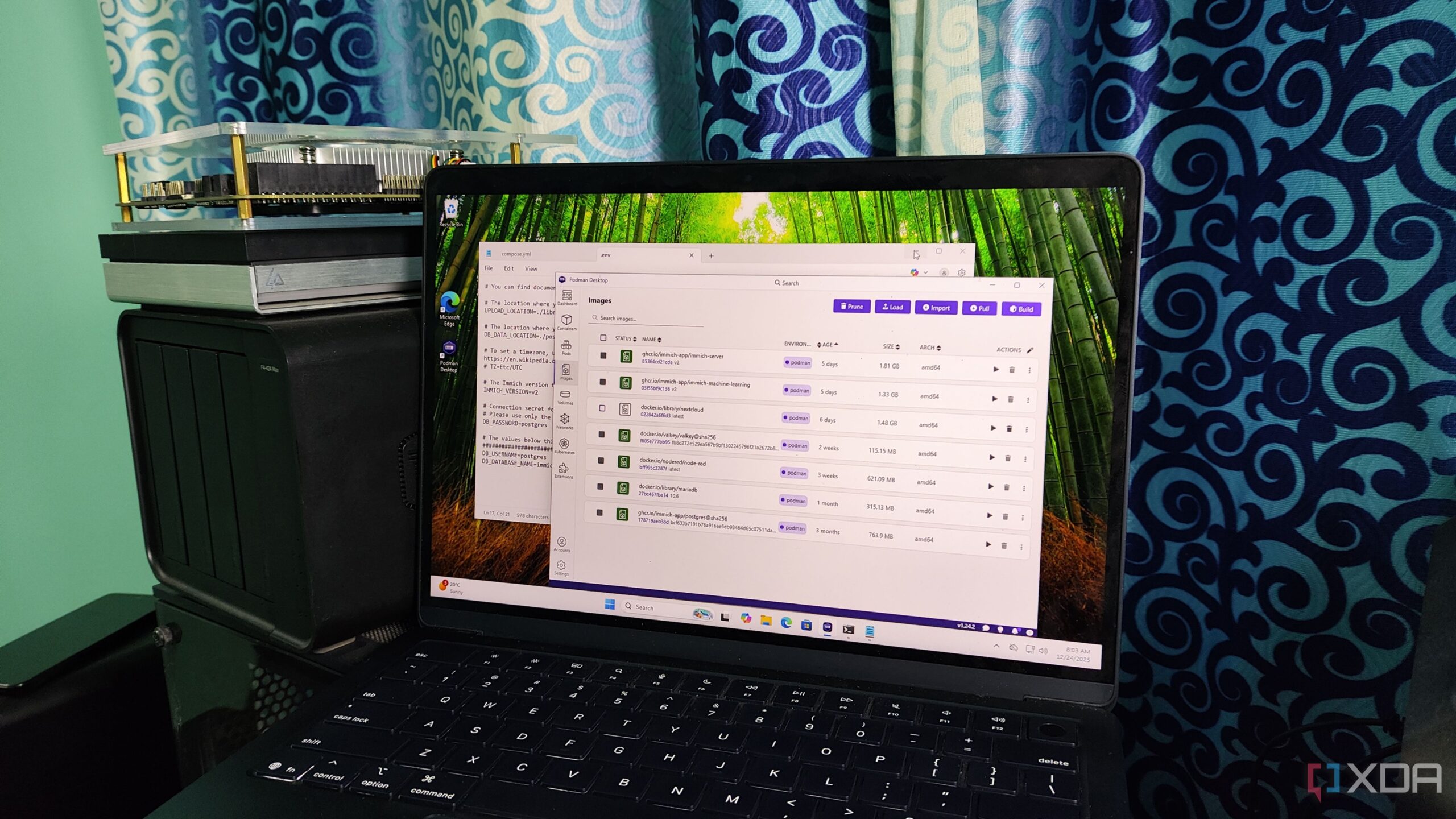
A user has decided to permanently uninstall Docker Desktop, citing a shift towards Podman Desktop for their container management needs. This transition stems from a growing reliance on container technologies that optimize resource usage and provide robust isolation for various development projects.
For several months, the user has explored different container runtimes and utilities in their home lab. At the forefront of these efforts has been Podman, which has facilitated experiments with Kubernetes and served as the backbone for their development activities. Additionally, the user has maintained a self-hosted stack of multiple Linux Containers (LXC) running on Proxmox Virtual Environment (PVE) nodes. Despite appreciating Docker for its simplicity—especially for powering an all-in-one monitoring suite on a Raspberry Pi—the user found Docker Desktop increasingly lacking in features following their container experiments.
The decision to switch was prompted by the discovery of Podman Desktop, which the user tested for a few days. They found that it seamlessly integrates Docker tools, allowing for the use of familiar command-line interface (CLI) commands. Podman Desktop also simplifies the deployment of containers through the creation of YAML-based Compose files, a feature that mirrors Docker’s usability.
Enhanced Functionality with Podman Desktop
Podman Desktop offers a versatile approach to container management, supporting not only Docker tools but also additional container utilities. Extensions like Minikube and Kind facilitate the integration of Kubernetes clusters into the user’s workflow, while the Bootable Containers extension enhances support for boot images. Notably, Podman Desktop even accommodates Apple Containers, making it suitable for users on the latest versions of macOS.
The user expressed a keen interest in exploring Red Hat’s OpenShift environments, which are compatible with Podman Desktop. With extensions like Podman Quadlet, MINC, and Kreate, the application establishes itself as a comprehensive tool for container enthusiasts.
Podman Desktop includes essential features for effective container management. The Images tab allows users to pull images from various repositories, build new ones using Containerfile documents, and launch them into containers. Networking capabilities are also robust, with a dedicated Networks tab for managing bridge configurations and subnets. The Volumes section enables users to monitor persistent data stores and manage storage effectively.
The Container tab provides operational control over utilities, detailed logs, and a terminal interface for command execution within isolated environments. Furthermore, it allows for the migration of existing containers to Kubernetes nodes, facilitating easier deployment of custom images.
Benefits of Pod-Based Deployments
One of the standout features of Podman is its support for pod-based deployments, which the user finds particularly beneficial for web applications. Podman pods allow for the grouping of related services within a shared network namespace, reducing complexity when integrating multiple components, such as web servers, databases, and cache storage. This organization streamlines configurations and simplifies the establishment of custom firewall rules.
Podman Desktop’s Kube integration further enhances its functionality, enabling users to create new pods using Kubernetes YAML configurations. While the user expressed some regret over the absence of built-in support for Docker Swarm, they maintain that Podman Desktop satisfies their container management requirements without the financial burden associated with Docker Desktop’s subscription model.
In conclusion, the user’s switch from Docker Desktop to Podman Desktop exemplifies a growing trend among developers seeking efficient and versatile container management solutions. With its extensive features and support for multiple container runtimes, Podman Desktop emerges as a strong contender in the evolving landscape of container technologies.