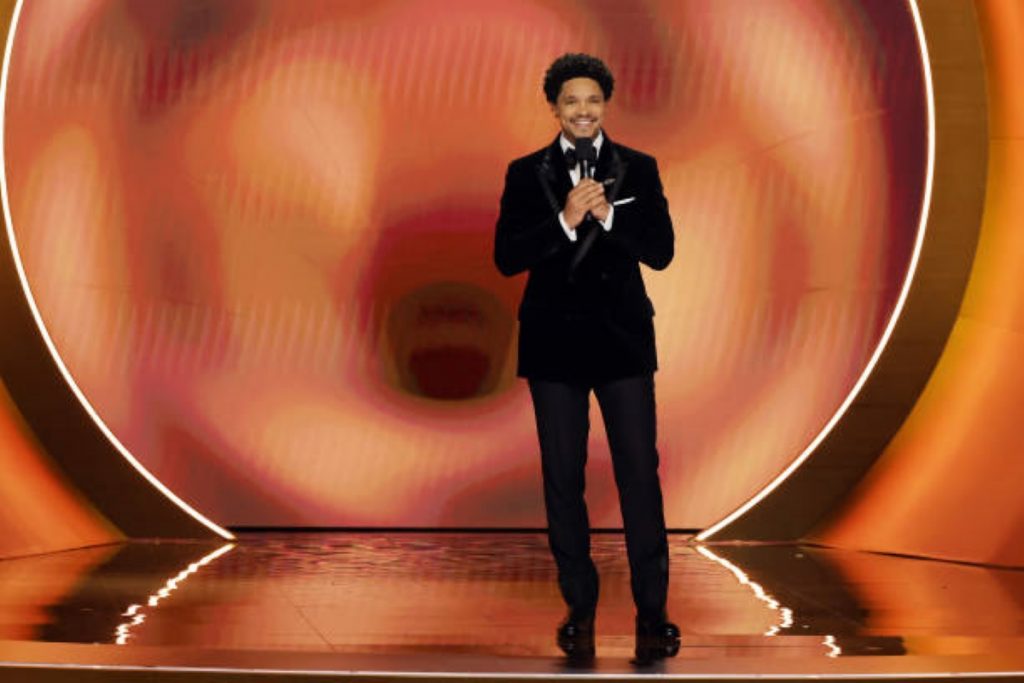
Former U.S. President Donald Trump has publicly threatened to sue comedian Trevor Noah following a joke made during the 2026 Grammy Awards. During his hosting duties, Noah referenced Trump and former President Bill Clinton in relation to Jeffrey Epstein’s infamous island, prompting Trump to label the comments as “false and defamatory” in a post on his social media platform, Truth Social.
In his post, Trump described Noah as a “total loser” and a “poor, pathetic, talentless dope of an M.C.” He also stated, “I will send my lawyers to sue him for plenty$.” As of February 2, 2026, no formal lawsuit has been filed, leaving many to speculate on the seriousness of the threat.
Context of the Controversial Joke
Noah’s joke, which was intended as a light-hearted cultural commentary, did not make direct accusations against either Trump or Clinton. Instead, it referenced publicly known associations with Epstein, a figure tied to numerous scandals involving powerful individuals. The comedian’s style often employs humor as a means of social critique, a tactic that resonated with audiences but evidently struck a nerve with Trump.
The immediate response on social media platform X (formerly Twitter) was swift. Users shared screenshots of Trump’s post, which quickly eclipsed the original joke in terms of visibility. The prevailing sentiment appeared to be one of skepticism and mockery, with many users suggesting that Trump’s reaction was typical of his behavior. Comments such as “Trump can’t take a joke” and “Here we go again” highlighted the familiar pattern of outrage following public criticisms.
Debate Over Defamation and Free Speech
Supporters of Trump argue that Noah’s remarks crossed a legal line, asserting they were defamatory and untrue. Trump has consistently denied ever visiting Epstein’s island and maintains that he has never faced allegations of wrongdoing in connection to the controversial figure. In contrast, critics assert that satire concerning public figures is protected speech. They note that Trump’s name has appeared in various Epstein-related documents, although no formal allegations have arisen from those connections.
One viral post succinctly captured the irony of the situation: “Trump suing over an Epstein joke might be the best Epstein joke yet.” This encapsulates the ongoing debate around the boundaries of free speech, particularly in the realm of satire.
The incident also serves as a reflection of the broader cultural divide, with pro-Trump accounts branding the Grammy Awards as “woke” and “unwatchable,” while supporters of Noah suggested that the backlash validated the essence of his joke. Neutral observers commented on the phenomenon of award shows increasingly becoming political battlegrounds, regardless of the original intent.
Global Perspectives on Trevor Noah
Noah, a South African by birth, brings a unique perspective to his comedy, often blending cultural insights with global relevance. His approach relies on a balance of humor and restraint, which some audiences find disproportionate in response to criticism. In South Africa, social media discourse frames this incident less as a scandal and more as a spectacle, highlighting the theme of power reacting poorly to humor.
At this stage, no legal action has been initiated. Trump’s history of threatening lawsuits without follow-through raises questions about the likelihood of any legal proceedings. Instead, the focus remains on the heightened attention surrounding the incident. The joke reached millions, while the ensuing reactions resonated with tens of millions more, generating a plethora of memes and commentary across social media.
The real currency in today’s internet economy is reaction, and Trump’s latest outburst has once again amplified the very thing he claims to oppose. As the situation evolves, the discussion surrounding freedom of speech and the role of humor in public discourse continues to unfold, with many eager to see how this saga will develop.