








































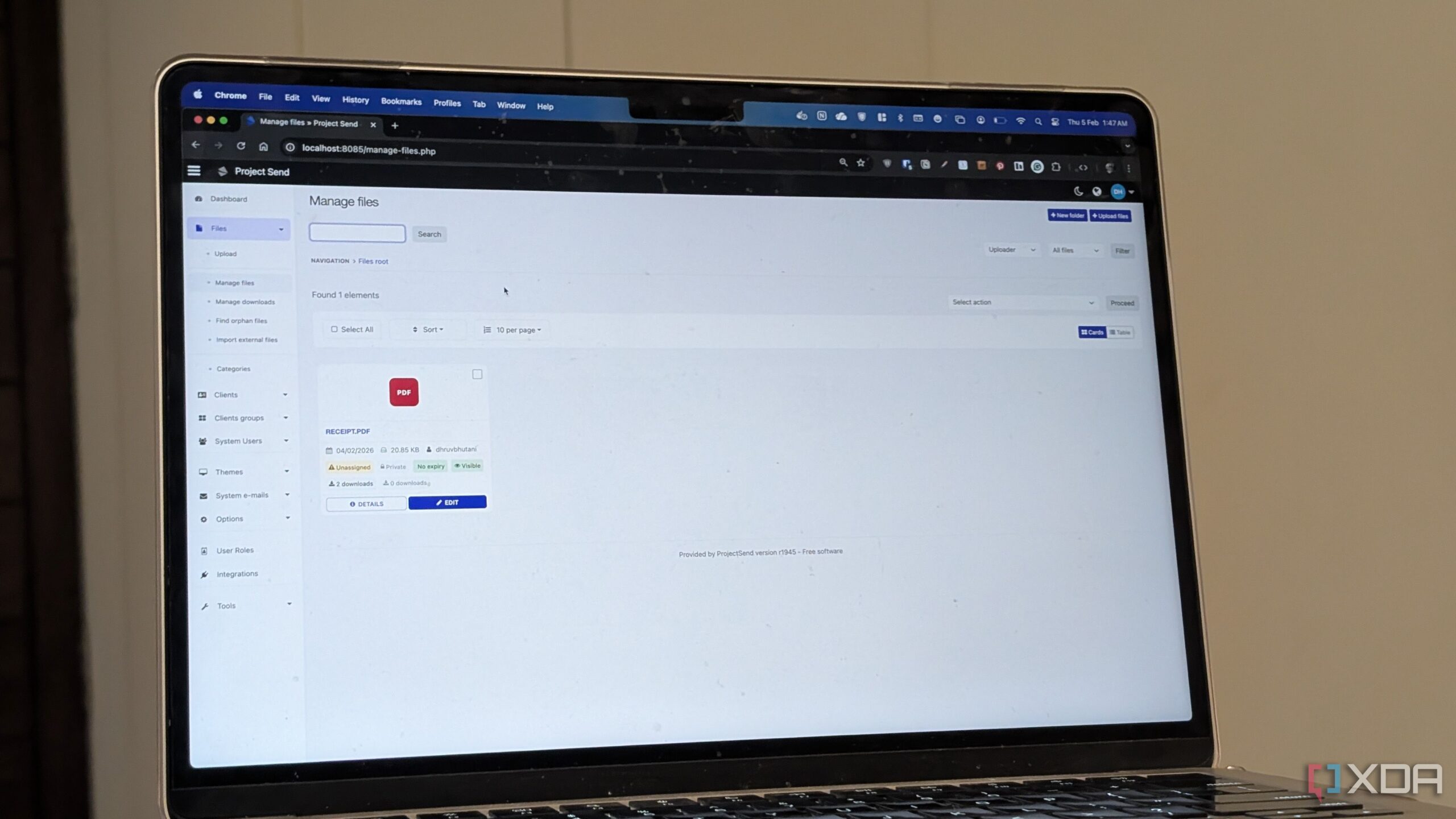
Individuals and businesses often face challenges when sharing large files, relying heavily on popular cloud storage services. A recent weekend project led to the creation of a self-hosted solution that promises increased control and customization. The platform, known as ProjectSend, is designed for users seeking a more reliable and private way to manage file sharing.
Challenges with Existing Solutions
Many users have experienced frustrations with traditional services like Google Drive, WeTransfer, and Dropbox. These platforms impose limitations such as file size caps, short link expiration periods, and concerns over data security. For instance, users frequently encounter restrictions on free tiers, which can hinder productivity. After years of navigating these hurdles, one user decided to take matters into their own hands by setting up ProjectSend, an open-source file sharing platform aimed specifically at enhancing private file management.
Getting Started with ProjectSend
Setting up ProjectSend is simpler than one might expect. The software operates on a personal server or Network Attached Storage (NAS), allowing for complete ownership and flexibility. The setup process is facilitated by a provided Docker file, which requires minimal configuration. Users need to establish a database and adjust a few basic settings. The initial setup wizard guides users through creating an administrator account, making it accessible even for those with limited technical experience.
The interface may seem daunting at first, but users usually find that it becomes intuitive after a brief exploration. The platform not only allows for file uploads but also enables the creation of individual accounts for clients, enhancing collaboration on shared projects. This feature allows users to group clients working together, giving them access to a common pool of files.
Enhanced User Management and Security Features
One of the standout features of ProjectSend is its granular permission system. Users can set files to expire after a specified number of days or downloads, crucial for managing sensitive documents. This level of control ensures that only authorized individuals can access privileged information, a significant improvement over many cloud-based solutions.
Furthermore, the platform includes robust logging capabilities, tracking who downloads files and when. This is particularly beneficial for small businesses that require accountability in file sharing. The security measures extend beyond user management; files are stored on the user’s personal server, and the platform supports server-side file encryption. Users can also enforce SSL encryption, ensuring secure file transfers on their domain.
Additionally, ProjectSend enables complete branding customization. Users can upload logos, modify color schemes, and personalize email templates for client notifications, enhancing professional appearance during communications.
Two-Way File Transfer and Long-Term Benefits
The functionality of ProjectSend extends beyond file sharing. With the appropriate settings, clients can also upload files back, facilitating feedback and revisions. This two-way transfer capability makes it a valuable tool for maintaining an ongoing dialogue with clients.
The transition to ProjectSend has proven to be a significant upgrade for users. It addresses common issues such as file limits, privacy concerns, and link expiration while offering a polished, professional interface. Although managing a self-hosted solution requires more effort than using traditional cloud storage, the benefits of total control and personalization far outweigh the challenges.
For anyone frequently sharing files, particularly with clients, ProjectSend is a recommended solution worth considering. Users with access to a server or NAS can greatly enhance their file-sharing experience while ensuring data security and control.
























