








































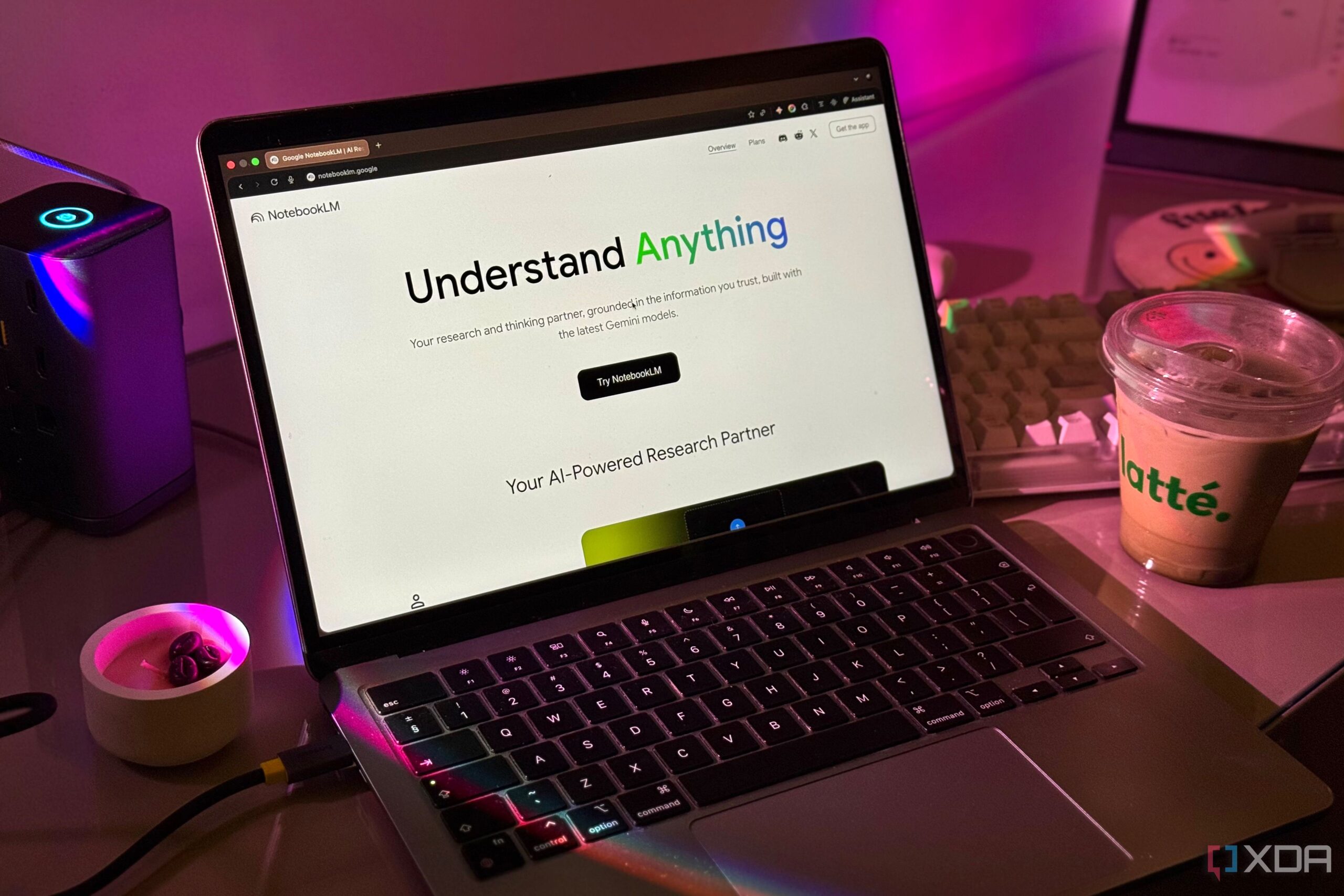
NotebookLM, an AI-powered productivity tool developed by Google, has gained popularity among tech bloggers for its ability to assist with documentation and complex topic analysis. While many users, including myself, find it beneficial for specific tasks, I have identified several areas where its use may hinder productivity rather than enhance it. After months of daily engagement, I have come to understand the limitations of NotebookLM and where it is best utilized.
Understanding the Financial Limitations
At first glance, the idea of integrating NotebookLM with personal finance management sounds appealing. The prospect of uploading bank statements and receiving insights about spending habits seems like a modern financial planner. However, upon trying it, I quickly recognized that NotebookLM does not serve well in this capacity.
One significant concern is data privacy. Financial records contain sensitive information, and sharing unredacted documents with a cloud-based AI raises substantial security issues. Additionally, NotebookLM lacks the precision required for financial calculations. It does not have a built-in calculator, leading to potential inaccuracies in interpreting financial data. This limitation means it often rounds values based on patterns rather than performing actual calculations. For precise budgeting, I have reverted to using dedicated finance applications that offer robust security and reliable mathematical functionality.
Challenges in Note-Taking and Real-Time Research
Despite its name, NotebookLM falls short as a note-taking application. The process of creating or selecting a notebook before jotting down thoughts creates unnecessary friction. Unlike specialized note-taking apps that allow instant access for quick entries, NotebookLM’s interface is cumbersome for spontaneous ideas. The “Add Note” feature serves primarily as a tool for saving AI-generated insights rather than as a workspace for creative thoughts.
In addition, I initially approached NotebookLM as if it were a standard search engine, expecting it to provide real-time information akin to Google searches. It became evident that NotebookLM operates as a “closed-loop” system, only able to process information supplied by the user. This limitation means that for current news or stock updates, I must rely on traditional web browsers that offer the latest information.
Limitations in Personal Knowledge Management
While NotebookLM demonstrates impressive capabilities as a research assistant, it lacks the functionality essential for long-term personal knowledge management (PKM). A true PKM system allows for interconnected ideas to evolve over time. NotebookLM’s structure, which isolates notes within individual notebooks, prevents cross-referencing of concepts. For instance, research on AI ethics cannot easily connect with notes on productivity hacks, limiting the potential for comprehensive understanding.
Moreover, I have concerns regarding data ownership. In self-hosted note-taking applications, my notes exist as local files under my control. In contrast, NotebookLM’s data remains within Google’s ecosystem, risking loss of my work if the service alters or ceases operations. For deep, evolving thought processes, I require a system that offers bidirectional links and a secure location for my information.
NotebookLM has clarified my approach to productivity tools. By recognizing its strengths and weaknesses, I have streamlined my workflow. I now utilize NotebookLM for specific projects while relying on other applications for tasks better suited to their capabilities. This strategic division has enhanced my productivity, emphasizing that success lies not in a single perfect application but in the effective integration of multiple specialized tools.
























