








































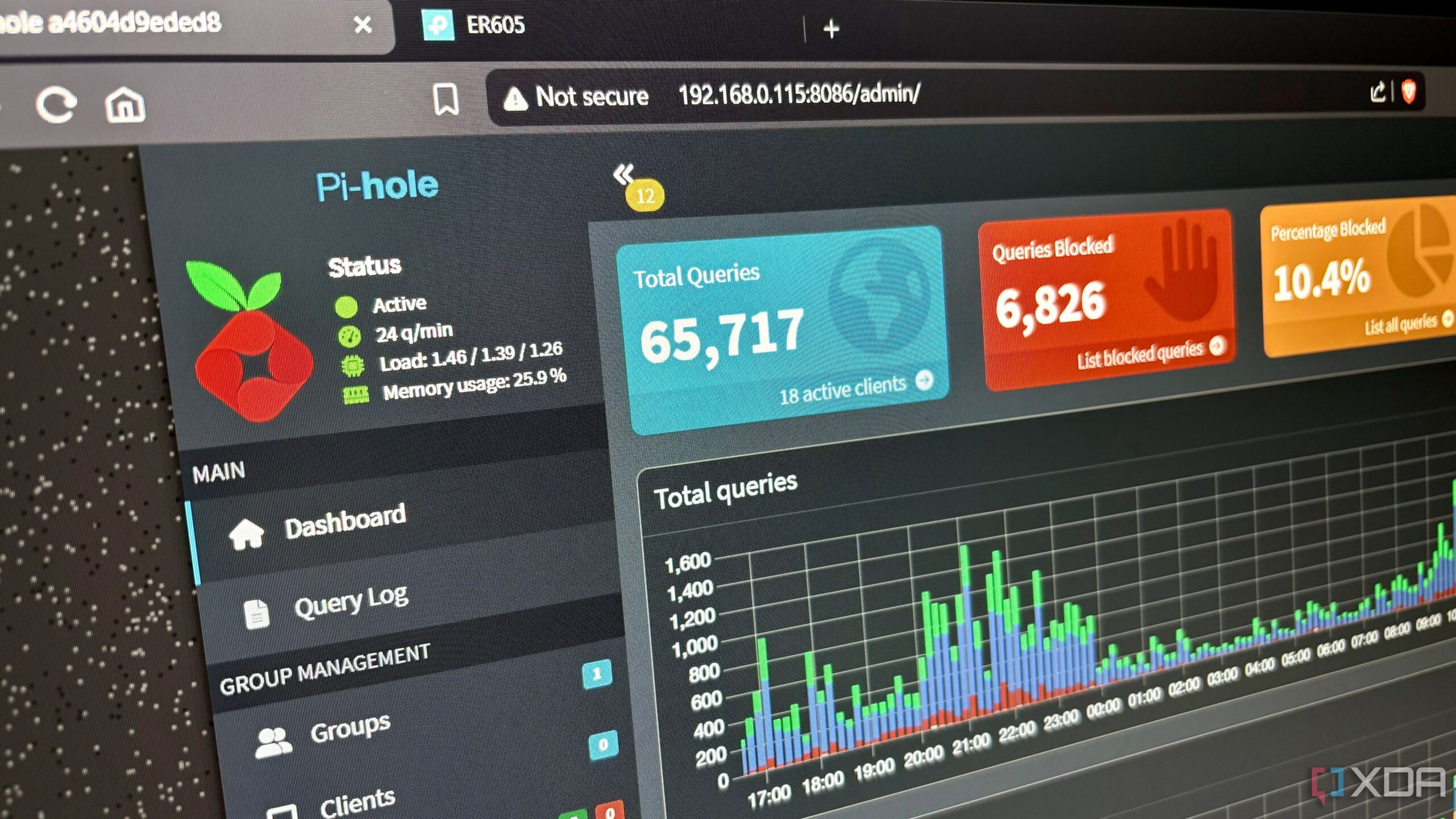
Smart home devices have become increasingly popular due to their convenience. Users can easily plug them in, connect to Wi-Fi, and rely on their functionality without much thought. However, the activities these devices engage in behind the scenes often remain hidden from their owners. This changed for one user when they installed Pi-hole, a network-wide ad blocker, on their Debian server. Initially intended for cleaner browsing, Pi-hole revealed surprising insights into the constant communication between smart devices and the internet.
The user set up Pi-hole with the primary objective of reducing intrusive advertisements across various devices connected to their home network. The installation was simple and effective; Pi-hole’s DNS filtering enabled a smoother browsing and streaming experience. Yet, as they explored the Pi-hole admin panel, they were taken aback by the volume of queries being logged. What they initially thought would be occasional requests turned out to be a continuous stream of activity from devices that appeared to be idle.
Among the smart devices in their home were an Alexa Echo smart speaker, a Wipro smart bulb, and a Fire TV Stick 4K. Additionally, the user’s mother utilized an Airtel Xstream TV box connected to her smart television. The dashboard indicated frequent DNS requests, even when these devices were not actively in use. For instance, the Alexa Echo demonstrated periodic check-ins and numerous requests to cloud services. Meanwhile, the Airtel TV box was found sending background requests to analytics services and ad-related domains, all while the television screen remained off.
Understanding Device Communication Patterns
The user noticed that the queries were not random but occurred in rhythmic bursts, suggesting that the devices were consistently checking in with external servers. The volume of DNS queries from the Airtel Xstream TV box was particularly high, surpassing that of the Alexa Echo, which was unexpected given the latter’s reliance on cloud processing for voice commands. This highlighted the often-overlooked communication behavior of seemingly passive smart devices.
With the knowledge gained from Pi-hole, the user embarked on an experiment to block some of these requests more aggressively by adding the OISD blocklist, which contains over 300,000 entries. This enhanced blocking capability led to some challenges, as certain websites, including Google Analytics and the Mediavine Publisher portal, became inaccessible. The user found that maintaining a balance between blocking unwanted traffic and allowing necessary services was crucial.
This experience underscored that while Pi-hole provides visibility into network activity, it does not grant complete control over the interactions of smart devices with cloud infrastructure. The user recognized that their home network, while still “smart,” was now less opaque. They shifted their approach to managing their home network, focusing on understanding the communication patterns of their devices rather than eliminating all connectivity.
Shifting Perspectives on Smart Home Technology
The realization that smart devices continuously communicate with the internet brought about a new level of awareness regarding privacy and convenience. The user did not remove any devices nor uninstall Pi-hole, but instead, they adopted a more informed stance on how their devices operated. This shift allowed for a better understanding of the balance between functionality and privacy.
As smart home technology continues to evolve, insights like these become increasingly valuable. They reveal the intricacies of device behavior that often go unnoticed. The user’s experience serves as a reminder that while the convenience of smart devices is appealing, being aware of their background activities is essential for maintaining control over personal data and privacy.
In conclusion, the integration of Pi-hole into a home network not only enhanced the browsing experience but also illuminated the hidden activities of smart home devices. This newfound visibility has transformed the user’s approach to managing their smart home, highlighting the importance of understanding technology in an increasingly connected world.
























