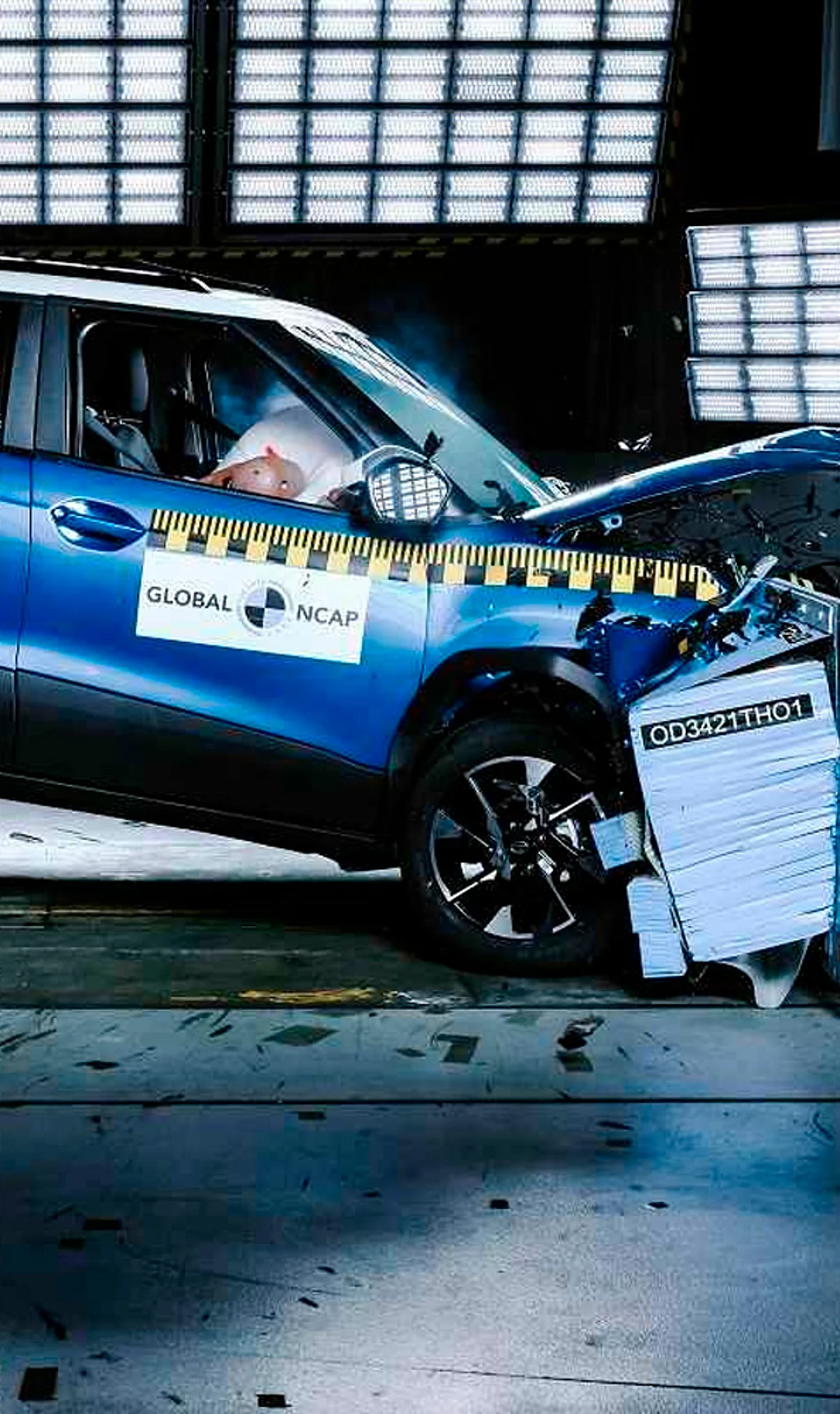
Automobile safety ratings are crucial for consumers who want to understand how well vehicles protect their occupants. Recent evaluations by organizations such as the National Highway Traffic Safety Administration (NHTSA) and the Insurance Institute for Highway Safety (IIHS) reveal significant disparities in safety performance that extend beyond brand reputation, vehicle size, and price.
Understanding Crash Ratings
Crash ratings are derived from a series of rigorous tests designed to assess how well cars withstand collisions. These tests evaluate factors such as the vehicle’s structural integrity, airbag effectiveness, and the potential for injury in various crash scenarios. The findings are typically presented in easy-to-understand formats, like star ratings or letter grades, helping consumers make informed decisions.
For example, the IIHS conducts tests that simulate a range of real-world crash conditions. In 2023, their latest report highlighted that several popular models, despite high price tags, did not perform as expected in critical safety evaluations.
The importance of these ratings cannot be overstated. According to the Euro NCAP, the organization that assesses new vehicles in Europe, a 5-star rating significantly lowers the likelihood of serious injuries in the event of a crash. In fact, vehicles with higher ratings often demonstrate a reduced risk of fatalities, underlining the necessity for consumers to prioritize safety features when selecting a car.
Safety Beyond Size and Price
Consumers may assume that larger, more expensive vehicles offer better protection. However, data from the Australia New Car Assessment Program (ANCAP) indicates that smaller, well-engineered cars can outperform larger models in crash tests. This highlights the critical need for buyers to look beyond mere size and cost when evaluating safety.
In 2023, a compact vehicle received a 5-star safety rating while a larger SUV scored only 3 stars. This discrepancy underscores the importance of consulting crash ratings rather than relying solely on brand perception or vehicle dimensions.
Additionally, factors such as the car’s design and technology play vital roles in occupant safety. Advanced safety systems, including automatic braking and lane-keeping assistance, can significantly reduce the likelihood of accidents. The IIHS has noted that vehicles equipped with these technologies tend to achieve higher safety ratings, further emphasizing the need for buyers to consider these features.
As vehicle safety technology continues to evolve, organizations are adapting their testing protocols. The NHTSA is expected to introduce new evaluation methods in response to advancements in automotive design and safety features by 2024. This shift will provide consumers with even more comprehensive insights into vehicle safety.
In conclusion, understanding crash ratings is essential for anyone in the market for a new vehicle. Consumers are encouraged to research safety ratings from credible organizations like the IIHS, NHTSA, Euro NCAP, and ANCAP. By doing so, they can make informed decisions that prioritize their safety and that of their passengers, regardless of the car’s size or price.