








































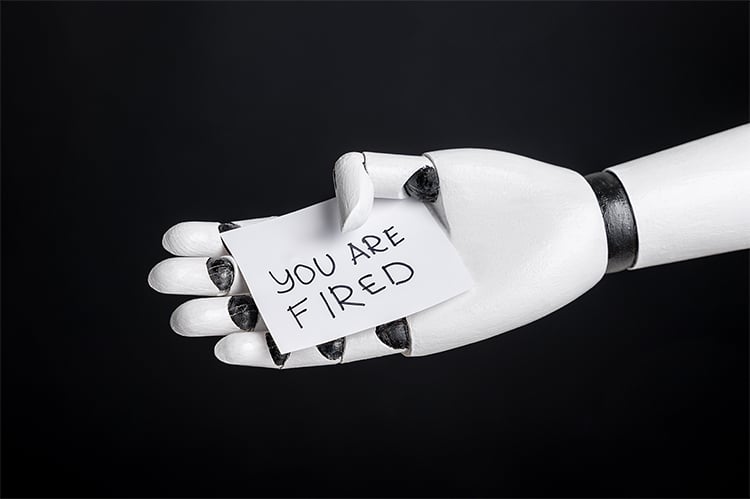
The year 2025 has seen significant job losses across various sectors, with approximately 1.1 million jobs cut, the highest figure since the onset of the COVID-19 pandemic. While the narrative surrounding these layoffs often highlights the role of artificial intelligence, recent data suggests that the actual number of job losses attributed directly to AI is only about 55,000, representing less than 1% of total layoffs.
The consulting firm Challenger, Gray & Christmas reports that the technology sector has been particularly hard hit. Major companies, including Amazon, have announced substantial workforce reductions. In a statement to employees in June, CEO Andy Jassy indicated that advancements in AI would lead to a “need for fewer people doing some of the jobs that are being done today.” Yet, after cutting 14,000 jobs, Jassy later clarified to investors that these layoffs were “not even really AI-driven, not right now at least.”
The impact of AI on employment is complex. While some corporations, like Salesforce, have reported that AI now handles as much as 50% of work processes, this does not necessarily correlate with direct job losses. Instead, AI appears to be affecting hiring practices more significantly. Companies are increasingly hesitant to fill entry-level positions, driven by the belief that AI can fulfill these roles.
An MIT study published in the summer of 2025 revealed that 95% of organizations implementing AI initiatives have not seen a financial return on their investments. This raises questions about the motivations behind layoffs. The reality is that many companies may be using AI as a convenient justification for downsizing, rather than as the primary cause.
The manufacturing sector has also experienced significant job losses, with nearly 60,000 jobs lost since the start of the year. Contrary to the narrative that AI is to blame, these cuts seem to stem from broader economic challenges. The same report from Challenger, Gray & Christmas indicates that over twice as many layoffs were attributed to corporate restructuring, while about four times as many were linked to market and economic conditions. Additionally, nearly six times as many layoffs resulted from cuts made by the Department of Government Efficiency.
These statistics underscore that even when AI is cited as a reason for layoffs, the ultimate decision rests with executives who calculate that reducing human labor in the name of “modernization” may enhance stock prices. As companies navigate a turbulent economic landscape, the trend of layoffs and hiring freezes continues to reflect deeper issues within the labor market rather than the direct effects of technological advancements.
The current job market landscape is a reminder that while AI is reshaping industries, it is not solely responsible for the employment challenges many face today.
























