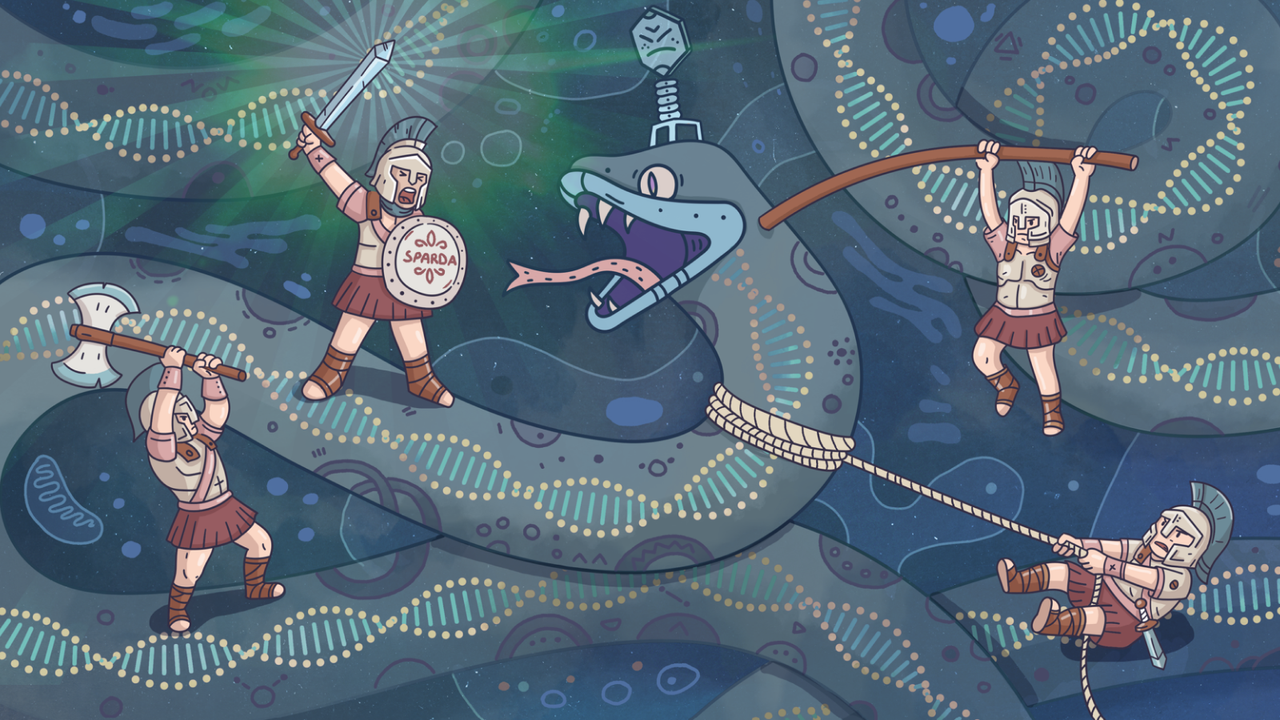
Research into genetic engineering has taken a significant step forward with the discovery of a bacterial defense mechanism known as SPARDA, short for “short prokaryotic Argonaute, DNase associated.” This promising system, detailed in a recent study published in the journal Cell Research, could pave the way for new biotechnology tools that enhance existing gene-editing capabilities, particularly those based on CRISPR.
Historically, CRISPR has revolutionized genetic research, allowing precise editing of DNA. Initially a bacterial immune system, it has been adapted for human applications. The newly explored SPARDA system operates differently, employing a self-destructive defense mechanism that protects bacteria from foreign DNA, including plasmids and bacteriophages. According to Mindaugas Zaremba, a biochemist at Vilnius University, SPARDA effectively degrades the DNA of both invading pathogens and infected host cells, thus halting the spread of infection.
Understanding SPARDA’s Functionality
Zaremba and his research team utilized the advanced AI protein analysis tool AlphaFold to investigate how SPARDA operates at the molecular level. This technology uses machine learning to predict protein structures based on their genetic sequences. The SPARDA system is primarily composed of argonaute proteins, which share a striking resemblance to the tentacles of argonaut octopuses, hence the name.
The research focused on SPARDA systems extracted from two bacterial species: Xanthobacter autotrophicus, a soil-dwelling microbe, and Enhydrobacter aerosaccus, discovered in Michigan’s Wintergreen Lake. The team inserted these SPARDA systems into the well-studied model organism E. coli for further analysis. Their findings revealed that the argonaute proteins contained a crucial “activating region,” which they termed the beta-relay, akin to electrical switches that change states based on external stimuli.
Upon detecting foreign DNA, these beta-relays change shape, allowing the proteins to assemble into long chains. This formation triggers an aggressive response, chopping up any DNA in the vicinity, thereby preventing further infection.
Potential Applications in Biotechnology
The implications of SPARDA extend beyond bacterial defense. Zaremba’s team argues that the system could be engineered for diagnostic purposes. Since SPARDA is a last-resort mechanism for bacterial cells, it employs a highly accurate recognition system to identify foreign DNA. By modifying the beta-relay to activate only in the presence of specific genetic sequences, researchers could create diagnostics that react exclusively to pathogens like the flu virus or SARS-CoV-2.
Existing CRISPR-based diagnostic tools have limitations, as they require specific DNA sequences known as PAM sequences to function effectively. This restriction hinders flexibility in targeting various pathogens. In contrast, SPARDA systems do not rely on PAM sequences, suggesting they could serve as universal adapters, enhancing the accuracy and scope of future genetic diagnostics.
While research into SPARDA is still in its infancy compared to CRISPR, its unique properties and mechanisms hold significant promise for advancing both gene editing and diagnostic technologies. As scientists continue to explore the potential of SPARDA, it may provide invaluable insights into the functions of microorganisms and their applications in addressing critical scientific challenges.