








































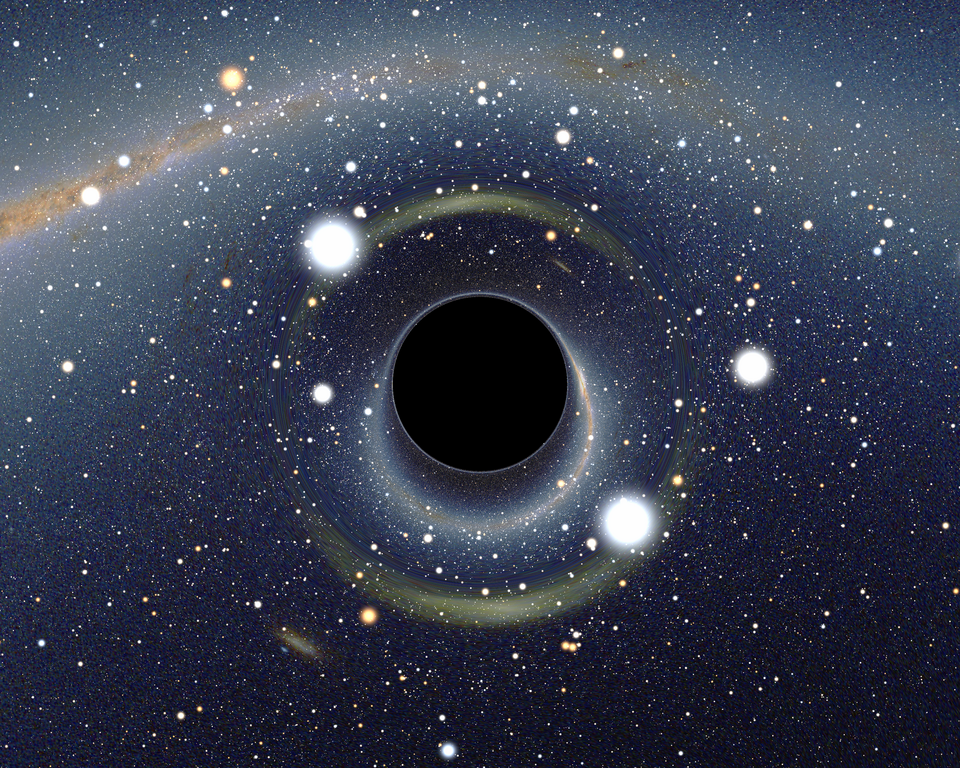
Photographing a black hole has long posed one of astronomy’s most daunting challenges. Traditional methods require an intricate collaboration of radio telescopes positioned worldwide, all working in unison to capture images of these enigmatic cosmic phenomena. Now, a team at KAIST in South Korea has introduced a groundbreaking solution that leverages laser technology to enhance the precision of these observations.
The team’s innovative approach replaces conventional electronic reference signals with optical frequency comb lasers. These lasers emit thousands of highly accurate frequencies, akin to a ruler with meticulously spaced markings of light. Each frequency acts as a reference point, allowing astronomers to synchronize telescopes with a level of accuracy previously unattainable.
Revolutionizing Radio Astronomy
Led by Professor Jungwon Kim from KAIST’s Department of Mechanical Engineering, the research team has developed a system that feeds laser combs directly into the receivers of radio telescopes. This method fundamentally shifts how observations are coordinated, moving away from electronic signals which struggle with stability at higher radio frequencies.
As astronomers aim to capture shorter wavelengths for finer details, the limitations of electronic methods become particularly pronounced. The laser system circumvents these issues by establishing phase alignment through the inherent stability of light, similar to using a rigid ruler for precise measurements.
The team validated their technology using the Korea VLBI Network’s Yonsei Radio Telescope, successfully detecting stable interference patterns between telescopes. Their recent tests at the KVN Pyeongchang Radio Telescope further confirmed the system’s effectiveness across multiple locations simultaneously.
Broader Implications for Science
The ramifications of this research extend beyond capturing images of black holes. The precision timing technology could facilitate intercontinental comparisons of atomic clocks with unprecedented accuracy. It could also enhance measurements in space geodesy, tracking Earth’s subtle movements, and improve navigation for deep space probes.
Professor Kim notes that this advancement represents a significant breakthrough in overcoming the fundamental limits of electronic signal generation by harnessing the precision of optical technology. As astronomers strive to capture sharper images of black holes and other distant celestial objects, this laser-based system offers a promising pathway toward treating distant radio telescopes as a single, colossal instrument.
The findings of this study not only position KAIST at the forefront of astronomical research but also hold the potential to reshape various scientific fields reliant on precise timing and measurement. The implications are profound, marking a new era in our quest to understand the universe’s most mysterious entities.
























