








































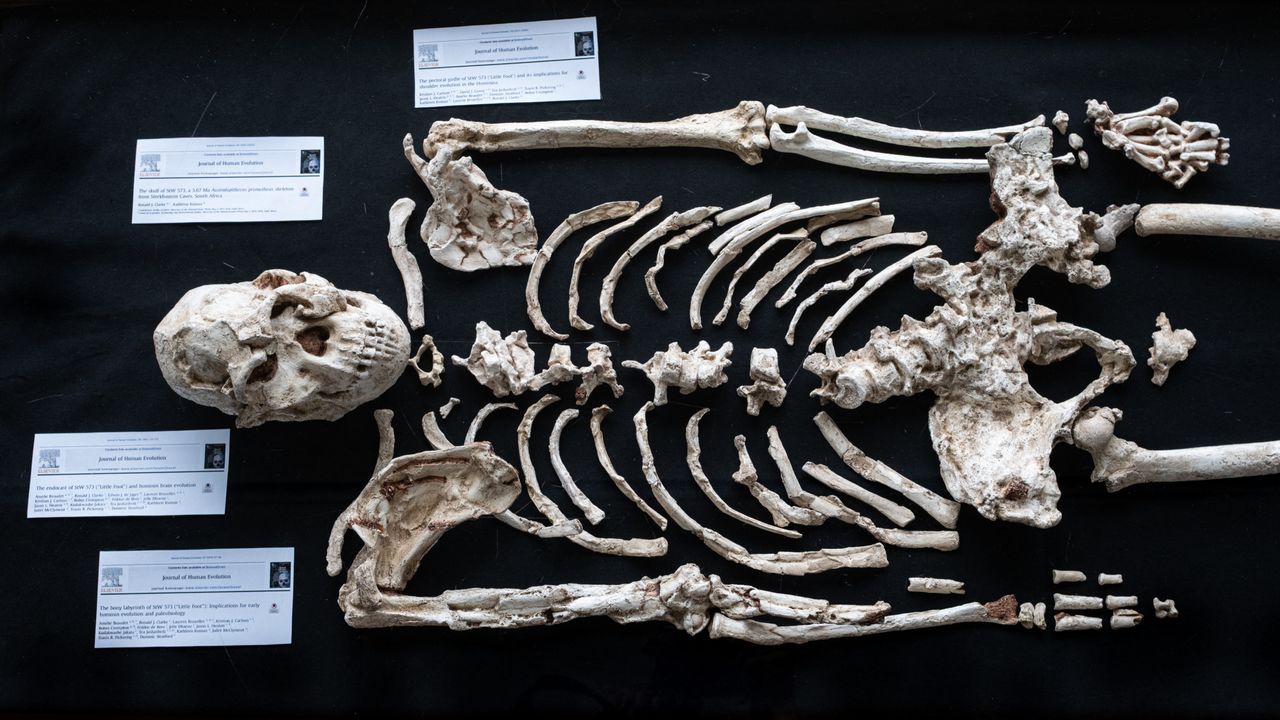
A research team has suggested that the hominin fossil known as Little Foot may represent an unknown ancestor of modern humans. This revelation adds a new dimension to our understanding of human evolution, which has long been a subject of scientific inquiry and debate.
Significance of Little Foot
Discovered in South Africa, Little Foot is a nearly complete skeleton of an Australopithecus, marking it as the most complete specimen of its kind ever found. First revealed to the public in 2017, the fossil has sparked ongoing discussions regarding its classification within the human lineage. The latest claims emerged from a study published in the American Journal of Biological Anthropology in December 2023.
Some researchers have proposed that Little Foot could belong to a previously unidentified species, suggesting it be classified as Australopithecus prometheus. Interestingly, this name was originally assigned to another fossil discovered in 1948, which was later reclassified as A. africanus. This historical context highlights the complexities involved in classifying ancient human relatives.
The research team argues that neither A. prometheus nor A. africanus accurately reflects the characteristics of Little Foot. The debate surrounding its classification reflects broader challenges within the field of anthropology, as scientists seek to define and refine the evolutionary tree of human ancestors.
Future Implications and Reactions
The implications of this research extend beyond academic circles; they could provide crucial insights into human ancestry and evolution. As the study gains attention, many in the scientific community are eager to see how their peers respond to these claims. The classification of human fossils is often contentious, and Little Foot is likely to remain a focal point of discussion.
In addition to the Little Foot findings, the weekend also saw the peak of the Geminid meteor shower, an annual celestial event that captivates skywatchers worldwide. Simultaneously, comet 3I/ATLAS is making its closest approach to Earth this week, adding to the excitement in the scientific community. These astronomical events remind us of the ongoing wonders of our universe.
As researchers continue to investigate the implications of Little Foot and other recent discoveries, the pursuit of knowledge about our origins remains a dynamic and evolving field. The ongoing debates and findings will undoubtedly enrich our understanding of human history and evolution in the years to come.
























