








































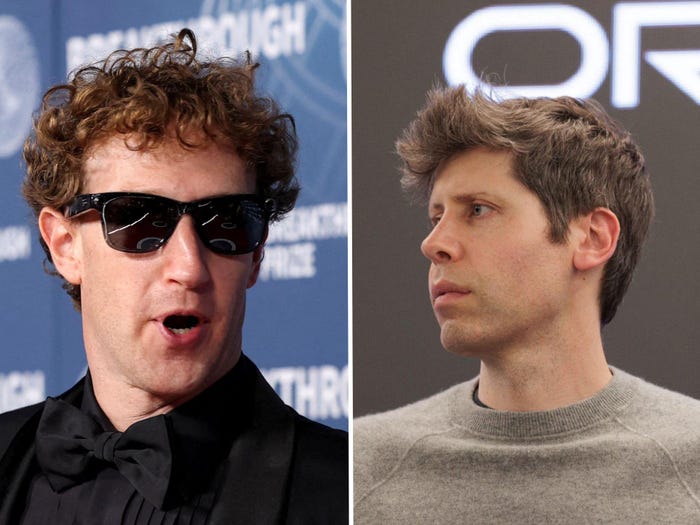
OpenAI experienced a significant talent drain in 2025, losing at least 12 key executives and researchers, primarily to Meta’s newly established Superintelligence Lab. This exodus, which included over half a dozen researchers in the summer alone, highlights ongoing challenges within the organization.
During the summer months, OpenAI saw a wave of departures, particularly to Meta’s billion-dollar initiative aimed at enhancing its AI capabilities. Among the notable figures who left were Jason Wei and Zhiqing Sun, both research scientists who transitioned to Meta’s Superintelligence Lab in July. Their move reflects a broader trend of skilled professionals shifting roles within the competitive AI landscape.
Several other prominent researchers made the same move to Meta. Shengjia Zhao, recognized for his contributions to the co-creation of ChatGPT and GPT-4, became the chief scientist at Meta’s lab. He is now collaborating directly with Mark Zuckerberg and Alexandr Wang, Meta’s Chief AI Officer. Hyung Won Chung, another departing researcher, expressed enthusiasm for the new opportunities at Meta, stating on LinkedIn that he and his colleagues were enjoying “building from a clean slate with a truly talent-dense team.”
A broader context reveals that OpenAI’s leadership has also faced notable changes. The summer departures followed a restructuring in 2024 that saw the loss of several top executives, including Mira Murati, the former chief technology officer, and Bob McGrew, who held the position of chief research officer. Following these changes, only Sam Altman remains from the original founding team of 11 members.
In addition to the researchers, OpenAI underwent other significant departures. Julia Villagra, who was appointed as chief people officer in March, resigned in August. Liam Fedus, the vice president of research and post-training, left in March to co-found an AI startup named Periodic Labs, which aims to develop an AI scientist. Another notable exit included Tom Cunningham, who was a data scientist at OpenAI until November, when he joined a non-profit research institute focused on evaluating AI models.
The departure of Hannah Wong, OpenAI’s chief communications officer, just weeks before the end of the year, added to the ongoing changes. Wong announced her transition to “the next chapter” in her career, while the company seeks a new CCO to take her place, with Lindsey Held Bolton serving as interim lead.
OpenAI’s recent turnover underscores the challenges the organization faces in maintaining its leadership and talent amidst a rapidly evolving industry. The high-profile exits raise questions about the company’s future direction and the impact on its ongoing projects. As the AI landscape continues to grow, the competition for top talent remains fierce, making strategic retention and recruitment crucial for companies like OpenAI.
























