








































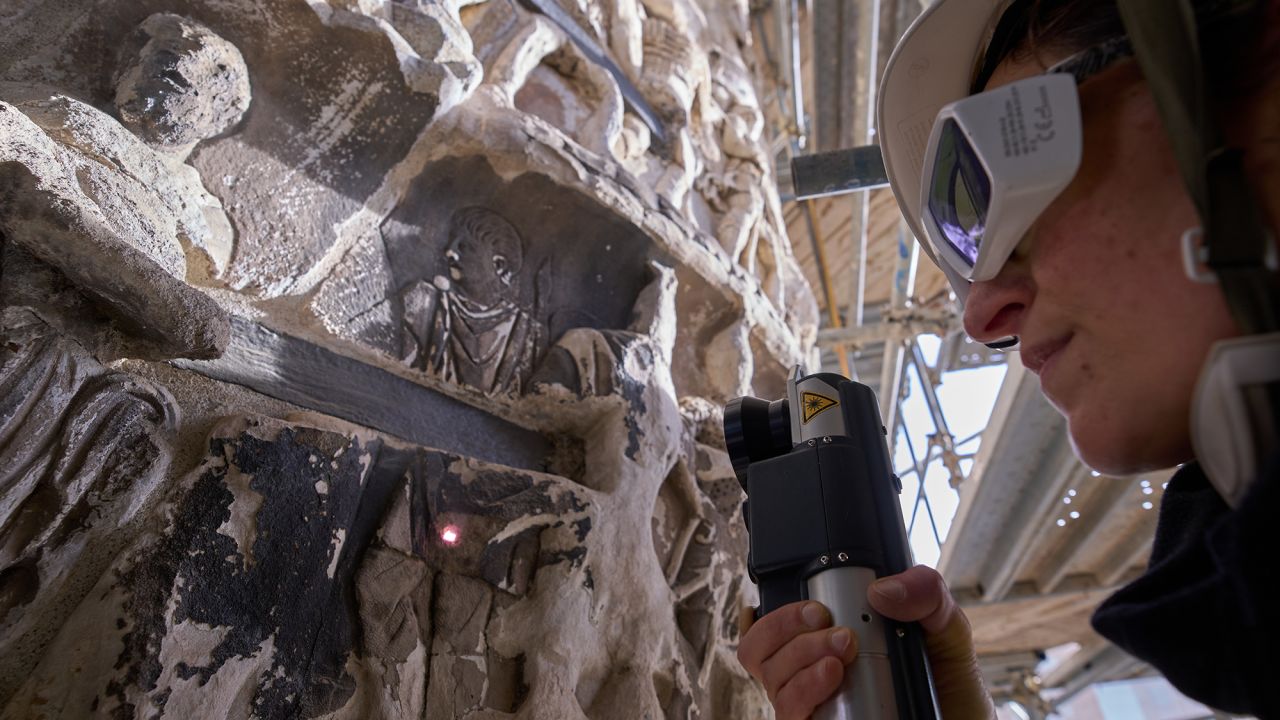
The iconic Column of Marcus Aurelius in Rome is undergoing a significant restoration using advanced technology. Built between 180 CE and 193 CE, this 100-foot monument showcases intricate carvings that depict the military campaigns of the Roman emperor. A dedicated team of 18 specialists has been employing high-tech lasers to meticulously clean and preserve this ancient structure.
Restoration Techniques and Timeline
The restoration project aims to complete its work by early 2026, ensuring that the column remains a vital part of Rome’s historical landscape. The use of lasers marks a departure from traditional cleaning methods that can be harmful to delicate surfaces. Instead, these tools allow for precise treatment, effectively removing grime and pollutants that have accumulated over centuries.
During a recent visit to the site, CNN correspondent Ben Wedeman witnessed the restoration efforts firsthand. The specialists are not only focused on cleaning the column but are also documenting their techniques to share knowledge with future generations. This restoration serves not only to preserve the monument but also to educate the public on the importance of cultural heritage.
Significance of the Column
The Column of Marcus Aurelius is more than just a remarkable piece of architecture; it is a historical narrative carved in stone. The detailed scenes illustrate the emperor’s victories and serve as a reminder of Rome’s military prowess during its peak. By investing in its restoration, Rome demonstrates a commitment to maintaining its rich history for both locals and tourists.
This project highlights the intersection of technology and heritage conservation. The innovative approach taken by the restoration team reflects a growing trend in cultural preservation, where modern techniques are harnessed to protect ancient artifacts. As the work progresses, the column will continue to stand as a testament to Rome’s enduring legacy.
The restoration of the Column of Marcus Aurelius is not just an effort to clean a monument; it represents a broader commitment to preserving history through advanced technology. As work continues, the anticipation builds for the completion of this project, which promises to enhance the beauty and significance of one of Rome’s most cherished landmarks.
























