








































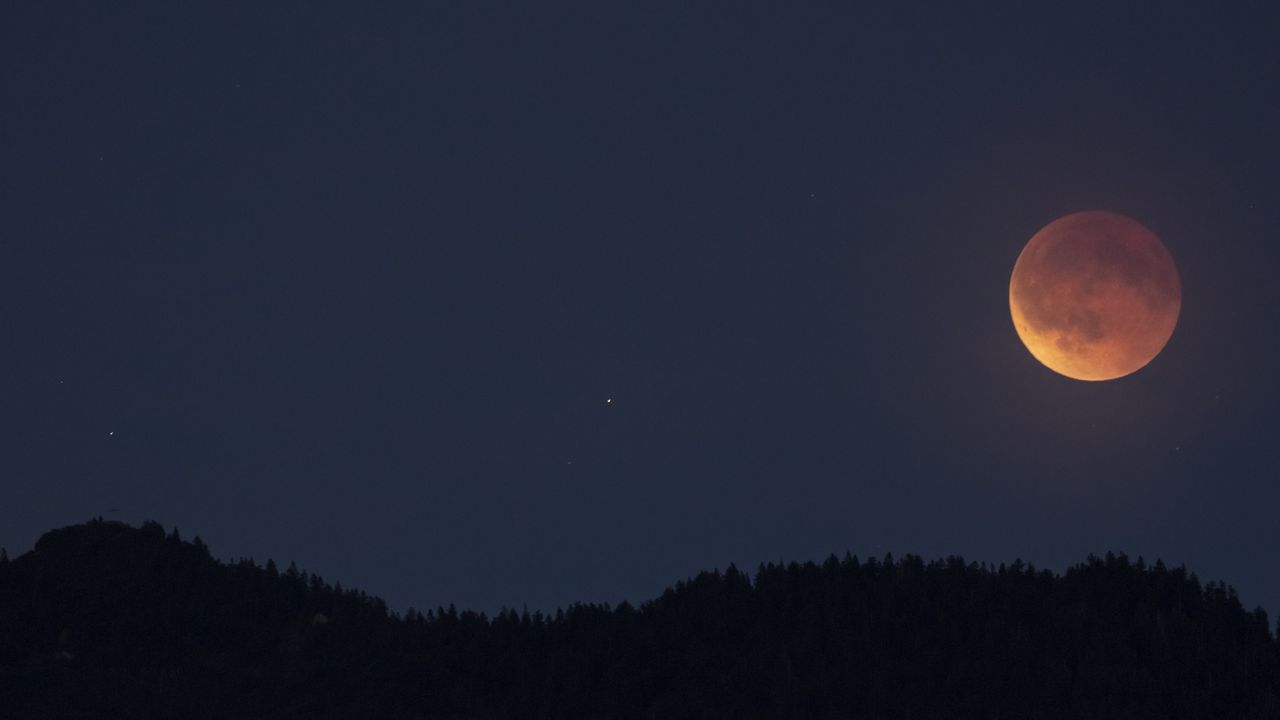
A total lunar eclipse will captivate skywatchers on March 3, 2026, with the best views expected from Australia, the Pacific, and the western half of North America. During this event, the moon will pass into Earth’s shadow, creating a striking red hue often referred to as a “blood moon.” The eclipse will be a global spectacle, with the most optimal viewing occurring around midnight in the Pacific region, while it will take place late on March 3 in Australia and early on March 3 in North America.
Experiencing a total lunar eclipse does not require perfectly dark skies, but clear conditions will enhance visibility. Initially, the full moon will brighten the night sky, obscuring all but the brightest stars. As totality approaches, the sky will darken, revealing not only stars but also the Milky Way and faint star clusters, reminiscent of a new moon.
While weather conditions can be unpredictable, utilizing historical climate data can improve your chances of witnessing the eclipse. Eclipsophile.com, which specializes in tracking global cloud cover, has provided insights into the best locations for viewing this celestial event, which will not occur again until New Year’s Eve 2028-2029. Here are ten recommended spots for optimal viewing.
Top Locations for the Total Lunar Eclipse
1. **Grand Canyon National Park, Arizona, U.S.**
Time of totality: **04:04-05:02 MST** on March 3, 2026.
Chance of clouds: **63%** (historical average).
Recognized as an International Dark Sky Park since 2015, Grand Canyon offers ideal stargazing conditions, especially from Mather Point and other viewpoints along the south rim.
2. **Horsetooth Mountain, Colorado, U.S.**
Time of totality: **04:04-05:02 MST** on March 3, 2026.
Chance of clouds: **60%** (historical average).
The Northern Colorado Astronomical Society is organizing a public stargazing event at this location from **03:30-05:30 MST**, making it a great communal experience.
3. **Arkaroola Wilderness Sanctuary, South Australia**
Time of totality: **21:34-22:32 ACDT** on March 3, 2026.
Chance of clouds: **24%** (historical average).
This remote sanctuary in the Flinders Ranges is dedicated to preserving wildlife and minimizing light pollution, offering lodges and astronomy experiences.
4. **Warrumbungle Dark Sky Park, Australia**
Time of totality: **22:04-23:02 AEDT** on March 3, 2026.
Chance of clouds: **45%** (historical average).
Located in New South Wales, Warrumbungle is Australia’s first Dark Sky Park, featuring the renowned Siding Spring Observatory, making it a prime location for eclipse viewing.
5. **Saguaro National Park, Arizona, U.S.**
Time of totality: **04:04-05:02 MST** on March 3, 2026.
This park, part of the Tucson Astro Trail, provides unique stargazing opportunities. It is open 24 hours, allowing for flexible viewing times.
6. **Wairarapa Dark Sky Reserve, New Zealand**
Time of totality: **00:04-01:02 NZDT** on March 4, 2026.
Chance of clouds: **64%** (historical average).
This reserve on the North Island is known for its strict outdoor lighting regulations, enhancing its suitability for night sky viewing.
7. **Anza-Borrego Desert State Park, California, U.S.**
Time of totality: **03:04-04:02 PST** on March 3, 2026.
Chance of clouds: **40%** (historical average).
As California’s largest state park, it has been designated a dark sky park, making it an excellent choice for eclipse enthusiasts.
8. **Big Island, Hawaii, U.S.**
Time of totality: **01:04-02:02 HST** on March 3, 2026.
Chance of clouds: **37%** (historical average).
The eclipse will be visible across the island, with Maunakea being a particularly dark site for stargazing.
9. **Joshua Tree National Park, California, U.S.**
Time of totality: **03:04-04:02 PST** on March 3, 2026.
Chance of clouds: **43%** (historical average).
Known for its exceptional stargazing conditions, it is advisable to plan ahead for camping reservations due to the park’s popularity.
10. **Death Valley National Park, Nevada, U.S.**
Time of totality: **03:04-04:02 PST** on March 3, 2026.
Chance of clouds: **47%** (historical average).
With its dark skies and no closing time, Death Valley is an ideal location for viewing the eclipse, particularly from Zabriskie Point or the Mesquite Flat Sand Dunes.
This total lunar eclipse presents a remarkable opportunity for both seasoned astronomers and casual observers alike. As the date approaches, interested viewers should keep an eye on local weather forecasts and prepare for an unforgettable night under the stars.
























