








































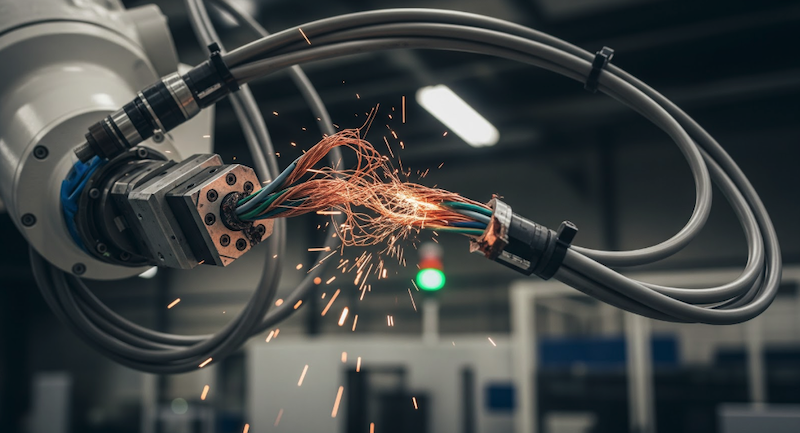
Cables are essential components in robotic systems, serving as the lifelines that power motors and ensure smooth operation. Nevertheless, as robots perform dynamic movements—such as robotic arms on assembly lines, autonomous guided vehicles (AGVs) navigating warehouses, or humanoid joints executing complex tasks—cables often endure significant wear and tear. This can lead to catastrophic failures that disrupt operations, resulting in loss of time and money. Understanding the reasons behind these cable failures and implementing effective solutions can mitigate these risks.
Understanding Cable Failures in Robotics
Cable failures in robotic applications primarily stem from dynamic flexing, a condition not experienced by cables installed in stationary electrical setups. Each cycle of movement exerts stress on both the conductors and insulation. Over time, even the most durable cables can fail if they are not specifically engineered for high-flex environments.
To prevent these failures, it is crucial to select cables designed for dynamic use. Standard cables often fall short in high-flex applications, leading to premature breakdowns. Cables featuring fine-stranded conductors, typically classified at five or six strands or higher, offer enhanced pliability, allowing them to withstand repeated bending. Additionally, the choice of insulation material is vital; options like polyurethane (PUR) and thermal plastics elastomers (TPE) provide superior flexibility and durability compared to conventional PVC. These materials resist abrasion, maintain structural integrity across varying temperatures, and can endure continuous movement without cracking.
Collaboration with a reputable cable assembly manufacturer is essential. Such manufacturers understand the unique requirements of robotic applications and can assist businesses in selecting or designing cables that meet specific movement profiles and environmental conditions.
Installation and Maintenance Best Practices
Even the highest quality cables will fail prematurely if not installed correctly. Proper cable routing and installation methods significantly influence cable longevity. Reducing stress and strain during movement is critical. Effective guides can provide a consistent bend radius, minimizing issues like tangling, excessive twisting, or contact with sharp edges. Adhering to the manufacturer’s minimum bend radius specifications is necessary; tight bends can damage internal structures and lead to early failures.
Furthermore, cables should be secured without overly tight clamps or zip ties, which can create stress points. It is important to treat cables as integral parts of the robot, allowing them sufficient space and flexibility to function optimally.
In addition to selecting the right materials and installation techniques, manufacturers must prioritize the internal construction of cables. Quality manufacturers implement robust strain relief measures at connection points, which are common failure sites. Rigid connectors can introduce weak points, necessitating the use of strain relief boots, molded connections, or specially designed backshells to mitigate this risk.
Regular maintenance and monitoring are equally crucial. Conducting routine inspections, especially in high-cycle environments, can help identify potential issues before they escalate into significant problems. Many facilities only discover cable failures after they occur, leading to costly unplanned downtime. Proactive maintenance allows for timely replacement of cables during scheduled maintenance, avoiding the financial ramifications of emergency repairs.
For critical applications, cables equipped with integrated monitoring capabilities or thermal imaging inspection can identify hot spots that indicate electrical resistance due to conductor damage. Some advanced robotic systems now utilize predictive maintenance software to track electrical properties, alerting operators to potential failures before they occur.
Partnerships with experienced suppliers can also enhance cable reliability. Engaging with specialists in industrial and robotic applications provides insights that may not be readily available. Firms such as WellPCB Spain offer engineering expertise to assess robot movement patterns, environmental factors, and performance needs. They can assist in testing and verifying cable selections, ensuring they meet longevity requirements before large-scale implementation.
In conclusion, there is no one-size-fits-all solution to minimizing cable failures in moving robots. A comprehensive approach that includes careful selection of cables, intelligent installation practices, high manufacturing quality, and proactive maintenance can significantly reduce failure rates. By paying attention to these factors, companies can extend cable life, minimize downtime, and enhance the performance of their robotic systems.
























