








































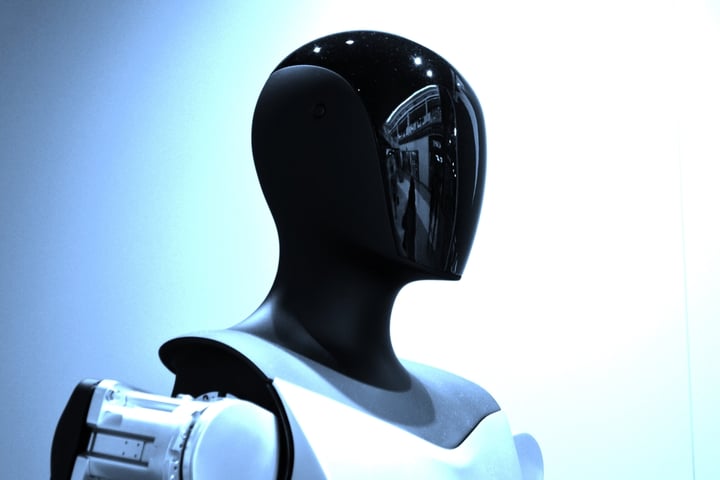
Elon Musk, CEO of Tesla Inc. and SpaceX, recently proposed that the company’s humanoid robot, Optimus, could play a pivotal role in establishing civilizations on distant planets. During a conversation on the social media platform X, Musk responded to a user’s inquiry about the potential for SpaceX’s merging with xAI and its ambitious goal of generating 1 terawatt of artificial intelligence computing power annually. Musk indicated that this could be the beginning of what he described as a Von Neumann machine.
Understanding the Von Neumann Concept
A Von Neumann machine, conceptualized by Hungarian-American mathematician and physicist John von Neumann, refers to a theoretical spacecraft capable of self-replication. Such a machine would gather raw materials from various planetary systems to create copies of itself, which could then explore further into space. By suggesting that Optimus could be the first of its kind, Musk hints at a future where advanced AI could autonomously manage robotic systems on other planets.
Musk has frequently highlighted Optimus as a groundbreaking advancement. He envisions it not only as a robotic assistant but also as a catalyst for productivity that could surpass current Earth-based outputs. In a strategic shift, Tesla plans to discontinue its premium offerings, specifically the Model S and Model X, to streamline production of the Optimus robot. The goal is to manufacture 1 million units annually at Tesla’s Fremont facility.
Market Impact and Future Prospects
Tesla’s stock performance reflects some investor concerns, with shares declining by 0.67% to $419.15 in after-hours trading on Tuesday. Despite this, analysts remain optimistic about the company’s momentum. According to Benzinga Edge Rankings, Tesla shows strong scores in the momentum metric and maintains a favorable long-term price trend.
Musk’s ambitious vision for Optimus positions the robot at the forefront of technological advancements in AI and robotics. As Tesla continues to innovate, the implications for both terrestrial industries and potential future space missions are significant. The exploration of new frontiers, supported by AI-driven capabilities, could redefine human existence beyond Earth.
As the conversation around AI and space exploration evolves, Musk’s assertions about the capabilities of Optimus will undoubtedly attract attention from both investors and the scientific community alike. The intersection of robotics, AI, and space travel raises critical questions about the future of civilization itself.
























