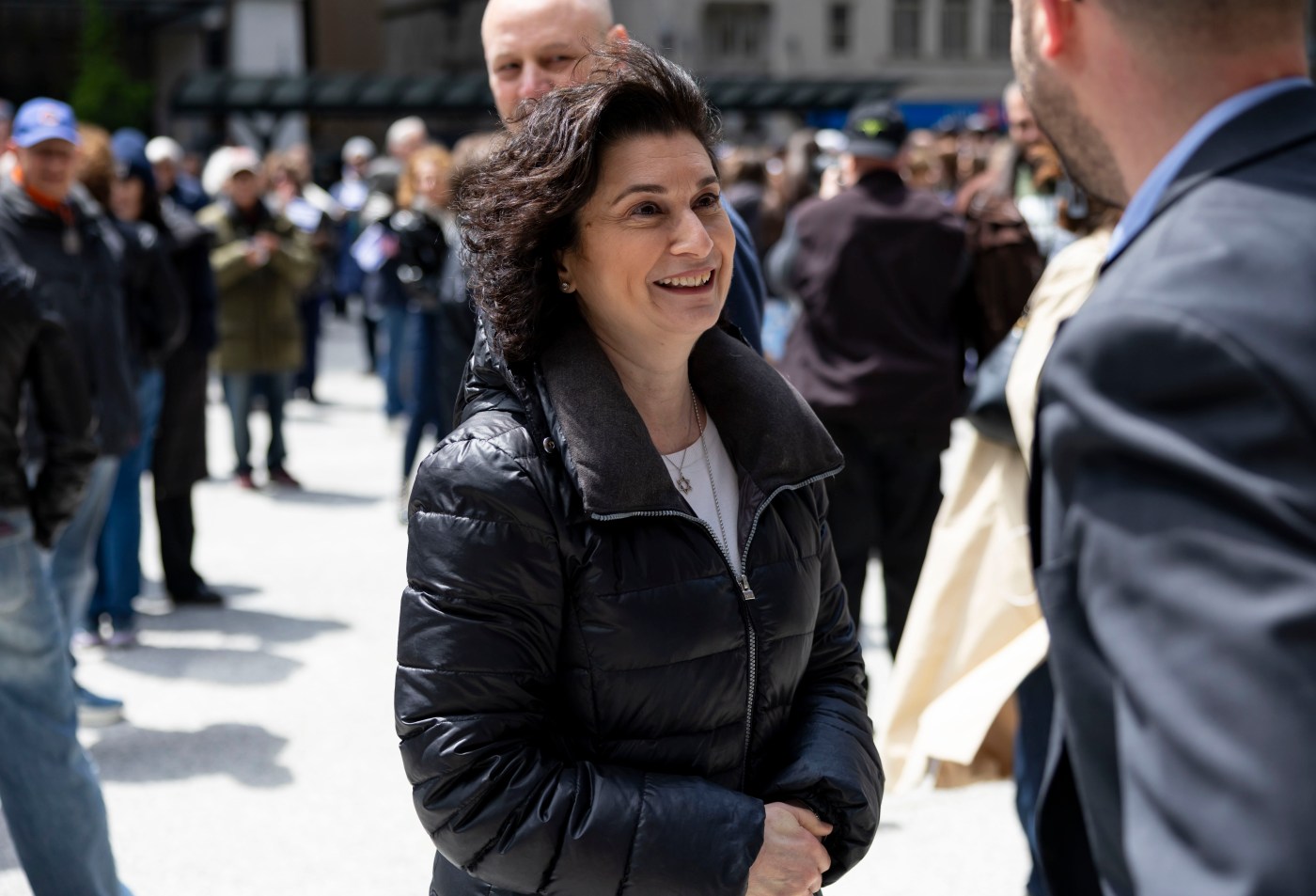
The ongoing race for Illinois’ 9th Congressional District has sparked a contentious debate about representation and identity. Debra Silverstein, a Chicago Alderman, expressed concern about the potential loss of the district’s Jewish representation, emphasizing the need for a Jewish representative who understands the community’s nuanced needs. Her comments followed the publication of an article titled “Illinois 9th District Race Tests Long Jewish Legacy” on February 8, 2024, which highlighted the district’s demographics.
Despite Silverstein’s perspective, data from the Jewish Electorate Institute indicates that only about 12% of residents in the 9th District identify as Jewish. The Jewish United Fund’s 2020 study further reveals a decline in Jewish households, particularly in suburban areas such as Skokie and Evanston. In contrast, 15% of the district’s population identifies as Asian, suggesting a more diverse electorate than traditionally acknowledged.
Voicing broader concerns, Linda Hendelman, a Chicago resident, argued that the needs of the district’s Jewish population should not overshadow the needs of the remaining 88% of residents. She highlighted candidate Hoan Huynh, who characterizes the district as “the Ellis Island of the Midwest,” advocating for an inclusive approach to representation that reflects the diverse makeup of the community.
The discussion surrounding identity politics extends beyond the congressional race. In the Illinois Senate’s 9th District contest, candidates Rachel Ruttenberg and Patrick Hanley are similarly navigating questions of religious representation. Some voters have suggested that Ruttenberg, a Jewish woman, should inherit the seat held by her predecessor, state Senator Laura Fine. This notion has led to apprehension among some constituents, who argue that democracy should prioritize ideas and commitment to public service rather than identity.
Voters are increasingly questioning the implications of institutional endorsements. Early support for Ruttenberg from the Illinois Legislative Jewish Caucus raised concerns about whether such backing reflects a broader evaluation of leadership qualities. As Jennifer Obel and Caryn Fliegler, both Jewish women from Illinois, noted, reducing political leadership to identity alone contradicts the principles of inquiry and ethical reasoning central to Jewish tradition.
Observations from the race reflect a growing tension in American politics about how representation is defined. The concern is not merely about a single candidate but rather about how demographic identity can shape electoral outcomes. As the candidates campaign, the emphasis remains on the need for a more inclusive dialogue that considers the diverse voices within the district.
Meanwhile, the Cook County property tax assessment system has also come under scrutiny. An editorial from the Chicago Tribune endorsed Fritz Kaegi, the Cook County Assessor, but criticized the underlying governance issues contributing to the property tax crisis. Under current Illinois law, errors in property assessments can be corrected only for the disputed year, leaving the foundational data unaltered. This ongoing situation has led to significant tax increases, particularly in areas where assessments have been inconsistent.
The need for reform in the assessment system reflects a broader desire for transparency and accountability in governance. As taxpayers face ongoing challenges, observers argue that addressing structural flaws in the property tax system should take precedence over defending existing practices.
As the political landscape evolves, voters in Illinois are encouraged to contemplate the broader implications of representation. The upcoming races not only define the future of the 9th Congressional District but also shape the discourse around diversity and inclusion in American politics.