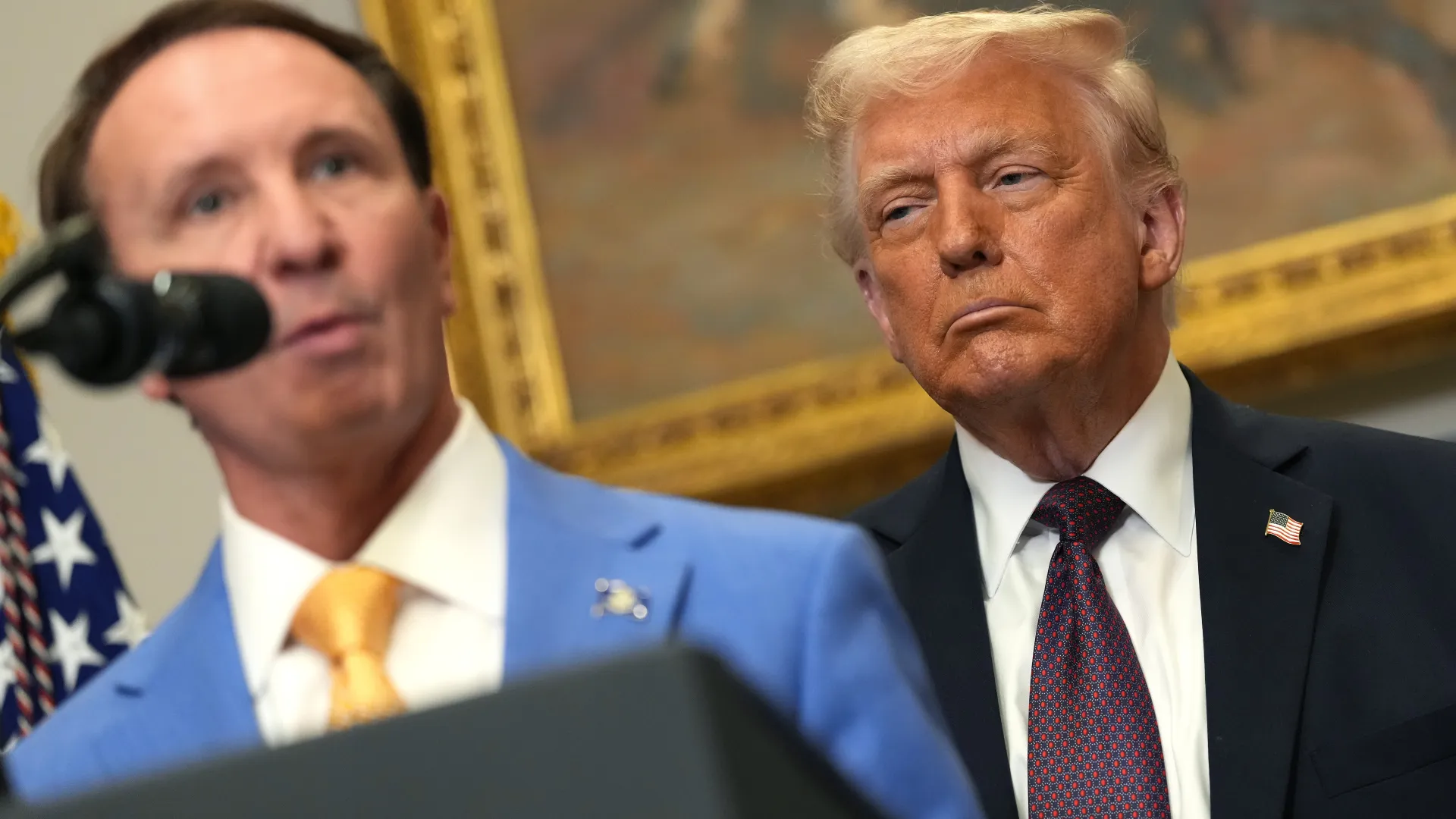
A significant diplomatic conflict has arisen following the appointment of Louisiana Governor Jeff Landry as the United States Special Envoy to Greenland. In a bold statement, Landry expressed ambitions to incorporate the resource-rich territory into the United States, prompting swift condemnation from Denmark and Greenland.
Donald Trump announced Landry’s appointment on social media, emphasizing the strategic importance of Greenland for U.S. national security. Trump stated, “I am pleased to announce that I am appointing the GREAT Governor of Louisiana, Jeff Landry, as the United States Special Envoy to Greenland.” He further asserted that Landry would “strongly advance our Country’s Interests for the Safety, Security, and Survival of our Allies, and indeed, the World.”
Landry responded to Trump, saying, “It’s an honor to serve you in this volunteer position to make Greenland a part of the US.” This statement has intensified tensions, as it challenges the sovereignty of Greenland, an autonomous territory that relies significantly on Danish subsidies, accounting for approximately one-fifth of its GDP.
Denmark and Greenland Respond
In reaction, both Jens-Frederik Nielsen, Greenland’s Prime Minister, and Mette Frederiksen, Denmark’s Prime Minister, issued a joint statement underscoring the inviolability of national borders under international law. They asserted, “You cannot annex another country. Not even with an argument about international security,” and emphasized their expectation for respect regarding territorial integrity.
Nielsen further addressed Greenlanders on Facebook, asserting, “We will determine our future ourselves. Greenland is our country,” reinforcing the sentiment that “Greenland belongs to Greenlanders.” Greenland’s government has summoned the U.S. ambassador to express its discontent, while the Danish foreign minister labeled Landry’s comments as “totally unacceptable.” He indicated plans to call in the U.S. ambassador for an explanation in the coming days.
This situation is compounded by Trump’s previous remarks suggesting military action could be a consideration in securing Greenland. In a statement made on Air Force One, Trump claimed, “I think the people want to be with us,” despite opposition among the majority of Greenlanders regarding U.S. annexation.
Geopolitical Tensions in the Arctic
The Arctic region is becoming increasingly contested as global powers vie for influence. Greenland’s strategic location between North America and Europe makes it a focal point for U.S., Chinese, and Russian interests, particularly in the context of rare earth minerals. The island also serves as a crucial point for missile routes between Russia and the U.S.
The U.S. maintains its Pituffik military base in Greenland, which is integral to its missile defense strategy. In June 2020, the U.S. established a consulate on the island to bolster its presence. Recently, Vice President JD Vance criticized Denmark for its perceived failure to safeguard Greenland from potential threats posed by China and Russia. During a visit, he described Greenland as America’s “first line of defence.”
This latest development comes on the heels of Denmark summoning the U.S. chargé d’affaires following reports of attempted interference in Greenland’s governance. As geopolitical tensions escalate, the situation in Greenland remains a pivotal point for international relations in the Arctic.
The unfolding events highlight the delicate balance of power and the complexities of sovereignty, as Greenland’s future hangs in the balance amidst external pressures from both superpowers and its own aspirations for independence.