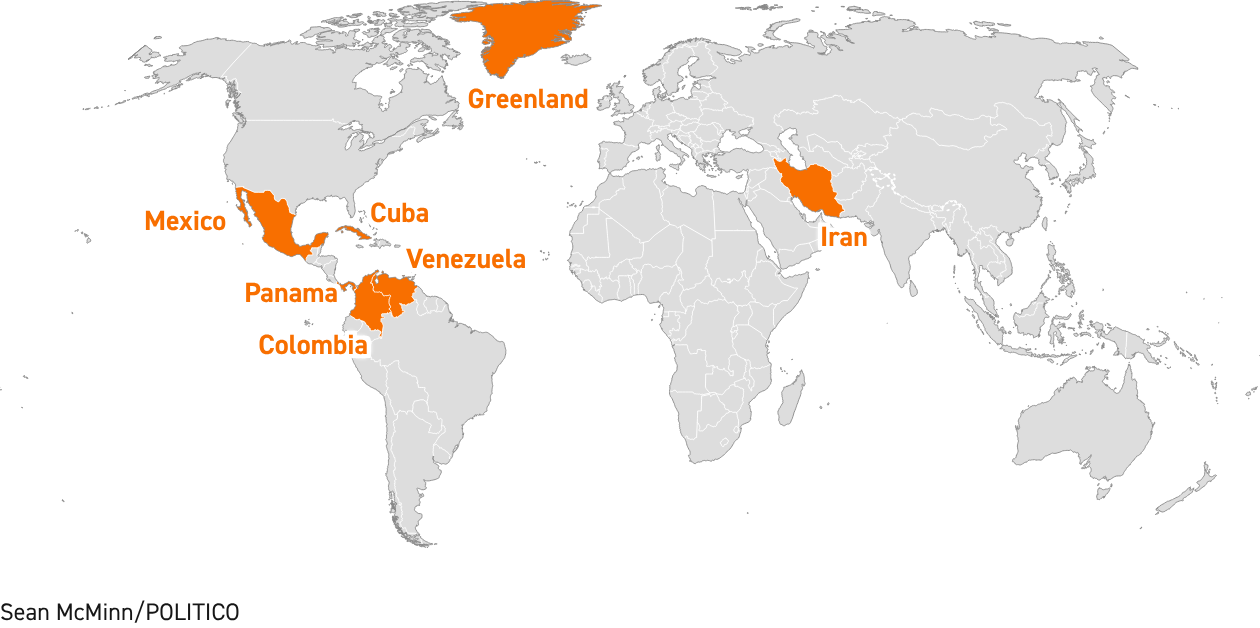
Donald Trump is shaping international discourse as he eyes potential engagements in regions like Venezuela and Greenland. His focus on these areas reflects a broader strategy to enhance U.S. influence globally, particularly as he gears up for the **2024 U.S. Presidential Election**.
The former president’s interest in Venezuela stems from its vast oil reserves and the ongoing political turmoil in the country. In recent statements, Trump has criticized the current U.S. administration’s approach to Venezuelan affairs, arguing that a stronger stance could support democratic movements and stabilize the region. Trump’s proposals have included ideas for economic sanctions aimed at the government of **Nicolás Maduro**.
Venezuela: A Focus on Energy and Democracy
Venezuela’s oil industry, once one of the most prosperous in the world, has struggled under years of mismanagement and sanctions. Trump argues that revitalizing this sector could not only benefit the Venezuelan people but also bolster U.S. energy security. He envisions a partnership that could help restore democracy while simultaneously providing American companies with access to lucrative energy resources.
The impact of Trump’s foreign policy on Venezuela could be significant. A shift towards a more aggressive U.S. stance might influence economic conditions within the country, possibly leading to changes in leadership. By positioning himself as a champion of democracy, Trump aims to appeal to voters concerned about international human rights issues.
Greenland: Reassessing Strategic Interests
In addition to Venezuela, Trump has expressed renewed interest in Greenland, a territory of Denmark. His previous proposal to purchase Greenland in 2019 sparked significant controversy, yet the strategic value of the region has not diminished. Greenland’s vast natural resources and strategic position in the Arctic make it a focal point for geopolitical interests.
Recent reports indicate that Trump is considering ways to foster closer ties with Greenland. This could involve economic partnerships or investments aimed at infrastructure development, potentially benefiting both the U.S. and Greenlandic communities. By strengthening relations, Trump positions himself as a key player in Arctic affairs, an area increasingly viewed as vital for future geopolitical competition.
The implications of these moves extend beyond regional politics. Trump’s strategies in Venezuela and Greenland could reshape U.S. foreign policy and impact international relations as a whole. The former president’s willingness to engage in these areas signals a commitment to reasserting U.S. influence on the global stage.
As the 2024 election approaches, Trump’s focus on Venezuela and Greenland may resonate with voters seeking a return to a more assertive U.S. foreign policy. By emphasizing energy independence and democratic support, he aims to craft a narrative that appeals to a broad spectrum of the electorate. The coming months will likely reveal how effectively he can translate these interests into tangible political support.
In summary, Trump’s potential maneuvers in Venezuela and Greenland reflect a strategic approach to international relations that prioritizes U.S. interests and influence. Whether these initiatives will gain traction remains to be seen, but they undoubtedly signal a renewed focus on America’s role in global affairs.