








































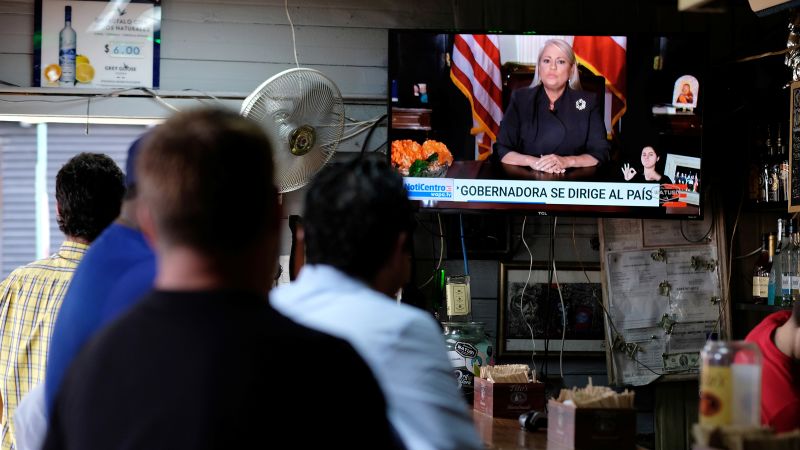
Former President Donald Trump has indicated his intention to pardon Wanda Vázquez, the former governor of Puerto Rico, who pleaded guilty to a campaign finance violation in August 2022. This decision comes in the wake of a federal investigation into alleged bribery related to her gubernatorial campaign financing for the 2020 election. According to a White House official, the pardons will also extend to two of her co-defendants.
The United States Department of Justice (DOJ) reported that from December 2019 through June 2020, Vázquez conspired with former FBI agent Mark Rossini and Julio Herrera Velutini, the owner of an international bank operating in San Juan, to illegally finance her campaign. The indictment detailed that the three agreed to provide funds for Vázquez’s campaign in return for her agreeing to replace the island’s top bank regulator with someone of their choosing. This arrangement arose while the bank was under scrutiny from regulatory authorities.
In August, after reaching a plea deal with the government, Vázquez, Herrera, and Rossini pleaded guilty to misdemeanor charges. The White House has suggested that the charges stemmed from political motivations, highlighting that the investigation into Vázquez commenced shortly after she endorsed Trump in 2020. Although Trump was in office at that time, Vázquez was not arrested until 2022, during President Joe Biden‘s administration.
Vázquez presented her case for a pardon by asserting that her actions did not involve any quid pro quo or bribery. She maintains that the charges were politically motivated and mischaracterized her dealings with Herrera.
The forthcoming pardons could potentially alter the consequences faced by Vázquez and her co-defendants, who initially faced significant legal repercussions. The political implications of this decision are also noteworthy, considering the ongoing discussions regarding campaign finance regulations and political accountability in the United States.
As the situation develops, the impact of Trump’s actions on both Puerto Rican politics and broader political discourse in the United States will likely become a focal point for analysis and debate.
























