








































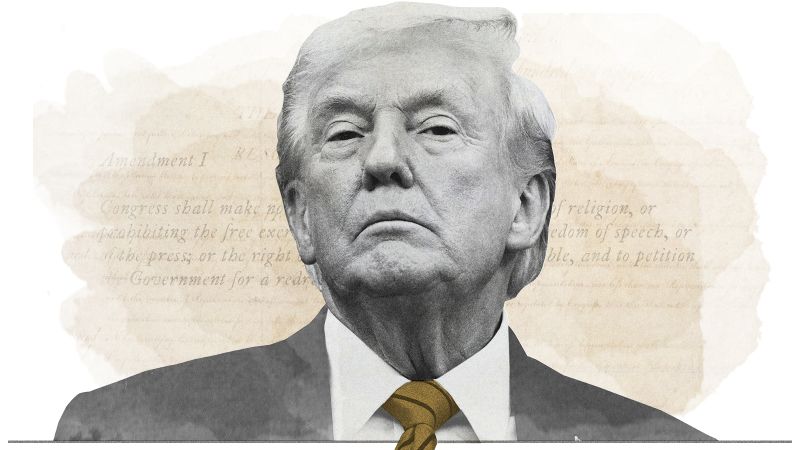
President Donald Trump has made headlines for his controversial actions regarding the First Amendment, claiming to restore free speech in the United States shortly after returning to the White House. Despite this assertion, his administration has repeatedly tested the boundaries of this constitutional protection, raising concerns among civil rights advocates and legal experts.
The First Amendment safeguards several fundamental rights, including freedom of religion, speech, press, peaceful assembly, and the right to petition the government for grievances. It prohibits the government from enacting laws that impede these rights. Nevertheless, Trump’s presidency has seen a series of actions that some critics argue undermine these freedoms.
Recent Actions and Legal Challenges
Through executive orders, lawsuits, and posts on his social media platform, Truth Social, Trump has targeted various groups, including protesters, universities, and news organizations. Just this week, he initiated a defamation lawsuit against the BBC in a federal court in Florida. Legal experts have characterized this lawsuit as weak, suggesting that its primary aim may be to deter criticism rather than to seek justice.
Additionally, concerns have been raised about the independence of the Federal Communications Commission (FCC). During a recent hearing, the FCC chair made comments that suggested the agency’s autonomy could be influenced by political pressures, alarming lawmakers who prioritize regulatory independence.
Despite some successful court challenges to Trump’s measures, certain organizations have yielded to his pressure. For instance, Disney’s ABC network temporarily suspended the show hosted by Jimmy Kimmel following his remarks about conservative activist Charlie Kirk after a tragic incident involving Kirk’s death.
Implications for First Amendment Rights
Prominent civil liberties expert Burt Neuborne, a professor at New York University School of Law, expressed grave concerns about the current state of the First Amendment under Trump’s influence. He stated that the administration is “trying to frighten Americans out of exercising their First Amendment rights.” Neuborne highlighted the potential long-term consequences, warning that the increased pressure could lead to a society that refrains from exercising these essential rights due to fear of repercussions.
Neuborne emphasized that while the rights may technically exist, the costs associated with exercising them are becoming too high for many individuals. The chilling effect on free speech and assembly could result in a populace that hesitates to voice dissent or engage in public discourse.
This timeline of events underscores the ongoing tension between the Trump administration and the First Amendment, raising critical questions about the future of free speech in America. As these developments unfold, the implications for civil liberties remain a focal point for advocates and the public alike.
























