A recent 42-minute video from a conservative content creator in Minnesota has prompted the Trump administration to intensify its claims of widespread fraud in federal safety net programs. Although there is currently no evidence substantiating the video’s allegations that child care centers in Minnesota committed fraud to receive federal funding, the administration has responded by freezing all federal child care payments to the state. Additionally, it has rescinded a rule implemented during the Biden administration that was said to have increased the risk of fraud.
The administration also plans to audit the state’s Medicaid billing practices and is halting funds for various programs in five Democrat-led states while it investigates further potential fraud. On Thursday, Vice President JD Vance announced the forthcoming appointment of an assistant attorney general dedicated to investigating and prosecuting fraud. Meanwhile, the Treasury Department is enhancing its scrutiny of financial institutions in Minnesota, aiming to ensure compliance with regulations designed to detect money laundering and other illicit activities, with plans to extend these measures nationwide.
Concerns regarding waste, fraud, and abuse in federal programs have historically been a focal point for Republicans. Under President Donald Trump, this issue has gained heightened attention, with officials citing fraud in the administration of food stamps, Social Security, Medicaid, and the Affordable Care Act as reasons necessitating program changes. Some experts contend, however, that the administration’s claims are either inaccurate or exaggerated.
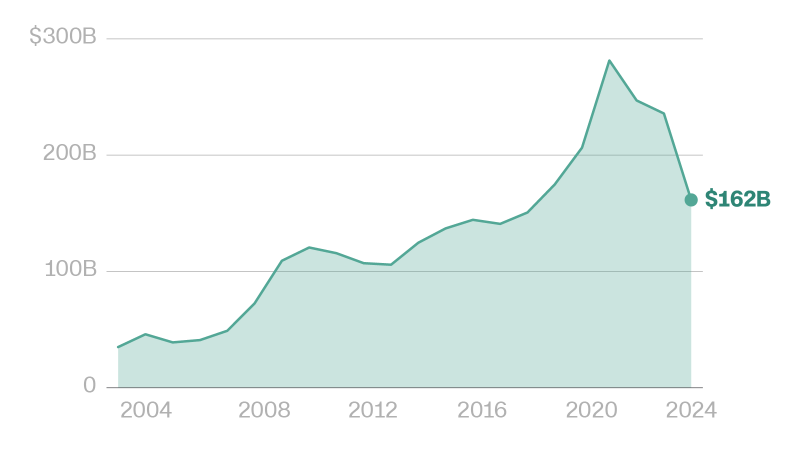
The extent of fraud across federal programs remains challenging to quantify. The Government Accountability Office (GAO) estimated in 2024 that between $233 billion and $521 billion in federal expenditures could be lost annually to fraud, representing approximately 3% to 7% of average federal obligations. It is important to note that not all improper payments are fraudulent; many arise from administrative errors rather than intentional deception.
The COVID-19 pandemic created an environment ripe for exploitation, with many individuals and organized crime groups seizing the opportunity to take advantage of federal relief measures. Linda Miller, founder of the nonprofit Program Integrity Alliance, pointed out that “the lesson from the pandemic is how enterprising and opportunistic and coordinated and sophisticated the fraud actors were.”
While the GAO has long identified vulnerabilities within federal agencies, addressing these issues has often been hindered by concerns over costs, outdated technology, and administrative burdens. Seto Bagdoyan, a director at the GAO, remarked on the lack of commitment at the highest levels of agencies to tackle these problems effectively.
In efforts to combat fraud, Trump officials have sought to enhance data sharing between federal departments and state governments. This initiative, however, has raised privacy concerns and led to lawsuits regarding the administration’s targeting of immigrant populations. Moreover, Congress has supported increased verification requirements for federal benefits. Matt Weidinger, a senior fellow at the conservative American Enterprise Institute, noted that improved technology, including data matching and artificial intelligence, could significantly assist in detecting fraud.
Fraudulent activities in federal programs are often perpetrated by organized crime groups rather than individuals attempting to meet eligibility criteria. Miller emphasized the need for greater understanding of the role that these groups play in systemic fraud, noting that “there’s so little understanding of the participation of these organized crime groups.”
The Trump administration has spotlighted a number of fraud instances across various federal programs to underscore the necessity for reform. In a recent cabinet meeting, Agriculture Secretary Brooke Rollins revealed that 186,000 deceased individuals’ Social Security numbers were being utilized to collect benefits from the Supplemental Nutrition Assistance Program (SNAP). Additionally, the USDA reported that approximately half a million individuals were receiving benefits in multiple states simultaneously.
The USDA also indicated that an estimated $24 million per day in federal funds is lost to fraud and errors that go undetected by states. The agency is expecting these figures to rise as more states provide their data. To mitigate such losses, there could be an annual saving of around $9 billion if effective measures are implemented.
Challenges persist, particularly with food stamp fraud linked to card skimming, where criminals use devices to capture Electronic Benefits Transfer (EBT) card information. Although Congress passed a law in 2022 that temporarily allowed state agencies to utilize federal funds to replace stolen benefits, this provision expired at the end of 2024.
The Centers for Medicare and Medicaid Services (CMS) has also been active in addressing fraud and improper enrollments. In July, the agency reported that approximately 2.8 million individuals were enrolled in Medicaid or the Children’s Health Insurance Program in multiple states, highlighting a need for coordination with state governments to reduce duplicated enrollments.
Moreover, the GAO’s covert testing revealed that the federal Affordable Care Act exchange approved coverage for nearly all fictitious applicants in 2024 and 2025, raising concerns about the integrity of the enrollment process. Similar fraudulent activities have been seen among agents and brokers who sought to exploit temporary enhancements to premium subsidies initiated by the Biden administration.
Despite the challenges, the Trump administration’s efforts to identify and address fraud in federal programs continue to evolve. As investigations proceed and new measures are introduced, the implications for recipients and the overall effectiveness of these programs remain to be seen.