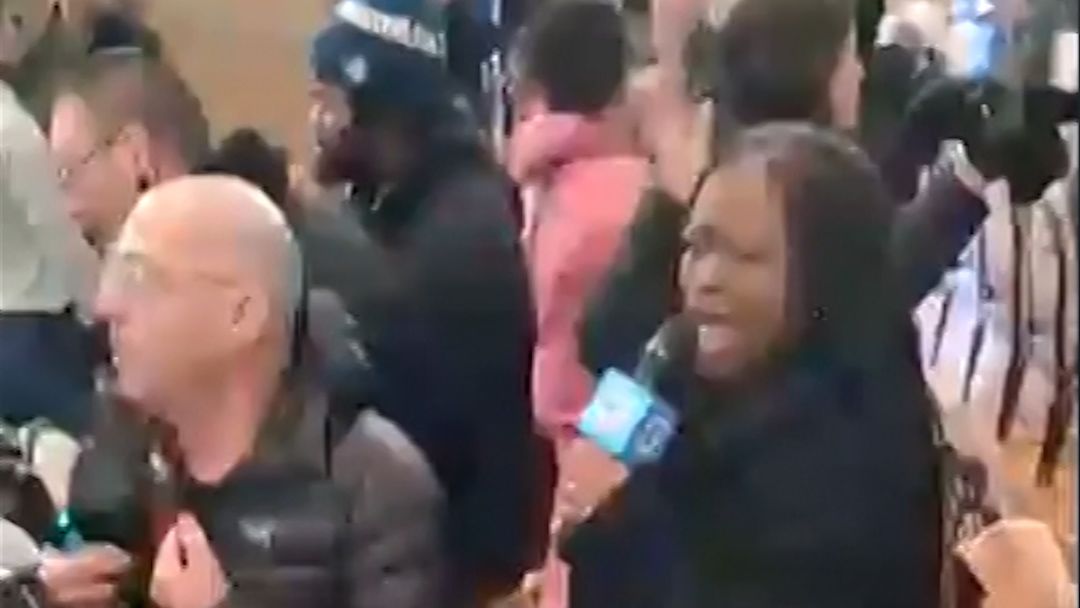
A recent protest against Immigration and Customs Enforcement (ICE) during a church service in St. Paul, Minnesota, has escalated tensions between demonstrators and the Trump administration. On the morning of January 7, 2023, dozens of protesters interrupted a service at Cities Church, calling for the removal of David Easterwood, a top ICE official who also serves as a pastor at the church. The demonstration, characterized by heated confrontations, has drawn significant attention from national officials.
Videos shared by activists show protesters shouting, “ICE out!” as they faced off against congregants and the lead pastor. The demonstrators aimed to raise awareness of Easterwood’s dual roles, particularly in light of ongoing controversies surrounding immigration enforcement practices in the Twin Cities. It remains unclear whether Easterwood was present during the incident, as no footage has confirmed his attendance at the church that day.
In response to the protest, Pam Bondi, the Attorney General, expressed on social media that such actions against law enforcement will be met with “the full force of federal law.” This sentiment was echoed by Assistant Attorney General Harmeet Dhillon, who announced an investigation into the protesters’ actions, describing them as “desecrating a house of worship.” Dhillon invoked the Freedom of Access to Clinic Entrances (FACE) Act, which protects individuals’ rights to religious expression.
The backdrop of this incident includes a significant increase in immigration enforcement in the Minneapolis area, known as Operation Metro Surge. This initiative has deployed thousands of federal agents, leading to widespread protests, particularly following the fatal shooting of Renee Good, a mother of three, by a Border Patrol agent on January 7. The administration’s rapid promise to investigate the church protest contrasts sharply with its earlier response to Good’s death, which saw a lack of cooperation with local law enforcement.
Prominent local figures have criticized the administration’s focus on the protest while overlooking broader community concerns. Nekima Levy Armstrong, former president of the local NAACP chapter, described the investigation as a “sham,” questioning the priorities of officials who react more strongly to disruptions in a church than to the “atrocities” faced by the community.
Cities Church has not issued a public statement regarding the incident. The presence of a St. Paul police vehicle outside the church on the following day did not yield any responses to inquiries from media representatives.
Easterwood, currently the acting field office director for Enforcement and Removal Operations at ICE, has been with the agency since 2015. In a legal declaration related to the recent protests, he argued that any court orders regarding ICE’s operations could jeopardize the safety of law enforcement personnel and the public. A judge recently criticized ICE agents for their aggressive tactics during protests, noting that their actions did not establish reasonable suspicion for detaining demonstrators.
Despite Easterwood’s assertions, a judge issued a largely symbolic injunction preventing agents from detaining individuals engaged in unobtrusive protest activities related to Operation Metro Surge. Shortly after assuming his current position, Easterwood was featured alongside Homeland Security Secretary Kristi Noem at a press conference discussing immigration enforcement.
In a statement, Tricia McLaughlin, Assistant Homeland Security Secretary, condemned the targeting of churches by protesters, placing blame on state officials, including Minnesota Governor Tim Walz and Minneapolis Mayor Jacob Frey, for allegedly inciting unrest.
As confrontations between protesters and law enforcement escalate, the incident at Cities Church serves as a critical juncture in the ongoing debate over the balance between free expression and maintaining public order. Legal analysts have highlighted the complexities law enforcement faces in protecting the rights of protesters while ensuring that other citizens are not intimidated.
The events in St. Paul underscore the heightened stakes surrounding immigration issues in the United States, reflecting the broader national discourse as communities confront the implications of federal policies.