








































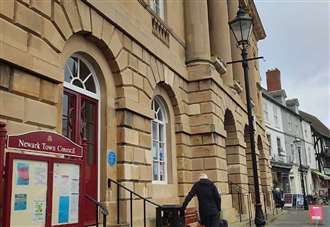
A proposal for Newark Town Council to return its assets to Newark and Sherwood District Council has been rejected during a council meeting on January 28, 2025. The motion, put forth by councillor Matthew Skinner and seconded by Diane Ledger, aimed to evaluate the future management of various assets and services, including parks, the town hall, and the market, under the upcoming local government reorganisation.
The motion suggested that these services might be more effectively managed by the district council, which is set to transition into a unitary authority as part of a broader government initiative. Skinner emphasized financial concerns, stating, “One of the biggest challenges we have… are items within those finances that are just perhaps too much of a challenge and too much of a burden.” He expressed belief that a streamlined approach could potentially save costs for Newark residents.
During the discussion, councillors expressed a range of opinions. Susan Crosby firmly opposed the motion, declaring, “My legacy will not be giving the town council assets away.” This sentiment highlighted the emotional stakes involved in the decision, as many councillors feel a strong connection to local governance and community control.
The local government reorganisation has led to significant changes in the structure of local councils. The decision entails creating two new unitary councils to serve different regions of Nottinghamshire, specifically the north and south areas. This plan, which was submitted to the government for approval in November 2025, could dissolve the nine existing councils and replace them with two new entities.
For the past decade, Newark and Sherwood District Council provided an annual grant of £3,780,000 to the town council, as part of a Devolution deal established in 2015. This funding has been crucial for maintaining local services. However, the upcoming changes indicate that the 2026/27 fiscal year will be the last for this financial support.
Opposition to the motion also came from Matthew Spoors, who criticized it as an attack on local democracy. He argued that returning assets to the district council would mean relinquishing control to a body disconnected from the specific needs of Newark residents. Esther Cropper echoed this sentiment, sharing her concern that management would shift away from local knowledge and oversight.
While some councillors expressed reservations, others raised points in favor of the motion. Paul Taylor highlighted the potential financial burden on Newark residents, who could end up paying council tax to both the town council and the new unitary authority. He noted the need for significant repairs to the town hall, which could exhaust existing reserves if the council does not find a sustainable financial solution.
Despite the varying perspectives, the council ultimately voted against the motion with nine members opposing it and seven in favor. The rejection of the proposal indicates a commitment among many councillors to retain local governance and services within Newark, even as the region prepares for significant structural changes in its local government.
As the reorganisation unfolds, the focus will likely remain on balancing financial sustainability with community control, a challenge that will require careful navigation in the months ahead.
























