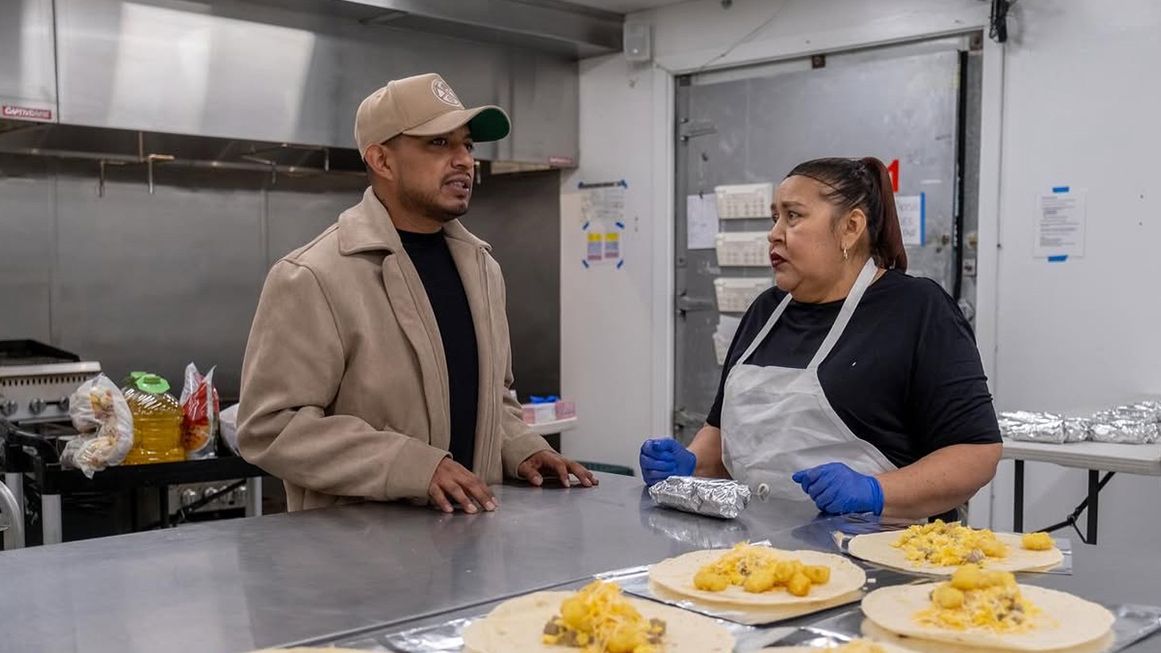
Alejandro Flores-Muñoz, a legal immigrant and entrepreneur, now confronts an uncertain future as mass deportations initiated under President Donald Trump’s administration threaten his business and those of other immigrant entrepreneurs. Having built a successful catering company after obtaining Deferred Action for Childhood Arrivals (DACA) status, Flores-Muñoz has become an advocate for immigrant business owners. However, the renewed focus on deportations has cast a shadow over his and many others’ contributions to the U.S. economy.
Flores-Muñoz, originally from Guadalajara, Mexico, witnessed his mother’s entrepreneurial spirit as she navigated challenges in the United States. Inspired by her resilience, he launched his own business ventures after receiving DACA in 2012, which provided him with a Social Security number and the opportunity to operate legally. He emphasizes, “I wanted to pay taxes. I wanted to get a business license. I wanted to get all of the things that made a business a business.” This spirit of entrepreneurship has driven him to create jobs and contribute to his community.
Yet since Trump took office for a second term, the atmosphere for immigrant entrepreneurs has drastically changed. “I have never really feared for my immigration status,” Flores-Muñoz explains. “That has changed since January 20, 2025, because now nobody is safe.” The mass deportation efforts have led many entrepreneurs to reconsider their safety and security, forcing them to prepare for potential detainment.
Recent data from the Cato Institute highlights a troubling trend. An analysis of Immigration and Customs Enforcement (ICE) records reveals that only 29% of those detained by ICE during the first half of 2025 had prior convictions. Instead, the agency has increasingly targeted individuals without criminal records, leading to a surge in detentions. This shift has adversely impacted many immigrant business owners, who contribute significantly to their local economies.
The plight of immigrant entrepreneurs extends beyond Flores-Muñoz. Kelly Yu, a Chinese immigrant who opened two successful sushi restaurants in Arizona, was detained by ICE despite having no criminal history. Her case garnered significant public support, highlighting the community’s reliance on immigrant business owners. Similarly, Paul Dama, an award-winning restaurant manager in Boston, faced deportation despite holding work authorization and a pending asylum case.
Impact on Communities and the Economy
The challenges posed by mass deportations extend beyond individual entrepreneurs. Immigrants are a vital force in the U.S. economy, demonstrating a higher propensity to start businesses than their native-born counterparts. According to the American Immigration Council (AIC), immigrants account for over 3.8 million entrepreneurs in the United States, with 1.1 million being undocumented.
The Bipartisan Policy Center (BPC) notes that immigrant entrepreneurs have historically contributed to approximately 25% of new businesses. Their ventures provide essential services and create jobs, bolstering local economies. For instance, immigrant-owned businesses make up a significant portion of “main street” enterprises, offering retail, food services, and neighborhood services that enhance community life.
Yet, the current administration’s approach to immigration risks undermining these contributions. Deportations create a hostile environment that not only threatens individual businesses but can also deter future entrepreneurial endeavors. Research indicates that stringent immigration laws, such as Arizona’s Senate Bill 1070, resulted in job losses as communities felt the repercussions of reduced immigrant labor.
Many immigrant entrepreneurs face barriers to securing work in their fields due to language barriers and credential recognition issues. These challenges are compounded for undocumented individuals, who often resort to self-employment as the only viable option. The BPC points out that the absence of a specific visa category for immigrant entrepreneurs forces many to navigate a complex immigration system, delaying their ability to contribute fully to the economy.
The Need for Supportive Policies
In light of these challenges, various localities have begun to adopt policies that encourage immigrant entrepreneurship. California and Colorado have allowed undocumented immigrants to obtain business licenses, recognizing the contributions these individuals make to their communities. At the national level, lawmakers have proposed legislation to create a visa category for immigrant entrepreneurs, aiming to support those with innovative ideas and proven track records.
Flores-Muñoz advocates for a shift in perception regarding immigrant contributions. He highlights the importance of community support, noting how U.S. citizens have rallied to assist those facing deportation. “We’re more than what we’re portrayed to be,” he asserts, emphasizing the vital roles immigrants play in the American economy.
As mass deportations continue, the impact on immigrant entrepreneurs will resonate beyond just those detained. Communities, customers, and local economies face the prospect of losing vital contributors to their growth and vitality. The narrative surrounding immigration needs to evolve to acknowledge the significant economic and cultural contributions of immigrant entrepreneurs, ensuring that the American dream remains accessible for all.