








































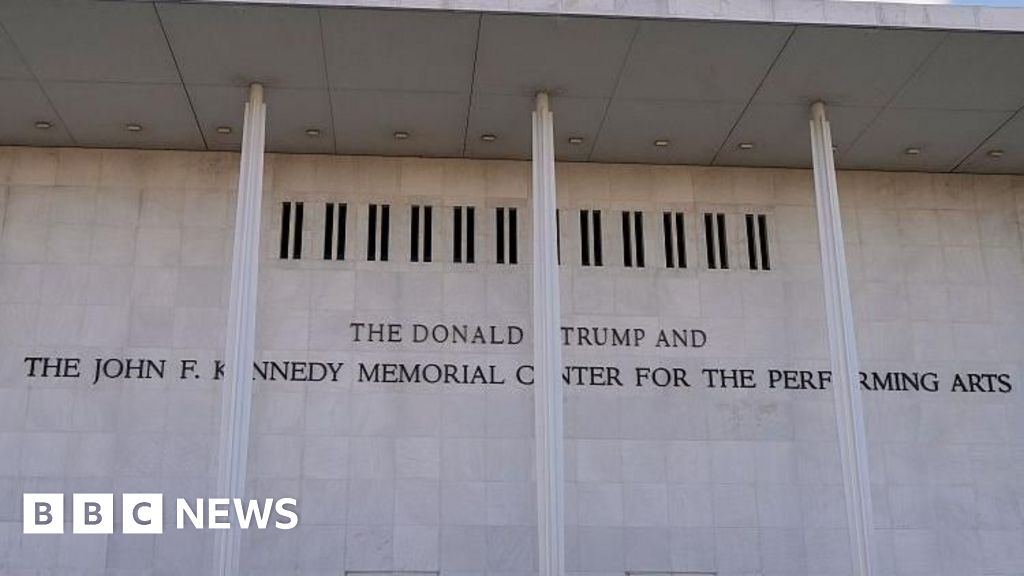
The Kennedy Center in Washington, D.C., is seeking $1 million in damages from musician Chuck Redd, who cancelled his Christmas Eve concert following the announcement of a name change for the venue to include Donald Trump‘s name. Redd, who has hosted the concert since 2006, cited the recent board decision to rename the site as the Trump Kennedy Center as the reason for his cancellation.
In a formal letter, Richard Grenell, president of the Trump Kennedy Center, described Redd’s actions as a “political stunt” that has had significant financial repercussions for the center. He stated, “Your dismal ticket sales and lack of donor support, combined with your last-minute cancellation, has cost us considerably.” Grenell’s letter served as a notice of the intention to pursue damages, emphasizing the impact of Redd’s decision on the non-profit arts institution.
The controversy erupted after the White House announced that the Kennedy Center’s board had unanimously voted to rename the cultural institution as the Donald J Trump and John F Kennedy Memorial Center for the Performing Arts. This decision received backlash from various quarters, including Democrats, artists, and members of the Kennedy family, who expressed concern over the implications of such a renaming.
Redd explained his decision to cancel the concert, saying, “When I saw the name change on the Kennedy Center website and then hours later on the building, I chose to cancel our concert.” His statement highlighted the emotional and political weight of the name change.
The Kennedy Center has a storied history, with its origins tracing back to the 1950s. Following the assassination of President John F. Kennedy in 1963, Congress designated the center as a living memorial to him. As such, some lawmakers and legal scholars argue that any alteration to the name should require an act of Congress, given that it was established under a law passed in 1964.
The legal landscape surrounding the name change is further complicated by a lawsuit filed by Joyce Beatty, a Democratic congresswoman from Ohio. Beatty contends that the renaming is illegal and argues that her voice was muted during the board meeting where the vote occurred. She is among several lawmakers designated as members of the board by law and maintains that changing the center’s name requires congressional approval.
As the situation unfolds, the implications of the name change and the potential legal actions against Redd may set significant precedents for cultural institutions and their governance. The Kennedy Center’s efforts to secure damages from Redd could also spark further discussions about the intersection of politics and the arts in the United States.
























