








































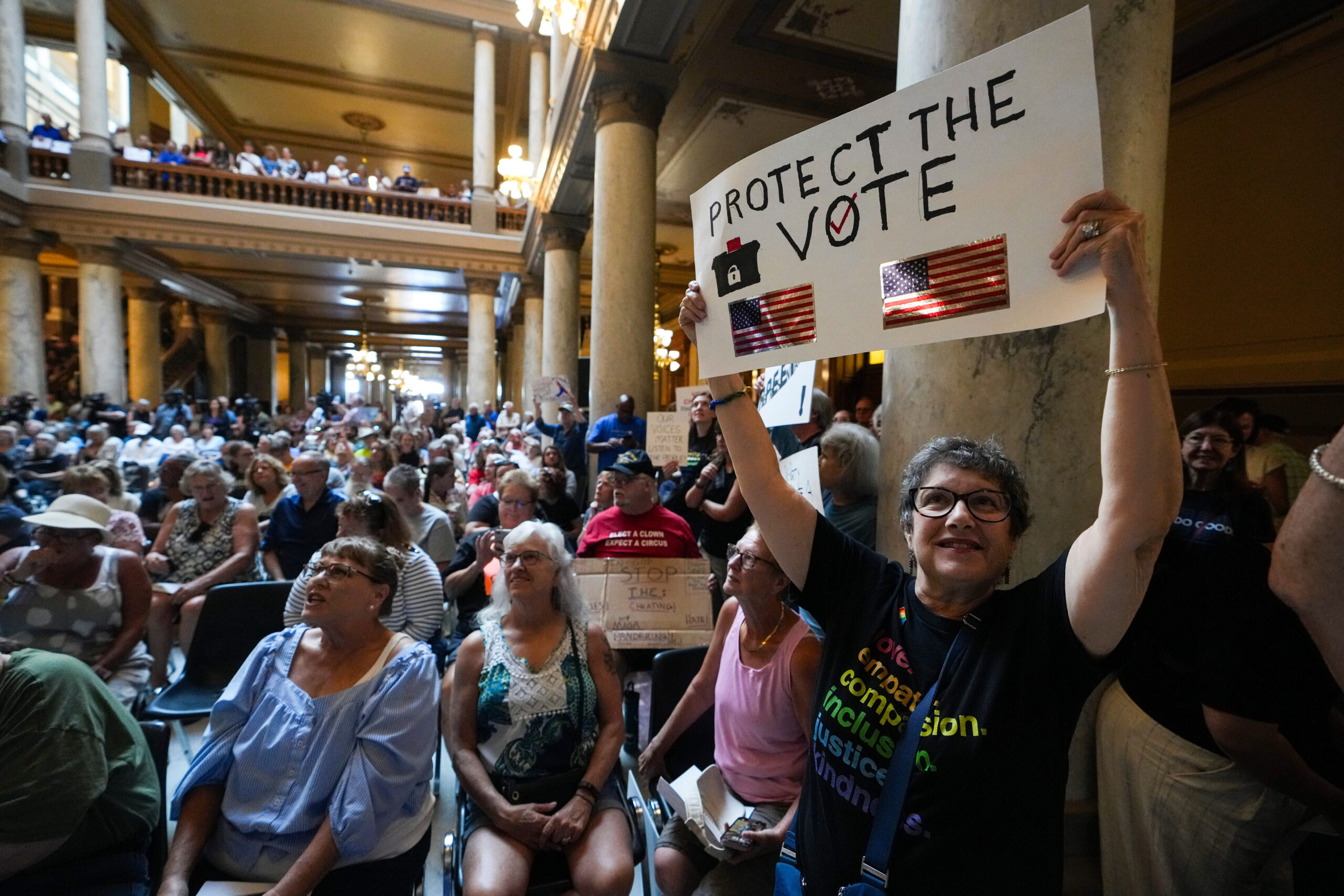
The Indiana Republican Party has issued a formal rebuke of former President Donald Trump, a move that could temporarily halt ongoing tensions surrounding redistricting efforts in the state. This decision arrives as the party navigates internal divisions while preparing for the upcoming 2024 elections.
In a recent statement, the Indiana GOP expressed dissatisfaction with Trump’s influence on the party, citing his divisive rhetoric and its potential impact on the party’s unity. This critique marks a notable shift in the party’s dynamics, as many members have historically supported Trump’s policies and candidacy. The rebuke signals a possible change in strategy as the party seeks to strengthen its electoral prospects.
Redistricting and Political Ramifications
The issue of redistricting has been a contentious topic in Indiana, with the state legislature previously engaged in drawn-out disputes over district boundaries. These conflicts have often been fueled by partisan interests, with each party aiming to secure favorable districts ahead of elections. According to political analysts, this latest development could lead to a temporary ceasefire in the redistricting wars as the Indiana GOP reassesses its approach.
In 2021, the U.S. Supreme Court ruled on several cases that impacted redistricting processes across the country, emphasizing the need for states to adhere to fair representation. The Indiana GOP’s recent actions may reflect an awareness of these legal precedents and the importance of maintaining a unified front in the face of electoral challenges.
The potential for a redistricting detente hinges on the party’s ability to reconcile its differences and focus on broader electoral goals. If the party can successfully navigate these internal tensions, it may position itself more favorably in upcoming elections.
Future Outlook for Indiana Politics
Looking ahead, the Indiana GOP’s stance on Trump and the redistricting process will likely shape the political landscape in the state. As party leaders work to unify their base, they must also contend with the broader implications of their decisions on voter sentiment and turnout.
Analysts suggest that the party’s ability to adapt to these changes will be crucial. If internal divisions persist, they could jeopardize Republican chances in key districts. Conversely, a united front could enhance their electoral viability as they approach critical elections.
In conclusion, while the Indiana GOP’s rebuke of Trump may lead to a temporary pause in redistricting conflicts, the long-term implications for the party and the state’s political future remain uncertain. As they prepare for the 2024 elections, the need for cohesion and strategic planning is paramount for the Indiana Republican Party.
























