








































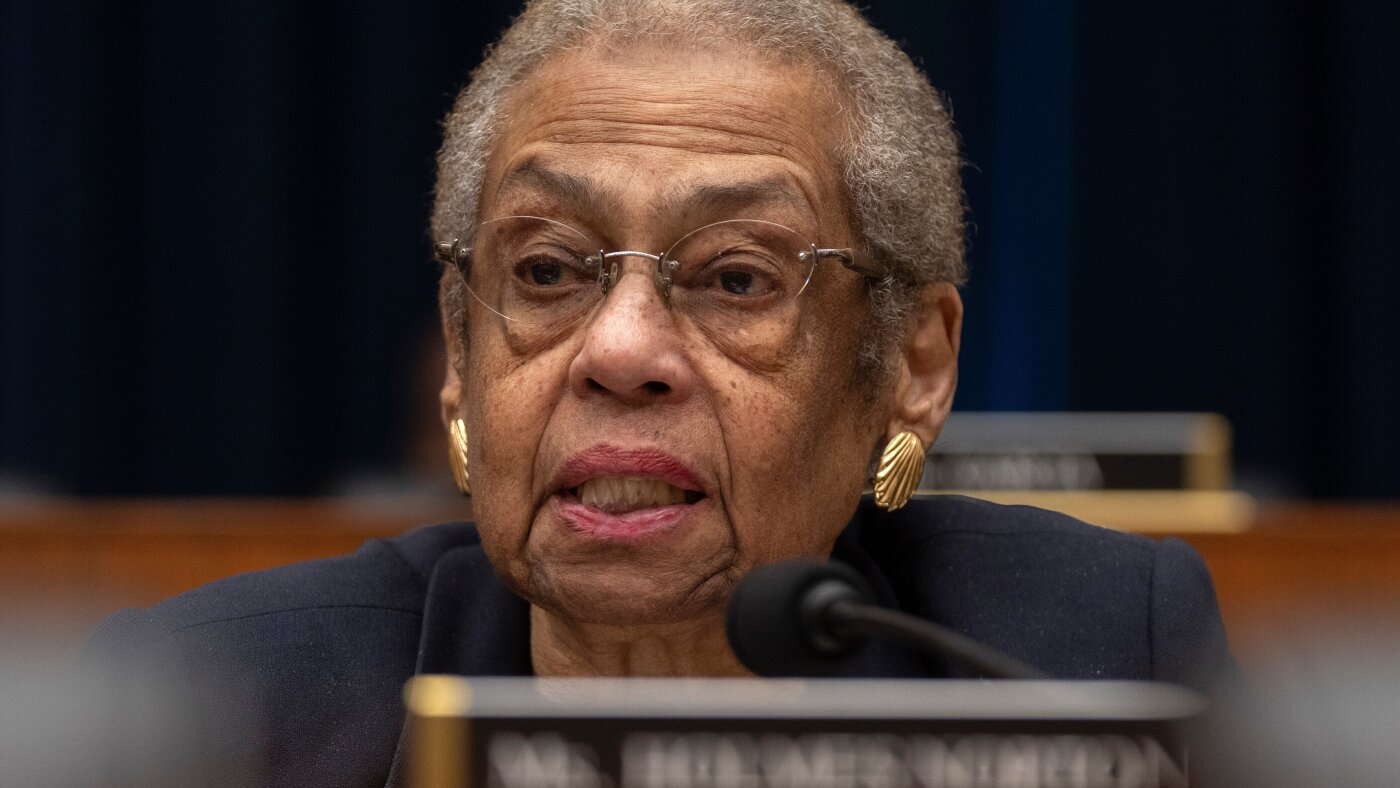
Eleanor Holmes Norton, a long-serving delegate representing the District of Columbia in Congress, has officially terminated her reelection campaign. This decision marks the likely conclusion of her notable career in public service, spanning nearly three decades. At age 88, Norton has been the sole voice for D.C. residents in Congress since 1991, navigating significant political and social changes over the years.
The termination paperwork was submitted to the Federal Election Commission on Sunday. While her office has not yet released an official statement regarding her future plans, the news was first reported by NOTUS. Following her announcement, D.C. Mayor Muriel Bowser praised Norton, referring to her as a “Warrior on the Hill” and acknowledging her unwavering commitment to the fight for equal representation for the nation’s capital.
As Norton steps back, her retirement opens the door for a competitive primary in a city that heavily favors Democratic candidates. Several local lawmakers have already expressed their intentions to run for the position. Norton has been a prominent figure in Washington politics, earning recognition not only for her longevity but also for her civil rights activism and advocacy for the residents of D.C.
Legacy of Advocacy and Civil Rights
Throughout her tenure, Norton has championed various causes, including the push for D.C. statehood and labor rights for federal workers. Although she does not have a formal vote in the House, she has been instrumental in securing significant benefits for her constituents. Her advocacy led to legislation that allows D.C. residents to attend public colleges at in-state tuition rates and access grants for private universities.
Norton also played a pivotal role in resolving a financial crisis for the district in the 1990s, negotiating a deal that transferred billions of dollars in unfunded pension liabilities to the federal government. This agreement was crucial for stabilizing the district’s budget and ensuring continued services for residents.
Her background is steeped in the Civil Rights Movement. Norton was born and raised in Washington, D.C., and was among the last segregated class at Dunbar High School. In her autobiography, “Fire in My Soul,” she reflected on her upbringing in a community deeply aware of racial issues. She later attended Antioch College and participated in pivotal civil rights actions, including working as an organizer during the Freedom Summer of 1963.
Norton’s connection to civil rights leaders, including her friendship with the late Medgar Evers, highlights her lifelong commitment to social justice. She was present at the historic March on Washington in 1963, which she described as “the single most extraordinary experience of my lifetime.” Her leadership extends beyond advocacy; she also made history as the first woman to lead the Equal Employment Opportunity Commission.
Challenges and Future Landscape
In recent months, Norton faced increasing scrutiny regarding her effectiveness, particularly as the Trump administration implemented significant federal interventions in D.C. These actions included federalizing the police force and deploying National Guard troops in response to protests and unrest. The response to these measures spurred calls from residents and local lawmakers for a more vigorous defense of D.C.’s autonomy.
Norton’s retirement comes at a time when a notable number of lawmakers are exiting their positions, with more than 10% of House members not seeking reelection. Her departure signals the end of an era in Washington politics and raises questions about the future direction of representation for D.C. residents.
As Norton concludes her long-standing service, her legacy as a dedicated advocate for D.C. will continue to resonate among the community and the many individuals she has inspired throughout her career. The upcoming primary will be closely watched as candidates vie to carry on her mission in a city that remains at the crossroads of representation and governance.
























