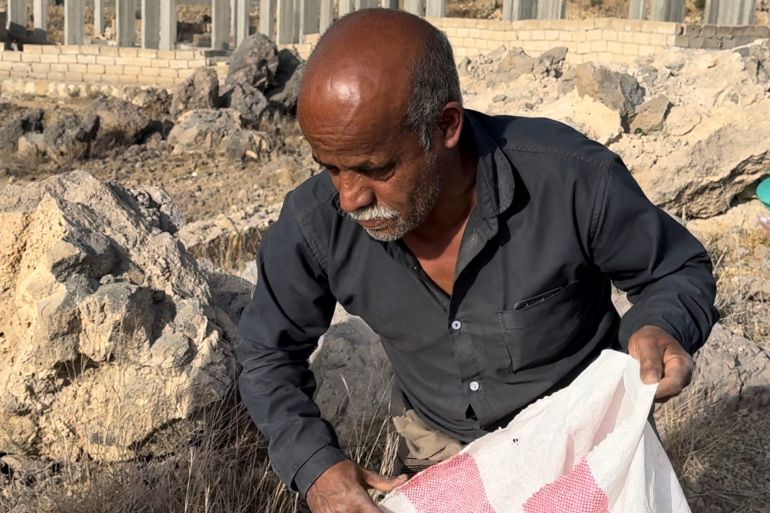
In Sanaa, Yemen, the daily struggles of families highlight a worsening food crisis that threatens the lives of millions. Mehdi Galeb Nasr, once an ice cream vendor, now scavenges plastic bottles to support his family of seven, reflecting the harsh reality faced by many in the country.
Worsening Food Shortages
According to the International Rescue Committee (IRC), more than half the Yemeni population—approximately 18 million people—will experience severe hunger by early 2026. This alarming forecast follows new projections from the Integrated Food Security Phase Classification, which indicate that an additional million individuals are at risk of life-threatening hunger.
The ongoing conflict in Yemen has compounded the humanitarian crisis. Years of war, mass displacement, and economic collapse have devastated livelihoods and restricted access to essential health and nutrition services. Nasr, now 52, has been particularly affected; his eyesight deteriorated, making it impossible for him to continue his previous work. “Selling ice cream was my main source of income,” he explained. As his vision worsened, he became disoriented and struggled to navigate the streets of Sanaa.
Impact of Conflict and Economic Collapse
Yemen is also experiencing intensified internal conflict, with regional actors further complicating the situation. The Southern Transitional Council (STC), supported by the United Arab Emirates, has gained control of strategic areas in southern Yemen, raising security concerns for Saudi Arabia. The resulting airstrikes and military actions have exacerbated the humanitarian crisis.
With no steady employment, Nasr and his family have turned to informal labor, collecting plastic bottles to make ends meet. On a recent day, Nasr earned just 600 Yemeni riyals (slightly over $1), barely enough to provide a basic meal for his family. “It’s not enough to cover what we need to eat for dinner before we go to bed,” he lamented. The family often finds themselves going to sleep hungry, a situation that has become all too common among Yemenis.
“Currently, we do not even have gas to cook anything,” Nasr stated. His family often resorts to cooking rice when they have access to gas, but this is not guaranteed. “Last night, my wife, five daughters, and I went to bed without eating dinner,” he added, linking their dire situation to the broader conflict and economic decline that have plagued Yemen since 2015.
As the humanitarian situation deteriorates, Nasr’s greatest worry remains the uncertainty of providing for his daughters. He represents one of millions of Yemeni households trapped in severe poverty, where the struggle for daily food has become a sobering reality for many. The future remains bleak as Yemen continues to grapple with a crisis that seems to deepen with each passing day.