








































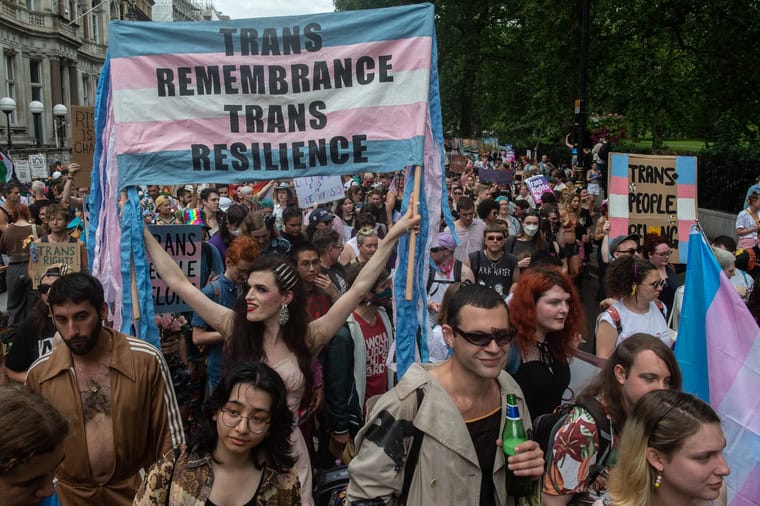
Recent employment tribunal rulings have highlighted the urgent need for trade unions to strengthen their support for trans+ workers. A case involving nurses at the Darlington and County Durham NHS Trust revealed that the Trust failed to provide alternative changing facilities for staff after complaints from nurses about sharing with a trans woman, Rose Henderson. The tribunal found the Trust guilty of harassment but dismissed complaints against Henderson, affirming her right to use the facilities.
This ruling is part of a broader issue of workplace discrimination against trans+ individuals. Similar cases, such as that of Sandie Peggie in Fife, Scotland, have demonstrated the need for unions to advocate for robust pro-trans policies to combat transphobic bullying. Unions are called upon to demand that employers not only provide appropriate facilities but also protect trans+ workers from discrimination.
Recent Tribunal Findings and Union Responsibilities
The tribunal’s decision emphasized that the solution to workplace discomfort should not involve relocating trans+ individuals. Instead, it should be those exhibiting transphobic behavior who are encouraged to change their attitudes. Following the tribunal’s ruling, some transphobic groups have falsely claimed victories in the name of “biological women,” despite the fact that only one of 300 users of the changing room was transgender.
Trade unions must confront these narratives and advocate for the rights of trans+ individuals. The Darlington NHS Trust recently withdrew its Transitioning in the Workplace policy, a move that raises concerns about future protections for trans+ employees. With the expectation of a more restrictive policy in the near future, unions play a critical role in safeguarding the rights and dignity of all workers.
Success Stories and Ongoing Challenges
In a positive development, tenants from three properties in Nottingham successfully campaigned against no-fault evictions. Approximately 45 residents faced eviction after their properties were sold to a billionaire landlord. The tenants, supported by the tenants’ union Acorn and local councillors, challenged the landlord’s intentions to relet the properties for higher benefits. Their campaign garnered substantial public support, leading to a reversal of the eviction plans and securing housing stability for the tenants.
As political tensions rise, campaigns such as those led by Reform UK pose challenges for communities. The party recently held a rally for the Gorton and Denton by-election, indicating a strong potential for electoral success. Their predicted 32 percent of the vote underscores the need for sustained anti-racist activism, similar to the successful strategies employed by Stand Up To Racism in previous elections.
Lastly, the recent cyclone that struck the coast of Sicily serves as a stark reminder of the intersection between climate change and social vulnerability. The storm not only inflicted physical damage but also exposed the systemic issues that render certain regions more susceptible to climate disasters. Advocates argue that true safety lies in equitable control over land and resources, prioritizing social needs over profit.
As these diverse issues unfold, the need for collective action and union support becomes increasingly evident. The protection of marginalized communities, particularly trans+ individuals, remains a pressing challenge that requires unwavering commitment from unions and advocates alike.
























