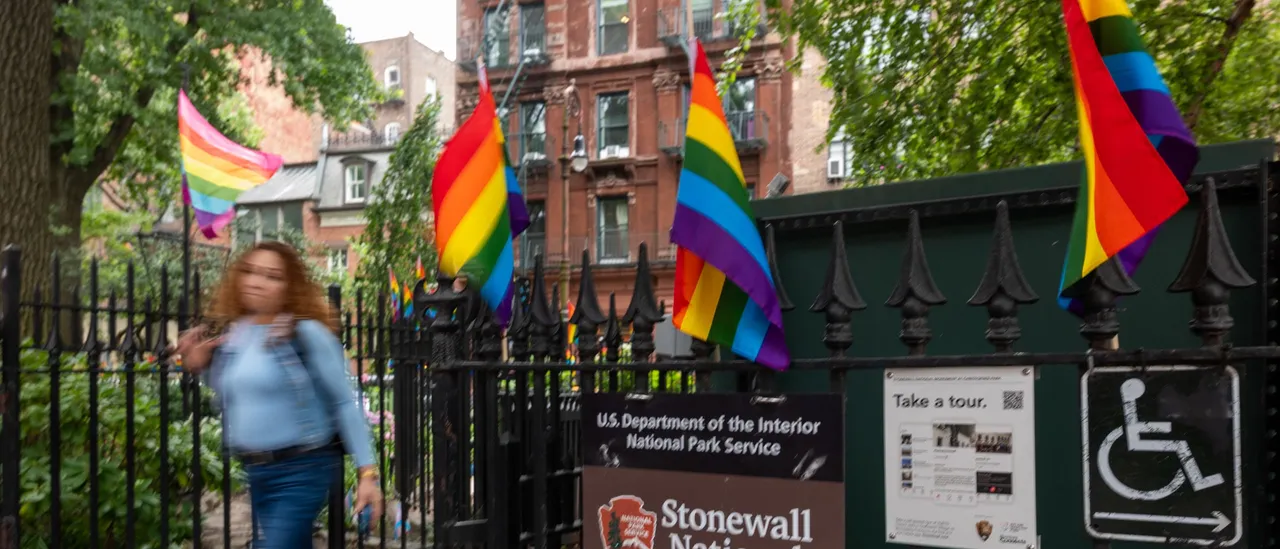
The National Parks Service (NPS) has removed a significant rainbow pride flag from the Stonewall National Monument in Manhattan, a site recognized as the birthplace of the modern LGBTQ rights movement. This decision has drawn widespread criticism from local officials and advocates. The monument was designated by former President Barack Obama in June 2016 to commemorate the Stonewall Uprising, which began on June 28, 1969, and to honor the ongoing fight for LGBTQ equality.
According to a statement from the NPS’s communications office, the policy governing flag displays on federal property has been in place for decades. The agency clarified, “Recent guidance clarifies how that longstanding policy is applied consistently across NPS-managed sites.” Under this policy, only the U.S. flag and flags authorized by Congress or relevant departments are permitted to be flown at NPS-managed flagpoles, with limited exceptions. The NPS emphasized that Stonewall National Monument continues to preserve and interpret its historical significance through various exhibits and programs.
The Department of the Interior (DOI) has not responded to requests for further comment regarding the removal, which was confirmed by Democratic Manhattan Borough President Brad Hoylman-Sigal in an Instagram post. He stated that a federal order issued on January 21, 2026, led to the flag’s removal, asserting that the Trump administration “cannot erase” LGBTQ history.
Criticism of the removal has come from several prominent figures in New York. Julie Menin, the Democratic New York City Council Speaker, condemned the action, calling Stonewall “sacred ground.” In a statement on social media, she described the removal of the Pride flag as a “deliberate and cowardly attempt to erase that history,” labeling it as an attack on LGBTQ New Yorkers.
Similarly, Democratic New York State Senator Erik Bottcher expressed his disapproval via social media, labeling the action as a “shameful attempt to rewrite history.” Bottcher emphasized the importance of the Pride flag in representing the struggles and victories of the LGBTQ community, stating, “You cannot separate that place from the symbol that grew out of it.”
This decision comes amidst a broader context where some major U.S. corporations have retreated from their involvement in LGBTQ pride events, stirring further debate about the support for LGBTQ rights at institutional levels.
The removal of the Pride flag from Stonewall National Monument has reignited discussions about the visibility and representation of LGBTQ history in the United States, particularly at a site that holds profound significance for the community. As officials and advocates continue to voice their concerns, the implications of this action resonate deeply within the LGBTQ rights movement.