








































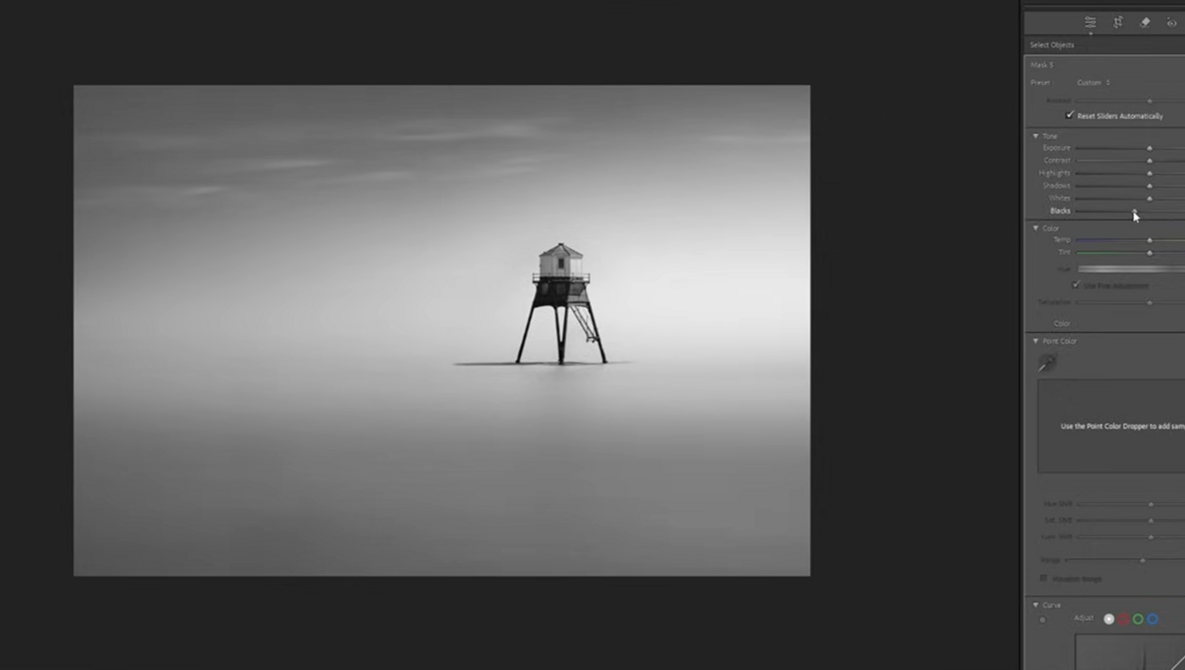
Fine art photography often transcends the mere act of capturing an image; it involves an artistic process that transforms raw files into minimalist masterpieces. Recently, renowned photographer and educator Steve Stain shared a tutorial that delves into the intricacies of this workflow, using Dover Court Lighthouse as a case study. His approach emphasizes the importance of post-production techniques that elevate ordinary images into extraordinary works of art.
Stain begins by addressing the common challenges photographers face, particularly the distractions present in many raw files. Whether it is the clutter around Poolbeg Lighthouse in Dublin or the distractions found in coastal landscapes in Portugal, he advocates for a focused approach that isolates the subject while maintaining the emotional resonance of the scene. This method not only simplifies the composition but also enhances the overall aesthetic appeal.
One of the key tools in Stain’s process is the new AI landscape selection feature in Lightroom. This innovation allows photographers to separate elements of an image with incredible precision. For instance, Stain uses this feature to differentiate between the water and the sky, enabling him to adjust the exposure of the dark water to harmonize with the brighter sky. This vital step occurs before he considers blending the layers, ensuring a solid foundation for his final image.
While Lightroom’s capabilities are impressive, Stain does not shy away from using Photoshop to achieve the desired results. He employs techniques that allow him to refine the image further, such as separating the lighthouse and sky into distinct layers. This separation provides him with the flexibility to manipulate each element independently, stretching the sky and blending the horizon to create an organic look that avoids the pitfalls of over-editing.
Stain’s workflow embodies the principle that fine art photography is often about subtraction rather than addition. He often ends up with multiple versions of an image—a color rendition, a high-contrast black and white, and a blend of both. This practice serves as a reminder to photographers that exploration is a vital part of the creative process. Just as one wanders through a landscape, navigating the sliders in post-production can lead to unexpected and rewarding outcomes.
The combination of technical skill and artistic vision is crucial in crafting minimalist fine art photographs. Stain’s methods demonstrate that a seemingly cluttered raw file can conceal a stunning masterpiece waiting to be revealed. As he notes, the journey from a chaotic image to a refined work of art is both a challenge and a joy.
For those interested in enhancing their fine art photography skills, Stain’s tutorial offers valuable insights into the creative and technical aspects of the process. By embracing the tools available and allowing for a degree of experimentation, photographers can unlock new potential in their images. The art of photography is ever-evolving, and with the right approach, anyone can create impactful minimalist works that resonate with viewers.
In conclusion, the art of transforming raw images into fine art is a nuanced process that requires both technical proficiency and creative intuition. With the guidance of experts like Stain, aspiring photographers can navigate the complexities of post-production and discover the beauty that lies beneath the surface of their work. As the field continues to evolve, the importance of mastering these skills becomes increasingly clear, paving the way for a new generation of fine art photographers.
























