








































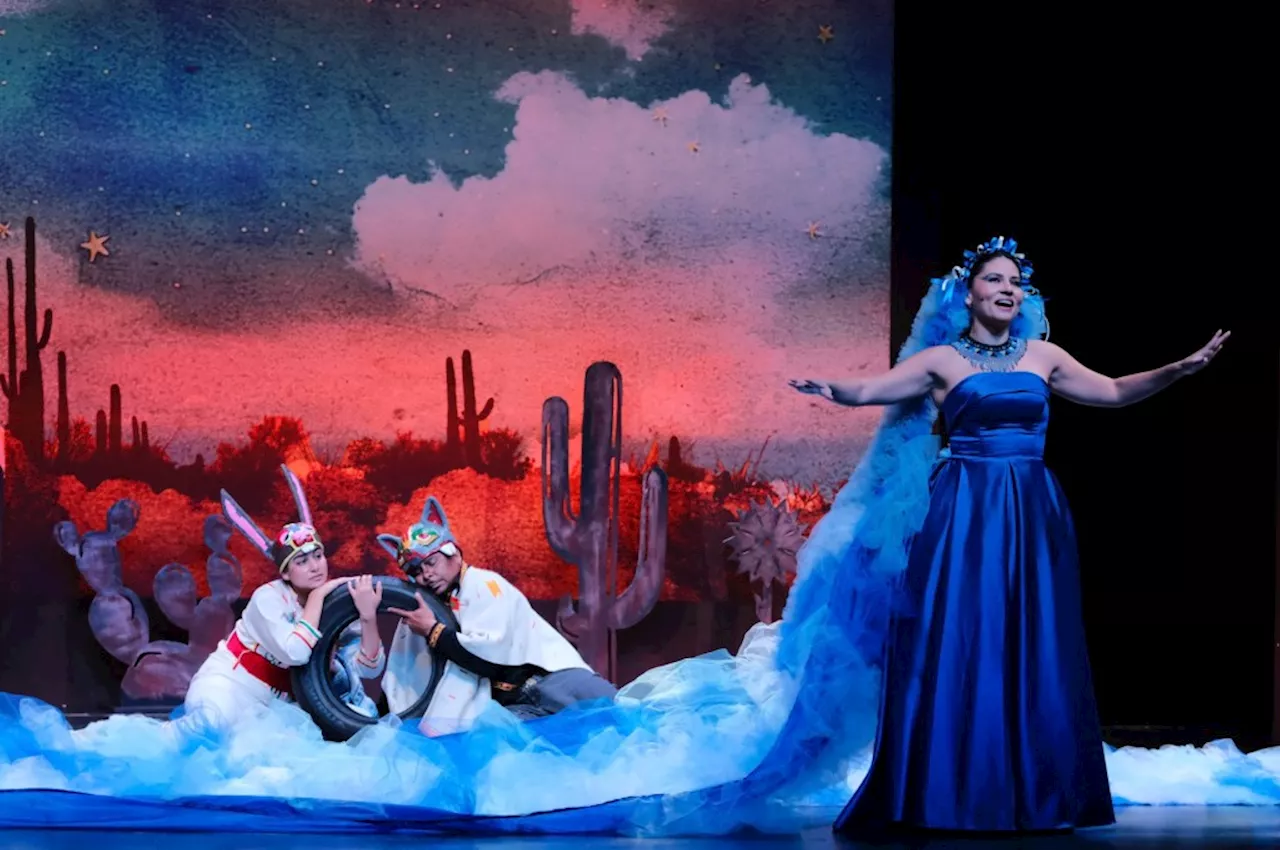
The world premiere of the new children’s opera, “Pancho Rabbit and The Coyote,” composed by Pulitzer Prize winner Anthony Davis, took place on Saturday at the Southwestern College Performing Arts Center. This production, commissioned by Bodhi Tree Concerts, seamlessly blends cultural narratives with contemporary themes, making it a significant addition to the operatic landscape.
A Cultural Resonance
Located just twelve miles from the world’s largest international border crossing, Southwestern College provided a fitting backdrop for Davis’ opera. The proximity to Tijuana adds a layer of resonance to a story deeply rooted in the experiences of Mexican-American families. Davis, who is also a professor at UC San Diego, is known for his impactful operas like “X: The Life and Times of Malcolm X” and the Pulitzer-winning “The Central Park Five.” With “Pancho,” he aims to reach audiences of all ages.
Based on the award-winning children’s book by Duncan Tonatiuh, the opera tells a poignant story that juxtaposes fantasy with the harsh realities faced by undocumented migrant workers. It follows Pancho, an 11-year-old rabbit, as he embarks on a treacherous journey from his home in Mexicali to find his father in El Norte, accompanied by a cunning coyote.
Stellar Performances and Musical Innovation
The cast features remarkable talent, with Mariana Flores Bucio shining as Pancho and Victor Ryan Robertson delivering a compelling portrayal of the Coyote. Bucio’s performance combined innocence with a powerful vocal presence, marking her as a standout. Robertson’s interpretation of the Coyote revealed the character’s moral complexities, highlighted in lyrics like, “I know all the shortcuts / Some are safer / Some are not so safe.”
Supporting performances from Oriana Geis-Falla as Mama Rabbit and Bernardo Bermudez as Papa Rabbit further enriched the production. The opera’s one-act structure allows for a concise yet impactful exploration of themes such as love, family, and the challenges faced by those seeking a better life.
Davis’ score is a vibrant tapestry of musical styles, blending classical elements with cumbia, salsa, and jazz. The orchestra of 17 musicians delivered a performance that was both sensitive and dynamic, with notable contributions from trombonist Michael Dessen and violinist David Boroff. The seamless integration of various musical genres enhances the storytelling, making it accessible and engaging for audiences of all ages.
Lyrics by Allan Havis, translated into Spanish by Laura Fuentes, were projected as supertitles, ensuring that the opera reached a diverse audience. Havis’ clever and poetic writing strikes a balance, appealing to children while providing depth for adult viewers.
Directed by Octavio Cardenas, the staging was notably effective, using simple yet innovative design elements to depict the river and tunnel that are central to Pancho’s journey. The production’s pacing kept the audience engaged, although some felt the final act concluded rather quickly.
The opera is not only a creative triumph but also a timely commentary on social issues. As the cast prepares for a performance in Tijuana on January 31, 2024, some members express concerns over crossing the border, highlighting the very real tensions surrounding immigration.
“Pancho Rabbit and The Coyote” is poised to become a significant work in the operatic canon, bridging the gap between cultures and generations. As it resonates with contemporary audiences, it serves as a reminder of the enduring human spirit in the face of adversity.
























