








































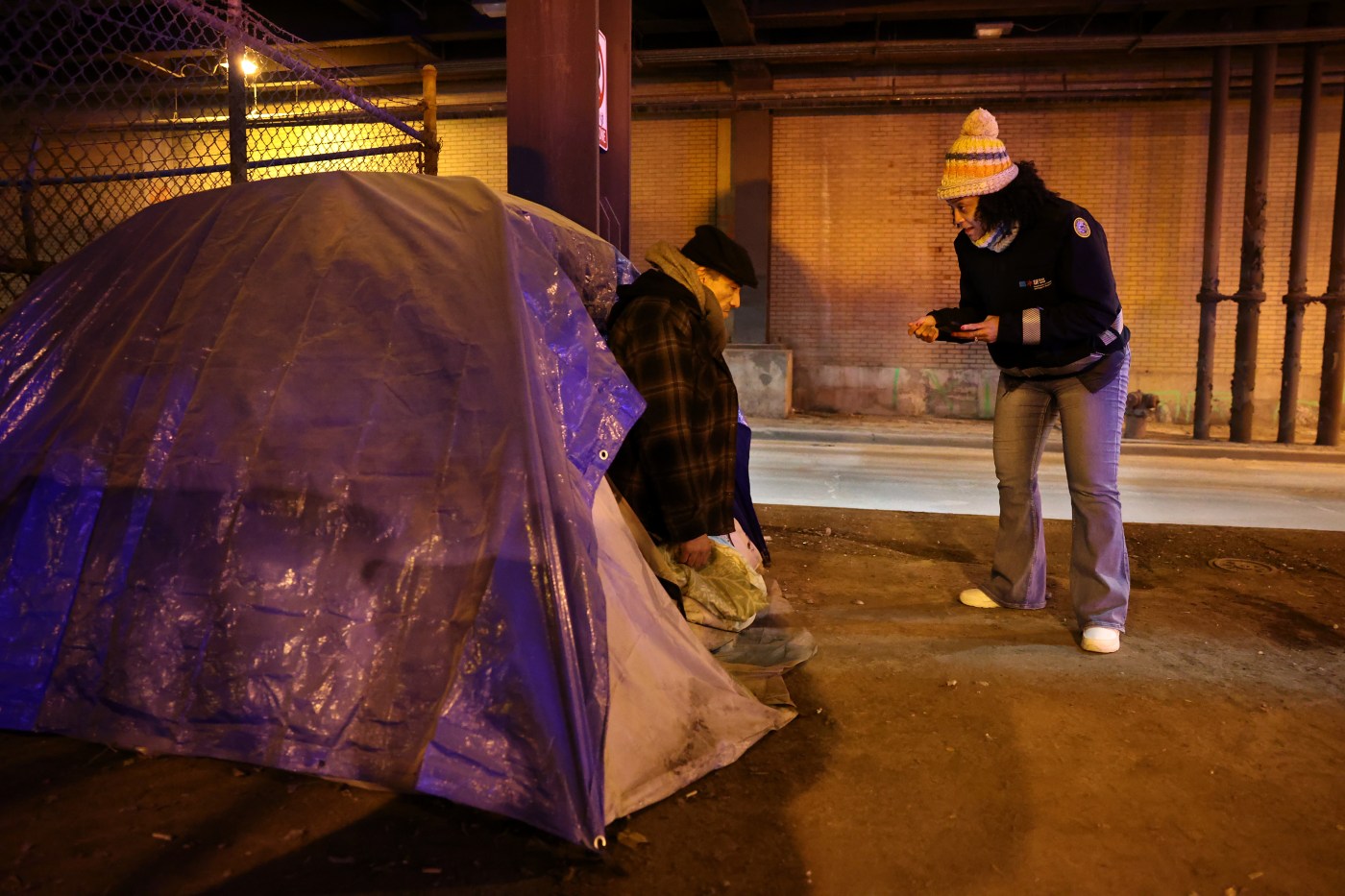
A recent report from the Illinois Department of Public Health highlights a stark disparity in life expectancy for individuals experiencing homelessness. The “Illinois Homelessness Mortality and Morbidity Report” covering the years 2017 to 2023 reveals that the average age of death for homeless individuals in Illinois is just 55.5 years, compared to 74.2 years for the general housed population. This alarming statistic underscores a significant health crisis that demands immediate attention from local officials and community members alike.
Understanding the Death Gap in Illinois
The findings indicate that homelessness is a critical public health issue, exacerbated by inadequate resources and outreach. Monica Dillon, a registered nurse and member of NWS Outreach Volunteers in Chicago, emphasizes that the situation is particularly dire on the city’s Northwest Side. For years, local residents have perceived homelessness as primarily a problem confined to downtown areas. Yet, the report illustrates that the challenges faced by unsheltered individuals are manifesting in local parks, libraries, and transit stations.
Data shows that unsheltered individuals are 39 times more likely to die from an overdose and nearly four times more likely to succumb to exposure to cold than their housed counterparts. Dillon argues that the current approach to addressing homelessness is inadequate, as it often consists of minimal assistance rather than comprehensive support. “We cannot simply hand someone a granola bar and a list of phone numbers,” she states, calling for more substantial resources.
To effectively address this crisis, Dillon advocates for the establishment of intensive homeless outreach initiatives and housing case management programs. She stresses the need for a dedicated adult emergency shelter on the Northwest Side, noting that the lack of local resources forces individuals to travel long distances for assistance. This displacement disrupts their connections to local jobs, families, and healthcare services.
Growing Demand for Social Services
The need for support extends beyond homelessness, as reports indicate a surging demand for food assistance across Illinois. More than 300,000 residents may struggle with food insecurity following the implementation of new work requirements for the Supplemental Nutrition Assistance Program (SNAP). The social service helpline 211 Metro Chicago has reported a 99% increase in food assistance requests from December 2024 to December 2025, reflecting a growing crisis.
The rise in demand has been attributed in part to delays in SNAP benefits, which have left many without adequate food support. This has forced individuals to seek alternative assistance programs, further straining resources. The helpline, operated by United Way of Metro Chicago in partnership with local government, aims to connect those in need with available resources while tracking community demands in real-time.
United Way of Metro Chicago has leveraged this data to distribute $250,000 in emergency response grants to organizations combating food insecurity in 2025. The partnership with 211 Metro Chicago allows for efficient resource allocation, ensuring that help reaches those who need it most.
Calls for Legislative Transparency
In light of these pressing issues, there are also calls for legislative reforms to ensure transparency in the legal system. State Representative Dan Ugaste has proposed HB5244, the Illinois Litigation Financing Transparency Act. This legislation aims to bring clarity to the growing industry of third-party litigation financing, which often operates with little oversight.
The bill would require registration and disclosure for litigation funders, ensuring that any financial influence on lawsuits is visible. Currently, concerns exist around fairness and accountability when funders are not identifiable. Ugaste argues that the measure is essential for maintaining integrity within Illinois’ legal framework, as other states like Wisconsin and New York have already made similar reforms.
As these various challenges unfold—ranging from the mortality rates among the homeless to rising food insecurity and the need for legal transparency—the call for action is clear. Community leaders and policymakers must prioritize comprehensive solutions that address these critical issues. The data is compelling, and the cost of inaction is substantial, as it directly impacts the lives of Illinois residents.
























