








































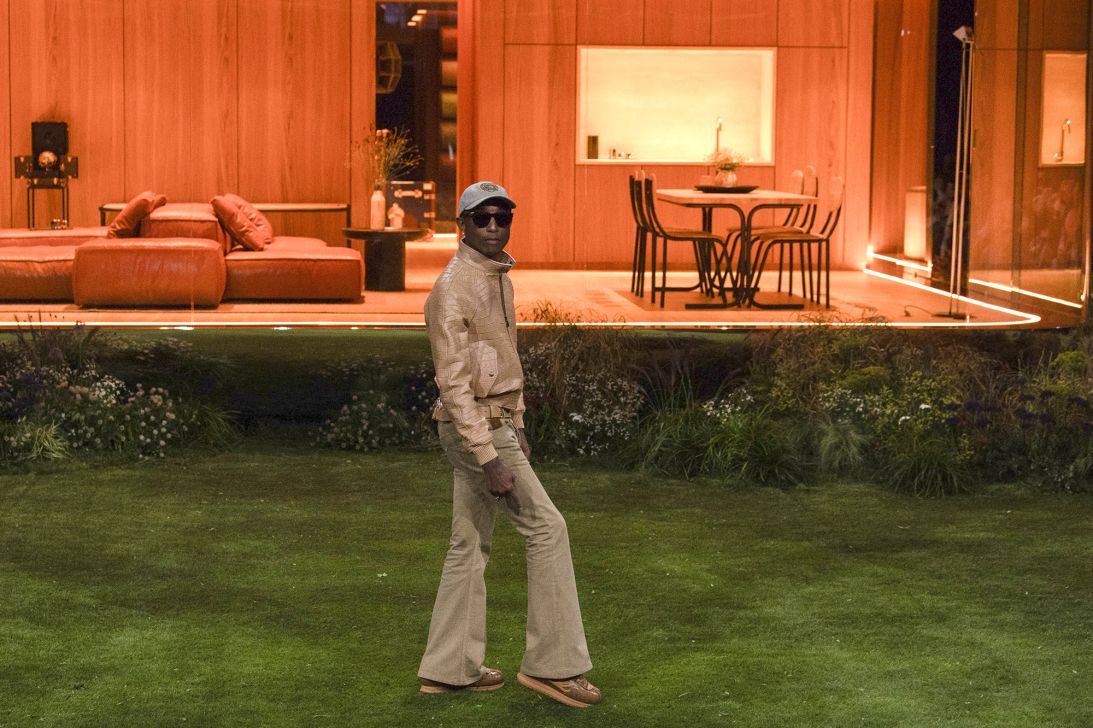
Fashion designers have embraced bold new aesthetics at the recent Paris Men’s Fashion Week, showcasing collections that challenge traditional norms of masculinity. The event, which featured a range of innovative styles, highlighted garments such as midi skirts and vibrant separates in shades like burnt orange, dusty pink, and magenta. These choices reflect a significant departure from the neutral tones typically favored in men’s wardrobes.
The conversation around masculinity in fashion has been notably sensitive, as evidenced by a viral debate in late 2025 surrounding a pink sweater from J.Crew. A comment from conservative commentator Juanita Broaddrick ignited controversy when she questioned whether “real men” would wear the $168 item. The backlash was swift, with many asserting that such colors detracted from traditional male identity. Users on social media expressed sentiments that ranged from disapproval to outright ridicule, branding the sweater as indicative of increased “feminization” in men’s fashion.
Bold Colors and Innovative Designs
The latest collections presented at Paris Men’s Fashion Week signify a willingness among designers to push boundaries. Brands such as Auralee, helmed by Japanese designer Ryota Iwai, and the Los Angeles-based label Amiri, alongside the iconic Louis Vuitton line led by Pharrell Williams, are advocating for a more expressive palette. The vision contrasts sharply with the “quiet luxury” trend that has dominated recent seasons, which emphasized understated sophistication.
Designers are now grappling with the question of whether they should cater to everyday wearability or challenge societal norms with more avant-garde pieces. This year’s shows illustrate a clear trend towards inclusivity, embracing a fluid approach to gender in fashion. The runway has become a platform for redefining what is deemed acceptable for men to wear, building on the broader cultural shifts that have been gaining traction over recent years.
The Evolving Landscape of Men’s Fashion
The changing attitudes towards masculinity are not limited to runways; they have permeated popular culture as well. Male celebrities, including Harry Styles and Alexander Skarsgård, have made headlines for their willingness to explore unconventional styles, bending traditional gender rules. Yet, the reaction to the pink sweater debate indicates that not all consumers are ready to embrace these changes. For many, items such as an Issey Miyake boiler suit or a Dior brocade skirt may still feel too radical.
Despite the resistance from some sectors, the array of options presented during Paris Men’s Fashion Week suggests that the industry is committed to evolving. Designers are crafting pieces that invite men to expand their fashion horizons while still providing conventional alternatives for those less inclined to experiment. As the fall-winter 2026 collections begin to shape public perception, it is clear that the conversation around masculinity in fashion will continue to develop, reflecting broader societal changes.
Paris Men’s Fashion Week has once again proven to be a pivotal moment for the industry, highlighting the intersection of creativity and cultural discourse. The collections not only showcase the vision of contemporary designers but also challenge audiences to reconsider their perceptions of style and identity in an ever-changing world.
























