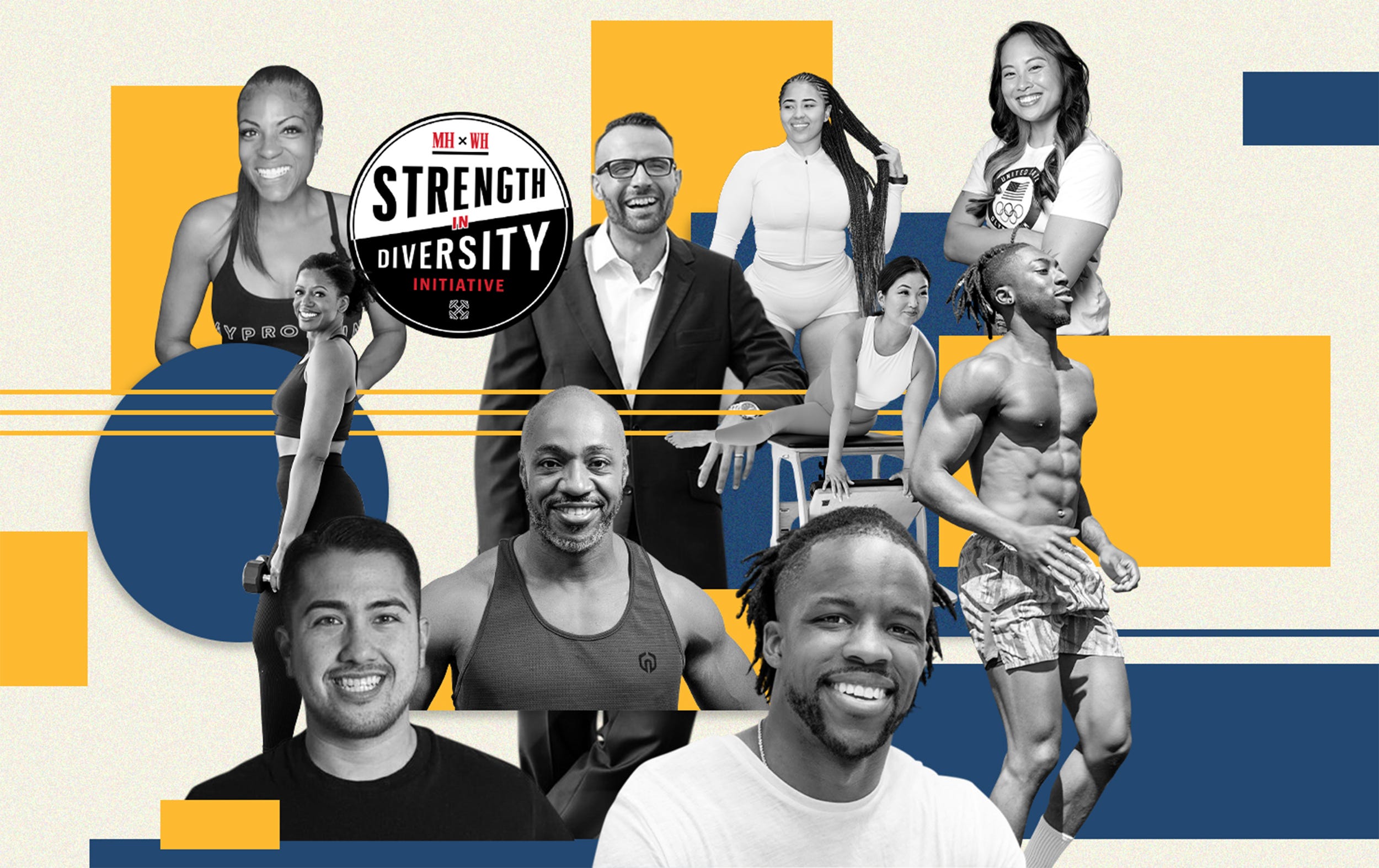
The Strength in Diversity (SiD) program, a collaboration between Men’s Health and Women’s Health, has successfully connected trainers from underrepresented communities with the fitness industry for six years. This initiative aims to enhance inclusivity and representation among fitness professionals, ensuring that the trainers reflect the diverse individuals who frequent gyms across the country. Since its inception, the program has supported 53 trainers, with the latest cohort featured in the upcoming Winter 2026 issue.
The program, spearheaded by Ebenezer Samuel, fitness director, and Amanda Lucci, director of special projects, includes weekly Zoom sessions and various enrichment activities designed to equip each trainer with valuable industry resources. As the program prepares to welcome a new class in late 2026, the trainers from the class of 2025 bring unique backgrounds and insights to the fitness landscape, focusing on areas ranging from nutrition to competitive athletics.
Insights from Top Trainers
Among the diverse trainers are individuals like Thomas Dellota, a 43-year-old strength coach from Chicago, Illinois. As a first-generation Filipino-American, Dellota emphasizes the importance of representation in strength and conditioning. He serves as the Head Strength and Conditioning Coach at Niles West High School, training student-athletes across 31 sports. Dellota encourages his trainees to approach fitness with purpose, stating, “Strength, speed, mobility, and recovery all matter equally and should be trained with balance and consistency.”
In Stuart, Florida, Tony Castillo, a registered dietitian and sports nutrition expert, focuses on sustainable nutrition for busy men. With experience working with collegiate and professional athletes, Castillo advises prioritizing nutrient quality over calorie counting. He emphasizes, “Consistency and sustainability win over quick fixes—find simple habits you can maintain daily.”
Another impactful voice is True Bey, a 46-year-old health coach from Fords, New Jersey. Having overcome personal struggles with obesity and food addiction, Bey teaches men how to master their nutrition for lasting transformations. His advice centers on the kitchen, stating, “The body doesn’t change because you trained harder; it changes because you learned how to fuel it smarter.”
Building a Healthier Future
Personal trainer and health coach Lamán Ben-Trahoret from Arlington, Virginia, highlights the importance of movement in daily life. With over eight years of experience, Ben-Trahoret notes that fitness should be accessible to everyone, regardless of their career demands. He advocates for an 80/20 approach: “You don’t need to live in the gym; you do need to live in your body.”
Another trainer, Ray Muskeyvalley, a former NCAA basketball player and biomedical engineer from Mount Clemens, Michigan, emphasizes the significance of joint health for athletes and active individuals. He founded The MVMT School to promote preventative training methods. Muskeyvalley states, “Before you chase strength or speed, give the joints you need—60 seconds of slow, controlled motion.”
These trainers, alongside others like Stephanie Pantoja from Atlanta, Georgia, and Sunny Choi, an Olympian from Queens, New York, share a common goal: to inspire individuals to embrace fitness as a lifelong journey. Their collective insights not only reflect their diverse backgrounds but also provide actionable advice for anyone looking to enhance their health and wellbeing.
As the SiD program continues to evolve, it reinforces the notion that representation in fitness is not just beneficial but essential. Each trainer’s story serves as a testament to the power of community, mentorship, and the belief that everyone deserves the opportunity to thrive in their fitness journey.